
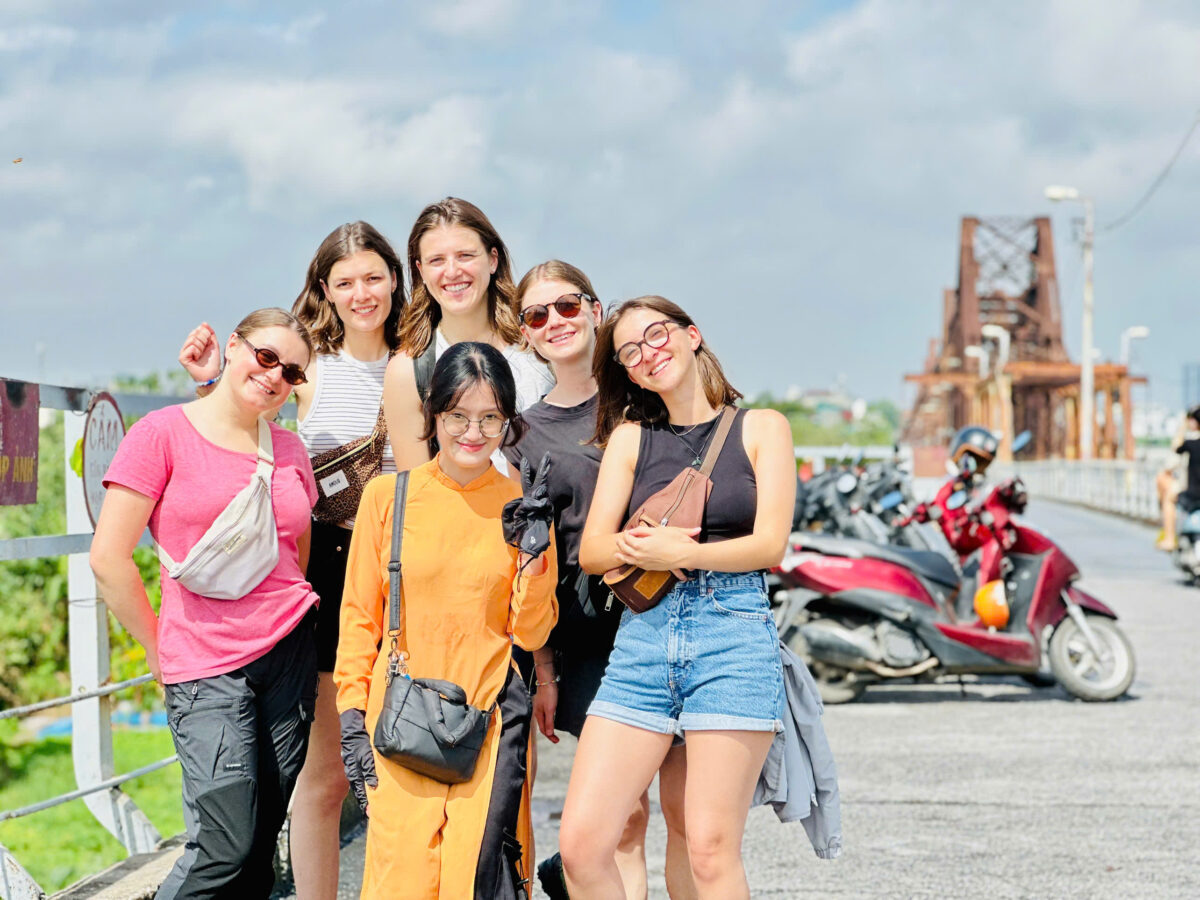
Hanoi Countryside Full-Day Vespa Tour – Bat Trang, Co Loa, Red River Villages & Local Life Led By Women
Escape the busy streets of central Hanoi and discover a quieter side of northern Vietnam on a Hanoi Countryside Full-Day Vespa Tour Led By Women.
Ride a classic Vespa beyond the Old Quarter and explore the villages, agricultural landscapes, historic communities and traditional crafts surrounding the capital.
This private Vespa experience combines Bat Trang Ceramic Village, Co Loa Ancient Citadel, Red River countryside, Dong Ngac Ancient Village and local farming communities into one full-day journey.
Instead of following the same city sightseeing route, you will ride through smaller roads, village lanes, riverside paths and agricultural areas where everyday Vietnamese life continues alongside the rapidly developing capital.
Your Vietnamese female rider and guide leads the journey, sharing stories about village traditions, family life, agriculture, handicrafts and the history of Hanoi.
With Vietnam Women Travel – Premium Private Tours Led by Women, the countryside becomes more than a backdrop.
It becomes the main experience.
Why Explore Hanoi Countryside by Vespa?
The countryside around Hanoi is close to the city but feels surprisingly different.
Within a short ride from central Hanoi, modern buildings gradually disappear and are replaced by village houses, vegetable gardens, rice fields, temples, workshops and narrow lanes.
A Vespa is particularly well suited to this type of journey.
It allows you to travel comfortably while still feeling connected to the surrounding environment.
You can stop beside a field, enter a village lane, visit a family workshop or pull over for photographs whenever the landscape catches your attention.
The private format also means you are not following a large convoy.
Your female rider can adjust the pace and route according to your interests.
Hanoi Countryside Full-Day Vespa Tour Itinerary
Part 1: Hanoi Old Quarter to the Red River – Leaving Central Hanoi Behind
Meet your Vietnamese female Vespa rider and guide at your hotel and begin the journey through Hanoi.
Ride away from the busy streets around Hoan Kiem Lake and gradually enter the city’s quieter northern and eastern neighborhoods.
Cross toward the Red River, one of the geographical features that has shaped Hanoi’s history and development.
As the urban landscape changes, observe residential neighborhoods, local markets, small workshops and riverside communities.
Your guide explains how Hanoi has expanded while traditional communities remain connected to the river and surrounding farmland.
Continue along quieter roads toward the countryside.
The transition from capital city to rural landscape happens gradually, making the ride itself an important part of the experience.
Part 2: Red River Countryside – Farms, Village Roads & Everyday Life
Follow local roads beside and beyond the Red River.
Ride through agricultural areas where farmers cultivate vegetables, flowers and seasonal crops.
Depending on the season, you may see farmers preparing fields, harvesting vegetables, transporting produce or working in family gardens.
Stop at a suitable location to walk briefly through the agricultural landscape.
Your female guide explains how food grown around Hanoi reaches markets and restaurants in the city.
This is a side of Hanoi that many visitors never see because it lies outside the normal sightseeing routes.
The Vespa makes it possible to move easily between the river, farms and villages.
Part 3: Dong Ngac Ancient Village – Old Houses, Gates & Family Traditions
Continue to Dong Ngac Ancient Village, one of the historic villages on the outskirts of Hanoi.
Explore quiet lanes lined with old houses, traditional gates, ancestral homes and village architecture.
The village provides a glimpse into the structure of traditional northern Vietnamese communities.
Your guide explains how village families organized their homes, communal relationships and ancestor traditions.
Stop at selected architectural sites and, where appropriate, visit a traditional family home.
The atmosphere here is very different from central Hanoi.
Rather than monuments built for tourists, you see a living residential community where history remains integrated into everyday life.
Part 4: Co Loa Ancient Citadel – Ancient Hanoi Before the Modern Capital
Continue north toward Co Loa Ancient Citadel, one of the most important archaeological and historical sites around Hanoi.
Co Loa was associated with the ancient kingdom of Au Lac and the legendary King An Duong Vuong.
Explore the remaining earthwork structures, temples and historical areas.
Your female guide explains the legends surrounding the citadel and its importance in early Vietnamese history.
The enormous defensive structure once formed a complex system of walls and fortifications.
Walking through Co Loa provides a completely different historical perspective from the French colonial architecture and imperial landmarks found in central Hanoi.
Part 5: Bat Trang Ceramic Village – Vespa Ride Through Vietnam’s Pottery Heritage
Continue by Vespa toward Bat Trang Ceramic Village, one of Vietnam’s most famous traditional craft communities.
Bat Trang has a long history of ceramic production and remains an important pottery center today.
Ride through the village and explore its narrow streets, ceramic shops and workshops.
Visit a local pottery workshop to see how artisans prepare clay, shape products, decorate surfaces and fire ceramics.
Depending on workshop availability, you may observe artisans working directly at the wheel.
Your guide explains how traditional pottery skills have been adapted to modern markets while remaining connected to the village’s history.
There is also time to browse locally produced ceramics, from everyday household items to decorative pieces.
Part 6: Local Village Lunch, Riverside Roads & Vespa Ride Back to Hanoi
Stop for lunch at a selected local restaurant or family-style dining place.
Enjoy a Vietnamese meal featuring seasonal ingredients from the northern region.
Depending on the restaurant and season, dishes may include:
- Fresh seasonal vegetables
- Vietnamese spring rolls
- Grilled pork
- Tofu
- Local chicken
- Traditional soups
- Fresh herbs
- Rice
- River fish
- Seasonal fruit
Your female guide introduces the flavors and explains how local ingredients are used in everyday Vietnamese cooking.
After lunch, continue through countryside roads and smaller villages.
Take a relaxed Vespa ride through agricultural landscapes before gradually returning toward Hanoi.
Make a final stop for Vietnamese coffee or tea before completing the journey.
The Red River Countryside
The Red River is central to understanding Hanoi’s geography.
Its fertile floodplain has supported agriculture and settlement for generations.
Even as Hanoi expands rapidly, pockets of farmland and riverside communities remain surprisingly close to the urban center.
Traveling by Vespa allows you to experience this contrast directly.
One moment you are surrounded by city buildings.
A short ride later, you are passing vegetable gardens and village houses.
Dong Ngac Ancient Village
Dong Ngac offers an opportunity to discover traditional northern Vietnamese village architecture without traveling far from Hanoi.
The village contains old houses, gates, temples and family compounds that reflect centuries of local history.
The narrow lanes are especially interesting from a Vespa because you can explore areas that are inaccessible to larger vehicles.
Co Loa Ancient Citadel
Co Loa represents a much older chapter of Vietnamese history.
Its ancient defensive system reflects the strategic importance of the area long before Hanoi became the capital of modern Vietnam.
The site is associated with An Duong Vuong and the ancient kingdom of Au Lac.
Temples, earthwork remains and historical landmarks are spread across the surrounding community.
A visit to Co Loa adds historical depth to the countryside experience.
Bat Trang Ceramic Village
Bat Trang is one of the most important traditional craft villages near Hanoi.
Generations of artisans have developed ceramic techniques that remain central to the local economy.
The village is not simply a souvenir stop.
Active workshops continue to produce pottery for Vietnamese households and international markets.
Seeing artisans work gives visitors a better understanding of the time and skill involved in traditional Vietnamese ceramics.
Hanoi’s Agricultural Villages
The countryside around Hanoi contains a surprising variety of agricultural landscapes.
Depending on the season, you may see:
- Vegetable gardens
- Rice fields
- Flower farms
- Fruit trees
- Corn
- Small family farms
- Irrigation channels
- Local livestock
Your guide explains how rural communities supply food to the growing capital.
This creates a useful connection between Hanoi’s restaurants and markets and the farms surrounding the city.
Local Village Life
One of the main goals of the tour is to observe ordinary life away from tourist attractions.
You may see residents preparing meals, repairing bicycles, tending gardens, transporting crops or meeting neighbors.
These small details provide a more authentic understanding of Hanoi than simply visiting famous monuments.
Because the tour is private, there is time to stop when something catches your attention.
Vietnamese Village Architecture
Traditional villages around Hanoi often contain a mixture of old and new architecture.
A narrow lane may lead past a centuries-old communal structure before reaching a newly renovated family home.
Old ancestral houses may stand beside modern buildings.
Village gates, courtyards, tiled roofs and family gardens reveal how traditional concepts of home and community continue to influence contemporary Vietnamese life.
Countryside Food Experience
Food is an essential part of the countryside journey.
The tour uses carefully selected local restaurants or family-style dining places rather than generic tourist venues.
Depending on the location and season, you may enjoy northern Vietnamese dishes prepared with vegetables, herbs and other locally sourced ingredients.
Your female guide can explain the difference between everyday family cooking and dishes commonly served to visitors.
Freshness, authentic preparation and food hygiene are prioritized.
What Makes This Vespa Tour Different?
This itinerary is deliberately different from the previous Hanoi Full-Day Private Bicycle Tour – Countryside & Local Villages.
It also avoids repeating the main focus of the Hanoi Full-Day Private Vespa Tour – City Highlights & Local Life.
This journey is built around a wider countryside loop:
Hanoi → Red River → Agricultural Villages → Dong Ngac Ancient Village → Co Loa Ancient Citadel → Bat Trang Ceramic Village → Countryside Roads → Local Restaurant → Hanoi.
The experience combines:
- Red River
- Riverside countryside
- Dong Ngac Ancient Village
- Co Loa Ancient Citadel
- Bat Trang Ceramic Village
- Traditional village houses
- Agricultural communities
- Vegetable farms
- Local workshops
- Vietnamese pottery
- Ancient Vietnamese history
- Rural roads
- Local cuisine
- Vespa riding
- Private travel
- Women-led guiding
The focus is not simply on ticking off attractions.
It is about following a countryside route and seeing how Hanoi’s history, agriculture, crafts and communities remain connected.
Vietnam Women Travel – Premium Private Tours Led By Women
Vietnam Women Travel – Premium Private Tours Led by Women creates private experiences that combine iconic destinations with authentic local communities.
Our tours are private tours led by women, not women-only tours.
Your Vietnamese female Vespa rider and guide accompanies you throughout the day.
She can explain the history of Co Loa, introduce the traditions of Dong Ngac, show you how Bat Trang pottery is produced and help you understand the agricultural communities around Hanoi.
Because the tour is private, the itinerary can be adjusted around your interests.
Spend longer at a ceramic workshop.
Take more photographs in the countryside.
Stop for Vietnamese coffee.
Explore an additional village lane.
Or simply slow down and enjoy the Vespa ride.
Private Vespa Experience
Travel as a passenger on a Vespa with an experienced Vietnamese female rider and guide.
Helmets are provided, and safety is prioritized throughout the journey.
The route may be adjusted according to traffic, weather, road conditions, local activities and attraction access.
The countryside contains narrow roads and changing surfaces, so the ride is designed around sightseeing rather than speed.
Comfortable clothing, closed-toe shoes, sunscreen, sunglasses and drinking water are recommended.
Who Is This Hanoi Countryside Vespa Tour For?
This private experience is ideal for:
- Couples
- Friends
- Private travelers
- Photography enthusiasts
- Culture lovers
- History enthusiasts
- Craft lovers
- Food travelers
- Adventure travelers
- Travelers who want to escape central Hanoi
- Travelers interested in traditional villages
- Travelers who enjoy Vespa experiences
- Repeat visitors to Hanoi
- Guests seeking private tours led by women
Book Your Hanoi Countryside Full-Day Vespa Tour
If you are searching for a Hanoi countryside Vespa tour, Hanoi private Vespa tour, Bat Trang Ceramic Village Vespa tour, Co Loa Ancient Citadel tour, Dong Ngac Ancient Village tour, or a private rural experience led by women, this itinerary offers a completely different perspective on the Vietnamese capital.
Ride beyond central Hanoi, follow the Red River, explore agricultural communities, discover Dong Ngac Ancient Village, travel back through Vietnamese history at Co Loa Ancient Citadel, experience traditional pottery at Bat Trang Ceramic Village, enjoy authentic local food and return to Hanoi by Vespa.
With Vietnam Women Travel – Premium Private Tours Led by Women, the countryside is not simply somewhere outside Hanoi.
It is where ancient history, traditional crafts, agriculture and everyday Vietnamese life continue to meet — best experienced slowly from the seat of a Vespa.