Hanoi Vespa Tour in Winter: Weather, Clothing and Comfort
A Hanoi Vespa Tour in Winter offers a very different experience from riding through the city during the hot and humid summer months. From December through February, Hanoi is generally cooler, with daytime temperatures often comfortable for sightseeing but mornings and evenings potentially chilly. Historical climate data puts average temperatures around 16.2°C in January, 18.3°C in February and 17.2°C in December, with relatively limited rainfall compared with Hanoi’s summer months. For travelers planning a Vespa experience during winter, the key is choosing the right clothing and understanding how the temperature feels while riding.
Is Winter a Good Time for a Hanoi Vespa Tour?
Yes. Winter can be one of the most comfortable periods for exploring Hanoi by Vespa because there is usually far less heat and humidity than during the summer. January is typically the coolest month, with average temperatures around 16°C and average minimum temperatures around 13°C, while February becomes noticeably milder. The cooler conditions are particularly pleasant when visiting Hanoi’s historic neighborhoods, markets, lakes and outdoor attractions.
What Is Hanoi Winter Weather Like?
Hanoi does not have a tropical beach-style winter. Instead, the city experiences a cooler northern Vietnamese winter, which can feel surprisingly cold to travelers arriving from warm climates. December averages around 17°C, January around 16°C and February around 18°C. Maximum temperatures are generally around 19–22°C during these months, although individual days can be warmer or cooler.
The important thing to remember is that temperature alone does not determine comfort on a Vespa. When you are moving through the city on an open scooter, the airflow can make a cool morning feel considerably colder than it would while walking.
December: Cool but Generally Comfortable
December is a popular winter period for visiting Hanoi. Average temperatures are around 17°C, with average minimum temperatures around 14°C and average maximum temperatures close to 20°C. Rainfall is relatively low compared with the wetter months of the year.
For a Vespa tour, a light jacket or sweater is usually useful, particularly for morning departures. During warmer afternoons, you may be comfortable with lighter layers.
January: The Coldest Month
January is normally the coolest month in Hanoi. Average temperatures are around 16°C, with average minimum temperatures near 13°C and average maximum temperatures around 19°C.
For a Vespa ride, January mornings can feel particularly cool because of the combination of lower temperatures and moving air. A warm jacket, long trousers and closed shoes are recommended, especially for an early departure.
February: Gradually Warmer
February generally becomes more comfortable for outdoor sightseeing. Average temperatures rise to around 18°C, with average minimum temperatures around 15°C and maximum temperatures around 22°C.
This means travelers can often dress in lighter layers than they would in January, although a jacket remains useful for morning rides.
Does It Rain in Hanoi During Winter?
Winter is relatively dry compared with Hanoi’s summer rainy season, but rain is still possible. Climate data records approximately 5–7 rainy days per month during December through February, depending on the dataset.
Winter rain in Hanoi can also make the city feel colder because of the combination of damp air and lower temperatures. Travelers should therefore prepare for both cool and wet conditions rather than assuming every winter day will be sunny.
What Should You Wear on a Hanoi Vespa Tour in Winter?
The best approach is layers. Instead of wearing one extremely heavy coat, wear a combination that can be adjusted as the temperature changes during the tour.
A practical winter Vespa outfit includes:
- Long trousers or comfortable jeans
- A T-shirt or lightweight base layer
- Sweater, fleece or warm long-sleeve shirt
- Lightweight jacket or windproof outer layer
- Closed shoes
- Socks
- Scarf for particularly cool mornings
- Light gloves if you are sensitive to cold
The advantage of layers is that you can remove a sweater or jacket when the afternoon becomes warmer.
Why a Windproof Jacket Helps
A windproof outer layer can be more useful than a very thick sweater on a Vespa. When the scooter is moving, air passes continuously around the passenger. Even when the actual temperature is around 18–20°C, the ride can feel cooler than walking at the same temperature.
A lightweight windproof jacket is therefore one of the most useful items to pack for a winter Vespa experience.
Should You Wear a Heavy Winter Coat?
Usually, a very heavy winter coat is unnecessary. Hanoi’s winter temperatures are considerably milder than those in northern Europe, North America or Northeast Asia. A medium-weight jacket combined with layers is generally more versatile.
There can, however, be particularly cold days. If the forecast is unusually cool, travelers who are sensitive to low temperatures may prefer a warmer coat.
What About Shoes?
Comfortable closed shoes are the best choice. Sneakers, walking shoes or lightweight casual shoes work well because you may get off the Vespa several times during the tour.
Avoid open sandals on a particularly cold or wet day. Closed shoes provide better protection against cool air, rain and splashes from the road.
Should You Bring Gloves?
Gloves are optional for most travelers but useful during particularly cool mornings. Because your hands are exposed to moving air throughout the ride, they can feel colder than the rest of your body.
A thin pair of gloves takes very little space in your luggage and can be useful if you are visiting Hanoi in January.
What About Rain?
Winter rain can make a Vespa ride feel colder, so rain protection is important. Motorbike City Tours lists raincoats among the equipment provided on its Hanoi Vespa Tour.
If rain is forecast, you can also bring a small waterproof bag or protective cover for your phone and camera.
Are Helmets Provided?
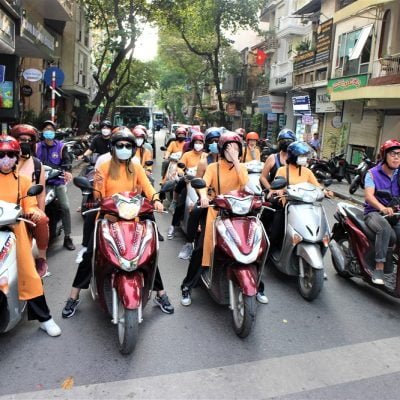
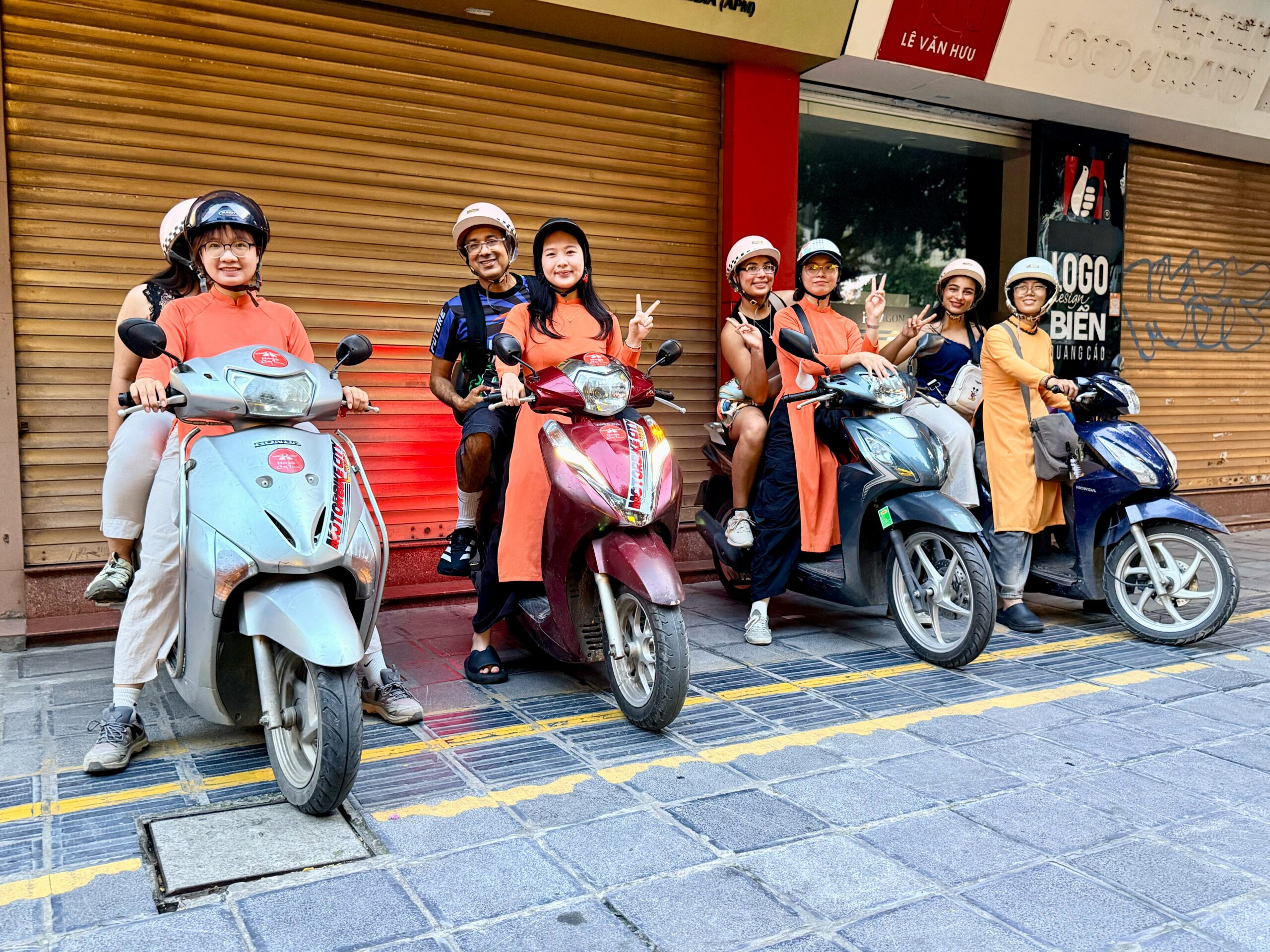
Yes. The published Motorbike City Tours Hanoi Vespa Tour includes helmets and raincoats. The company also lists Honda Lead scooters with passenger backrests and storage.
This means travelers do not need to bring their own helmet for the standard tour.
Is the Vespa Tour Comfortable in Cold Weather?
The passenger experience is designed to be comfortable even though you are outdoors. Guests ride behind professional drivers rather than operating the scooter themselves, allowing them to focus on the scenery and cultural experience.
The published tour uses scooters with passenger backrests, which provide additional support during the approximately 4.5-hour experience.
The most important factor for winter comfort is therefore clothing. Dress appropriately for the temperature, and the ride can be very enjoyable.
Morning vs. Afternoon: Which Is Better in Winter?
For winter travelers, the afternoon departure may feel warmer, particularly in January. The published afternoon tour runs from 1:00 PM to 5:30 PM, while the morning tour runs from 8:00 AM to 12:45 PM.
The morning tour is still an excellent option if you prefer cooler temperatures and want your afternoon free. However, travelers who are particularly sensitive to cold may prefer the afternoon departure.
Winter Is Excellent for Outdoor Sightseeing
Cooler temperatures make it easier to spend several hours outside without becoming overheated. This is particularly useful for a Vespa route that includes Hanoi’s historic landmarks, residential neighborhoods, Long Bien Bridge, Banana Island and West Lake.
The published route combines these outdoor areas with cultural stops, food, coffee and drinks.
Winter Makes Long Bien Bridge More Enjoyable
Long Bien Bridge can be particularly pleasant during cooler weather. Instead of dealing with the intense heat associated with summer, travelers can cross the Red River with a cooler breeze and clearer physical comfort.
The changing scenery from central Hanoi toward the Red River also makes the ride itself an important part of the experience.
Discover Banana Island in Cooler Weather
Banana Island is another outdoor section of the route where winter temperatures can be an advantage. The agricultural area includes cultivated land, banana and guava trees and quieter paths.
Walking briefly around the area or meeting farmers is more comfortable when temperatures are moderate rather than extremely hot.
Winter and Hanoi’s Food Culture
Cool weather also makes Hanoi’s food culture particularly enjoyable. Sitting down for a Vietnamese meal after riding through the city can provide a welcome warm break.
The published Vespa tour includes a traditional Vietnamese meal, along with Hanoi egg coffee and Bia Hoi.
Egg Coffee Is Perfect for a Cool Day
Hanoi egg coffee is especially enjoyable during cooler weather. The thick, creamy coffee is rich and sweet, making it a natural stop after several hours of outdoor sightseeing.
The published Motorbike City Tours itinerary includes egg coffee at a café toward the end of the experience.
Can You Take Photos During a Winter Vespa Tour?
Absolutely. Winter’s softer conditions can be excellent for photography, particularly around Hanoi’s historic neighborhoods, lakes and Red River landscapes.
A phone or camera should be kept secure while riding, and it is better to take photographs when the Vespa is safely stopped rather than while moving.
Is Winter Better Than Summer for a Vespa Tour?
For many travelers, yes. Hanoi’s summer months are considerably hotter, wetter and more humid. Winter provides cooler conditions and much lower average rainfall. For example, January averages around 47 mm of rainfall in the cited climate dataset, compared with more than 200 mm in several summer months.
The trade-off is that winter can feel damp and chilly, particularly during cold spells. Proper layers solve most of the problem.
What Should You Pack in Your Day Bag?
For a winter Hanoi Vespa tour, keep your day bag simple:
- Phone
- Camera
- Sunglasses
- Sunscreen
- Small bottle of water
- Light scarf
- Thin gloves if needed
- Waterproof phone pouch
- Small amount of personal cash
- Any necessary medication or personal items
Avoid carrying a large backpack because the scooter already provides limited personal space.
Do You Need to Drive?
No. Travelers joining the published Motorbike City Tours experience ride as passengers behind professional female drivers. The company lists professional and licensed all-female drivers, English-speaking guides, helmets and raincoats as part of the tour.
This is especially convenient in winter because you can concentrate on staying warm and enjoying the scenery rather than navigating traffic.
Winter Is a Great Season for a Women-Led Vespa Tour
A Women-Led Hanoi Vespa Tour provides the same street-level access as a conventional scooter experience while allowing guests to ride with professional female drivers. The published tour combines Hanoi’s hidden backstreets, historic landmarks, Long Bien Bridge, Banana Island, West Lake, Train Street, food, egg coffee and Bia Hoi.
For travelers visiting Hanoi during winter, this combination of outdoor sightseeing and indoor food and coffee stops creates a comfortable balance.
What If the Weather Changes?
Hanoi winter weather can change during the day, so flexible clothing is more useful than trying to predict the exact temperature. Start with layers, keep a raincoat available and bring an extra warm layer if you are particularly sensitive to cold.
The tour operator provides raincoats, but travelers should still check the forecast before departure and dress according to the conditions that day.
How Long Is the Winter Vespa Tour?
The published Hanoi Vespa Tour lasts approximately 4.5 hours. The morning option runs from 8:00 AM to 12:45 PM, with lunch included at the end, while the afternoon option runs from 1:00 PM to 5:30 PM, with lunch included at the beginning.
This half-day format is useful because travelers can enjoy an extended outdoor experience without spending the entire day exposed to winter weather.
Hotel Pickup Makes Winter Travel Easier
Central Hanoi hotel pickup and drop-off are included in the published tour. This is particularly convenient on a cold or wet winter morning because you do not have to walk a long distance to find the meeting point.
Winter Hanoi Vespa Clothing Checklist
Before leaving your hotel, check that you have:
Top: T-shirt or base layer + sweater + lightweight jacket.
Bottom: Long trousers or jeans.
Feet: Comfortable closed shoes and socks.
Optional: Scarf and thin gloves.
Rain: Use the provided raincoat if necessary.
Sun: Sunglasses and sunscreen are still useful even during winter.
Is a Hanoi Vespa Tour Worth Doing in Winter?
Absolutely. Winter offers a comfortable alternative to Hanoi’s hotter months, particularly for travelers who enjoy outdoor sightseeing. The cooler weather makes it easier to spend several hours exploring the city’s streets, historic sites, lakes and riverside areas.
The key is simply to dress for the ride rather than for the temperature you experience while sitting inside a café or hotel.
Book a Hanoi Vespa Tour in Winter
A Hanoi Vespa Tour in Winter can be one of the most comfortable ways to discover the capital when temperatures are cooler and rainfall is relatively limited. December, January and February generally bring mild daytime conditions, although January can feel quite cold on an open scooter, especially in the morning. Dress in layers, wear long trousers and closed shoes, bring a light jacket and take advantage of the helmets and raincoats provided by the tour operator.
MOTORBIKE CITY TOURS – HANOI VESPA TOURS LED BY WOMEN
Address: 91 Tho Nhuom Street, Hoan Kiem District, Hanoi, Vietnam
Phone / WhatsApp / iMessage: +84 988 402 008
Email: info@motorbikecitytours.com
Website: motorbikecitytours.com
Tours: Hanoi Vespa Tours Led by Women | Hanoi Motorbike Tours Led by Women | Hanoi Food Tours | Hanoi Jeep Tours | Hanoi Bicycle Tours | Private Hanoi Tours
Contact Motorbike City Tours to check availability, confirm the departure time and arrange central Hanoi hotel pickup for a private or small-group Hanoi Vespa Tour Led by Women during your winter visit.