Ha Giang Travel Guide: Routes, Landscapes & Local Experiences
Ha Giang is one of the most spectacular regions in Northern Vietnam for travelers who want dramatic mountains, winding roads, ethnic cultures and experiences far removed from the major tourist centers. Located in the far north near the Chinese border, the region is defined by towering limestone peaks, deep valleys, terraced fields and traditional communities. The Ha Giang Loop has become particularly famous among adventure travelers, but the destination is much more than a motorcycle route. It is a journey through mountain landscapes, local markets, villages, food traditions and everyday life. Vietnam’s official destination information describes Ha Giang as a remote frontier region best experienced by road, with the Ma Pi Leng Pass, Dong Van Karst Plateau and ethnic villages among its major attractions.
One important point for travelers planning a current trip is that the wider Ha Giang area has undergone administrative changes, with the former Ha Giang province incorporated into the expanded Tuyen Quang Province. However, Ha Giang remains the familiar destination name used by travelers, tour operators and tourism information when referring to the mountain region and the famous loop.
The best way to experience Ha Giang is to avoid rushing. A classic Loop generally takes 3–4 days, while travelers who want more time for villages, photography, walking and local experiences should consider four or five days. The commonly traveled route follows Ha Giang City, Quan Ba, Yen Minh, Dong Van, Meo Vac and Du Gia before returning to Ha Giang.
Why Visit Ha Giang?
Ha Giang offers something that is difficult to find elsewhere in Vietnam: an entire journey where the road, landscape and communities are the attraction. You are not simply traveling from one monument to another. The scenery changes continuously as the road climbs through passes, crosses valleys and winds around limestone mountains. The region is also home to a remarkable variety of ethnic communities, including Hmong, Tay, Dao, Lo Lo, Pu Peo and others, with many villages maintaining traditional houses, agricultural practices and local markets.
For photographers, Ha Giang provides dramatic mountain silhouettes, terraced fields, colorful markets, traditional clothing and changing weather. For adventure travelers, the mountain roads are the major attraction. For cultural travelers, village life and local markets offer opportunities to understand the region beyond its famous viewpoints.
Where Is Ha Giang?
Ha Giang lies in the far north of Vietnam, close to the Chinese border. Ha Giang City is the usual starting point for the Loop, although many of the most spectacular landscapes are several hours farther north in the Dong Van and Meo Vac areas. The region is roughly 300 kilometers from Hanoi by road, and because there is no direct railway or commercial airport serving Ha Giang, road transportation is the normal way to reach it.
The remoteness is part of the appeal. The journey from Hanoi takes several hours, but once you enter the mountain region, the landscape becomes increasingly dramatic and the pace of travel naturally slows.
Hanoi to Ha Giang
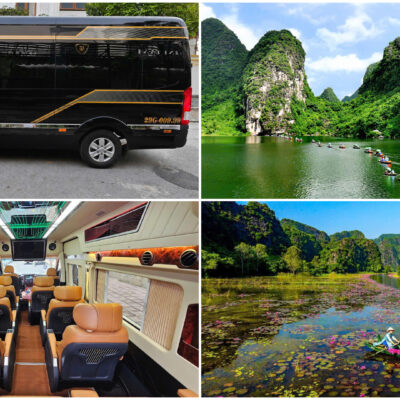
For most international travelers, the journey begins in Hanoi. Sleeper buses, limousine vans and private cars are the most practical options. A road journey generally takes around 5–7 hours, depending on traffic, departure point, stops and weather. Many travelers arrive in Ha Giang City the day before starting the Loop so they can rest, meet their driver or guide and prepare for the mountain journey.
A daytime limousine or private car is particularly useful for travelers who want to arrive rested. An overnight sleeper bus can save a hotel night, but early-morning arrival may be inconvenient if you cannot check in immediately. For couples, families and private groups, a private vehicle provides the greatest flexibility.
The Classic Ha Giang Loop Route
The classic route generally follows Ha Giang City → Quan Ba → Yen Minh → Dong Van → Meo Vac → Du Gia → Ha Giang City. Most travelers complete it in three or four days.
The exact route is flexible. Local road conditions, weather, market days and seasonal conditions can influence where you stay and which side roads you take. A private guide can adjust the route rather than forcing you to follow a fixed timetable.
Day 1: Ha Giang City to Quan Ba and Yen Minh
The first day introduces you to Ha Giang’s mountain scenery. Leaving Ha Giang City, the road climbs toward Quan Ba, where the landscape changes from valleys into increasingly dramatic limestone terrain. The Heaven’s Gate viewpoint is one of the first major scenic stops and gives travelers a panoramic introduction to the mountains. The route then continues toward Yen Minh through forests, valleys and mountain communities. Official route descriptions identify Heaven’s Gate and the Dong Van Karst Plateau as major highlights on this first section.
This is not a day to rush. Stop for coffee, photographs and village views along the way. The best memories are often made at viewpoints that were never marked on your original itinerary.
Day 2: Yen Minh to Dong Van and Ma Pi Leng
The second day is usually one of the most spectacular sections of the journey. As you move toward Dong Van, the limestone formations become larger and the roads more dramatic. The landscape belongs to the Dong Van Karst Plateau, recognized as a UNESCO Global Geopark and one of the defining geological areas of Northern Vietnam.
After Dong Van, the route continues toward Ma Pi Leng Pass, one of the most famous mountain roads in the country. The road climbs high above the Nho Que River, creating dramatic views across the canyon and surrounding limestone peaks. Current travel guides consistently identify Ma Pi Leng as the signature landscape of the Ha Giang Loop.
Ma Pi Leng Pass
Ma Pi Leng is the point where many travelers understand why Ha Giang has become famous. The road runs along steep mountain terrain above the Nho Que River, with enormous cliffs and deep valleys stretching into the distance. The scenery is impressive in every direction, but the scale is difficult to appreciate from photographs alone.
Do not simply stop at one viewpoint and leave. Allow time to walk short sections, photograph the road and look down toward the river. Weather can change quickly, and fog can transform the landscape from sharp mountain ridges into a moody, almost surreal scene.
Nho Que River and Tu San Canyon
The Nho Que River is one of Ha Giang’s most recognizable natural features. It cuts through the mountains below Ma Pi Leng and passes through the dramatic Tu San Canyon. A boat trip can provide a very different perspective from the mountain road above.
Depending on the season, the river can appear strikingly green or turquoise, with towering rock walls rising dramatically from the water. Early morning can be particularly atmospheric when mist remains in the canyon. If the boat trip is important to you, build enough time into your itinerary rather than treating it as a quick optional stop.
Day 3: Meo Vac to Du Gia
After reaching Meo Vac, the route can continue toward Du Gia before returning to Ha Giang City. This section often feels greener and more rural than the dramatic high passes around Dong Van and Ma Pi Leng. Valleys, farms, streams and traditional villages become more prominent.
Du Gia is popular as an overnight stop because it allows travelers to slow down after several intense mountain-road days. Homestays can provide a more relaxed evening, local food and a closer connection with village life.
Day 4: Du Gia to Ha Giang City
A fourth day gives the journey breathing room. Instead of treating the final return to Ha Giang as a simple transfer, you can stop at waterfalls, villages, rice fields and viewpoints along the route.
This is one of the advantages of a four-day itinerary: you are less likely to feel pressured to reach the next hotel before sunset. The road becomes part of the experience rather than simply something to complete.
The Dong Van Karst Plateau
The Dong Van Karst Plateau is one of the defining landscapes of Ha Giang. Limestone peaks rise from valleys where communities farm corn and other crops, creating a dramatic relationship between geology and agriculture. The area was recognized as a UNESCO Global Geopark and is also home to diverse ethnic communities and hiking opportunities.
For travelers interested in nature, this region is worth exploring slowly. Pull over at viewpoints, walk through villages and look closely at the mountain terraces and stone walls. The scenery is impressive from a distance, but much of the character appears when you travel at ground level.
Quan Ba Heaven Gate
Quan Ba Heaven Gate is one of the most accessible scenic viewpoints on the Loop. From the high road, you can see valleys and limestone formations spreading across the landscape. It is generally one of the first major mountain viewpoints after leaving Ha Giang City.
The area is also a useful place to understand how dramatically the terrain changes as you move deeper into Northern Vietnam.
Quan Ba Twin Mountains
The Quan Ba Twin Mountains, sometimes called the Fairy Mountains, are a recognizable landscape feature below the mountain roads. Their rounded shapes contrast with the sharper limestone formations surrounding them.
The viewpoint is particularly attractive when the valleys are green and cultivated, creating a strong contrast between farmland and mountains.
Yen Minh Pine Forest
The Yen Minh area offers a different atmosphere from the exposed mountain passes. Pine-covered hills create shaded sections of road where you can stop, rest and enjoy cooler mountain air. The landscape becomes particularly atmospheric after rain or when low clouds settle over the hills.
This is a good reminder that Ha Giang is not just about dramatic cliffs. Forests, farmland and quieter valleys are equally important to the journey.
Dong Van Ancient Town
After a day on the mountain roads, Dong Van Ancient Town is a pleasant place to slow down. The central area has traditional architecture, cafés, small restaurants and a market atmosphere.
If your itinerary coincides with a local market day, the town becomes much more lively as residents from surrounding communities arrive to trade products and socialize.
Dong Van Sunday Market
Market days are among the best opportunities to experience local culture in Ha Giang. The Dong Van and Meo Vac markets, particularly around Sundays, bring together people from surrounding villages. Traditional clothing, agricultural products, food, livestock and household goods appear alongside everyday social activities.
These markets are not performances designed for visitors. They are working markets used by local communities. Travelers should therefore behave respectfully, especially when photographing people.
Meo Vac
Meo Vac sits in one of the most dramatic mountain environments on the Loop. The town is surrounded by limestone peaks and is closely connected with the communities living in the high valleys around it.
Many travelers use Meo Vac as a place to eat, rest and prepare for the next section of the journey. Market days can be particularly interesting because they bring together people from remote villages.
Lung Cu Flag Tower
The Lung Cu Flag Tower is one of Ha Giang’s most recognizable northern landmarks. It sits near the northern border and provides broad views across the surrounding mountain landscape.
The area is often added to longer Ha Giang itineraries rather than the shortest three-day routes. If you are interested in geography, border history and panoramic views, it is worth the additional time.
Vuong Family Residence
The Vuong Family Residence, sometimes known as the Hmong King’s Palace, is another interesting stop in the Dong Van area. Built almost a century ago, the complex combines architectural influences associated with Hmong, Chinese and French traditions.
It provides a useful historical contrast to the natural landscapes. Rather than viewing Ha Giang only as a motorcycle destination, the site helps explain the history and social structures of some of the communities that lived in the region.
Sung La Valley
Sung La Valley offers a softer landscape of cultivated fields, villages and mountain slopes. Depending on the season, flowers and agricultural colors can dramatically change the appearance of the valley.
It is an excellent place to slow down and observe how people farm in a mountainous environment.
Local Experiences in Ha Giang
The best local experiences are often simple. Have breakfast in a village, drink tea with a family, visit a market, walk through a farming area, learn about traditional houses or eat a home-cooked dinner at a homestay.
The region’s strongest cultural experiences are rarely formal performances. They are found in everyday activities such as preparing food, working in the fields, trading at markets or gathering around a family table.
Ethnic Cultures of Ha Giang
Ha Giang is home to a diverse collection of ethnic communities, including Hmong, Tay, Dao, Lo Lo and others. Their traditions can be seen in clothing, architecture, agriculture, food, festivals and village structures.
For travelers, it is important to remember that these communities are not tourist attractions. Visiting respectfully means asking before entering private homes, seeking permission before close-up photography and supporting locally operated businesses where possible.
Staying in a Ha Giang Homestay
A homestay can be one of the most memorable parts of a Ha Giang trip. Instead of staying in a standard hotel, you may sleep in a traditional house, eat a family-style dinner and wake up to mountains and farmland outside the window.
Some homestays are very simple, while others provide private rooms and modern bathrooms. Always check the room arrangement before booking if privacy and comfort are important.
Local Food in Ha Giang
Ha Giang’s food reflects the mountain environment and local agricultural traditions. Travelers may encounter corn-based dishes, sticky rice, local noodles, grilled meats, mountain vegetables and regional specialties.
A market is often the best place to discover these foods because you can see the ingredients before they appear on the table.
Don’t expect the same menu you find in Hanoi. One of the pleasures of traveling through Ha Giang is discovering how Northern Vietnamese food changes in mountain communities.
Ha Giang Corn and Buckwheat
Corn has historically been important in highland agriculture, while buckwheat has become closely associated with the visual identity of Ha Giang. During flowering season, fields can take on pink and purple tones that attract photographers from around the world.
Buckwheat can also appear in local foods, including cakes and other preparations.
Du Gia Waterfall
The Du Gia area is known for its green valleys and waterfall scenery. During the rainy season, waterfalls can become particularly impressive, and swimming may be possible when local conditions are safe. Vietnam’s official regional guide specifically highlights Du Gia’s waterfall and valley landscape as a seasonal attraction.
Conditions vary after heavy rain, so always follow local guidance before entering the water.
Ha Giang for Photographers
Ha Giang is one of the strongest photography destinations in Vietnam because every section of the route offers a different landscape. The most iconic subjects include Ma Pi Leng Pass, Nho Que River, rice and corn terraces, mountain roads, villages and traditional markets.
The best photographs often come from stopping before or after the obvious viewpoints. Morning mist, changing light and farmers working in the fields can produce more meaningful images than a standard tourist panorama.
Ha Giang for Adventure Travelers
The region is ideal for travelers who enjoy long road journeys, mountain landscapes and outdoor activities. The Loop itself is the main adventure, but walking, swimming, kayaking or river trips can be added depending on the season and route.
The important point is to choose an itinerary that matches your experience level. Ha Giang’s roads are not a casual scooter ride through a city.
Self-Driving the Ha Giang Loop
Self-driving can be rewarding for experienced motorcyclists, but it should be taken seriously. Mountain roads include sharp bends, steep climbs, changing surfaces and variable weather.
A current 2026 travel guide recommends that travelers who are not confident or properly licensed use a local driver rather than riding themselves, and official regional guidance similarly emphasizes the risks of mountain riding.
Travel insurance may also require the rider to have the correct licence and legal documentation.
Easy Rider Experience
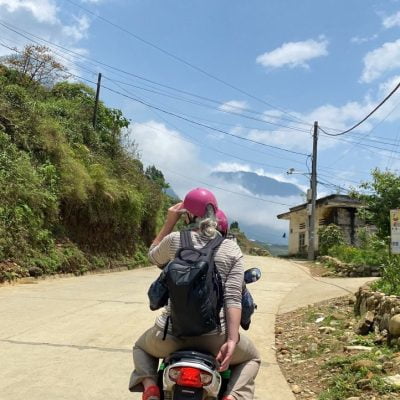
For many international visitors, an Easy Rider experience is a better alternative to self-driving. You sit behind an experienced local rider while the driver handles the road.
This allows you to concentrate on scenery and photography rather than navigation.
The format is particularly attractive for first-time visitors who want the motorcycle experience but are not comfortable riding mountain roads themselves.
Ha Giang by Private Car
A private car is another excellent option, particularly for families, older travelers and travelers who prioritize comfort.
You will not have exactly the same feeling as riding a motorcycle, but you can still stop at viewpoints, villages and markets while avoiding the physical demands and safety concerns of mountain riding.
For groups, a private car can also make the itinerary easier to customize.
Ha Giang by Jeep
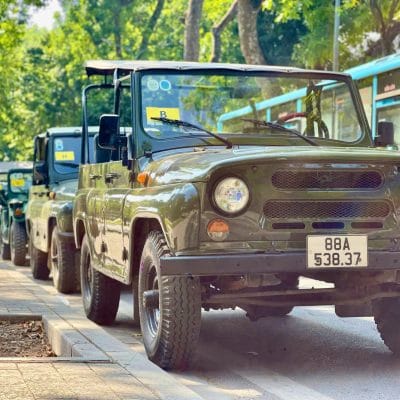
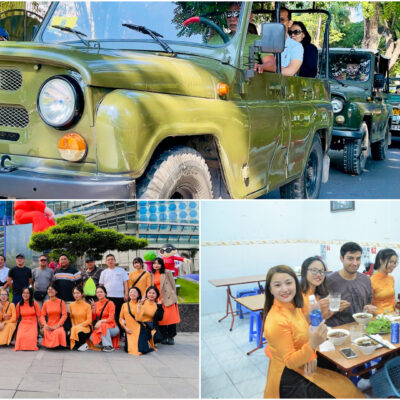
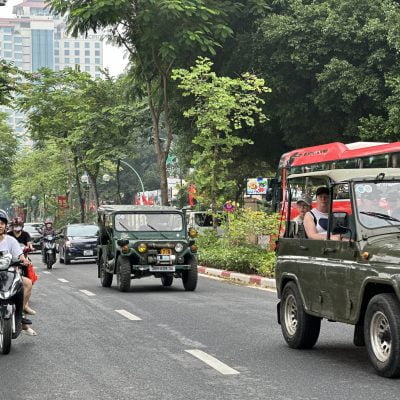
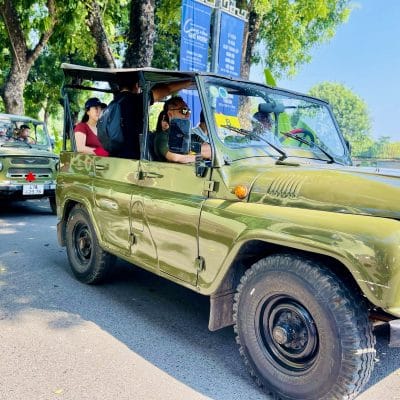
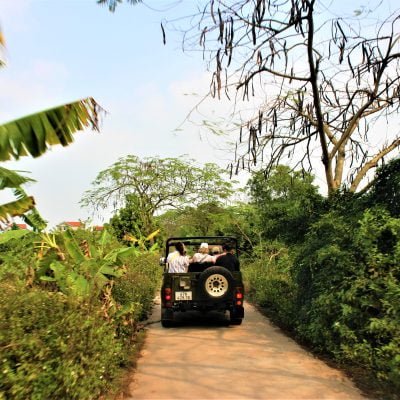
An open-air Jeep can be an interesting middle ground between a private car and a motorcycle. It provides excellent visibility and a sense of being outdoors while allowing passengers to travel together.
This is especially attractive for private groups who want the mountain-road experience without riding motorcycles themselves.
Best Time to Visit Ha Giang
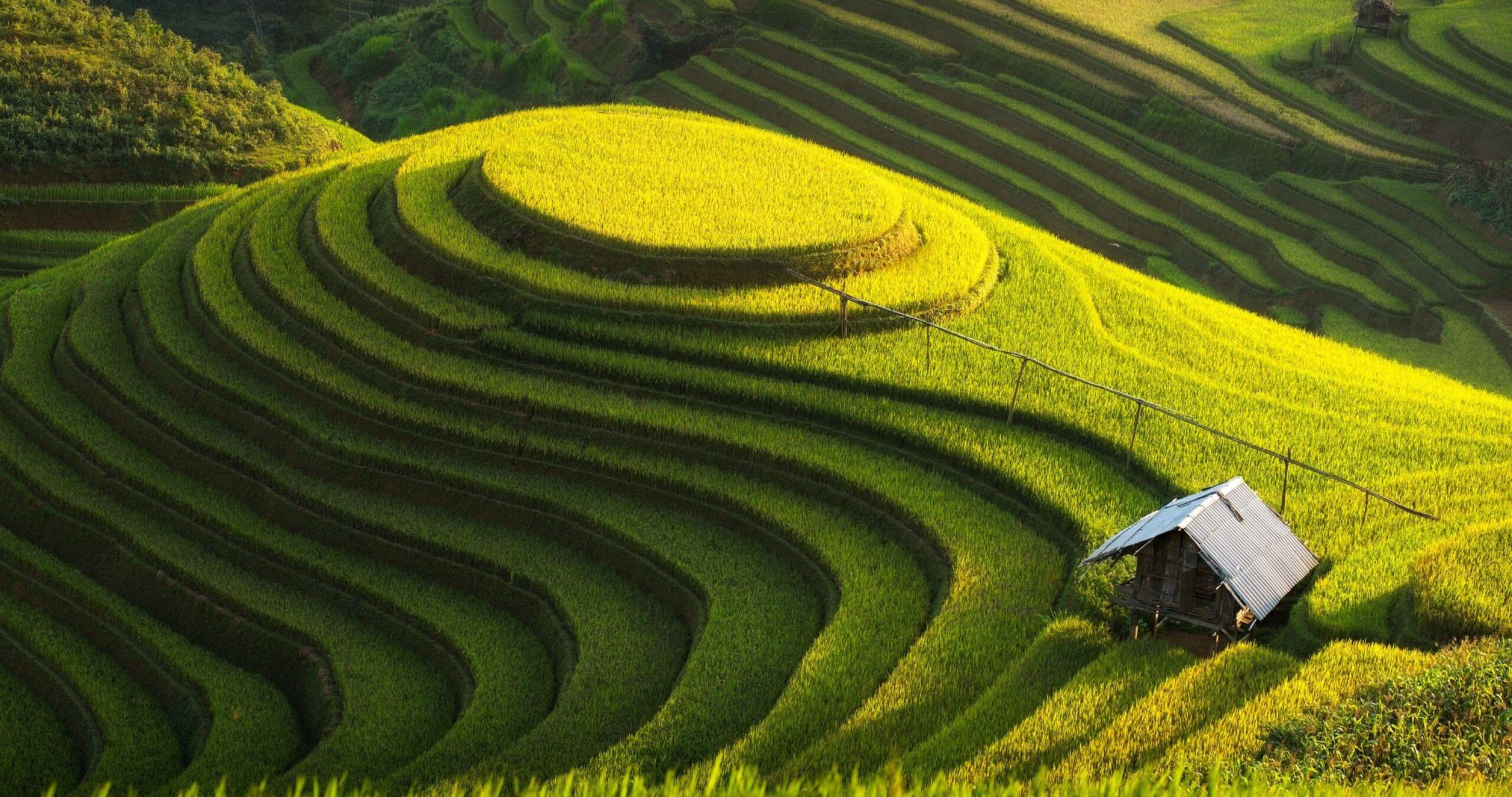
Ha Giang can be visited throughout the year, but the scenery changes dramatically by season. Official regional information notes that spring brings flowers, summer can make the terraces look like mirrors after planting, autumn brings golden rice fields and the later months can feature buckwheat and mustard flowers.
For travelers focused on mountain-road weather, March–May and September–November are commonly favored. For rice-terrace photography, September and October are particularly interesting. For buckwheat flowers, the later autumn period is often more attractive.
Ha Giang in Spring
Spring can bring flowering trees, mustard fields and comfortable temperatures. The mountains can feel fresh and green, while local communities prepare for a new agricultural cycle.
This is an excellent time for travelers who prioritize flowers and cultural events.
Ha Giang in Summer
Summer brings heavy greenery and full waterways, but also more frequent rain. The Nho Que River can be particularly impressive after the rains, and waterfalls around Du Gia can become stronger.
The downside is less predictable road weather. Heavy rain can reduce visibility and make mountain roads more difficult.
Ha Giang in Autumn
Autumn is one of the most popular periods because temperatures are generally more comfortable and rice fields can create golden landscapes.
For photographers, this is one of the strongest seasons.
Ha Giang in Winter
Winter can be cold and foggy, particularly at higher elevations. The mist can create beautiful atmospheric scenery but may also reduce visibility.
Bring proper warm layers if traveling during the colder months.
How Long Should You Spend in Ha Giang?
A 3-day Loop is the minimum I would recommend for a first visit. A 4-day itinerary is more comfortable and gives you time to slow down around Dong Van, Ma Pi Leng, Meo Vac and Du Gia. Travelers who want more walking, photography or local experiences can extend the trip to five days.
The key is not to measure the trip only in kilometers. A route covering fewer kilometers with more stops can be much more rewarding.
A Recommended 3-Day Ha Giang Route
A practical three-day Loop can run from Ha Giang City to Quan Ba and Yen Minh on Day 1, Dong Van and Ma Pi Leng on Day 2, then Meo Vac and Du Gia before returning toward Ha Giang on Day 3. This follows the broad structure used by many operators and current travel guides.
A Recommended 4-Day Ha Giang Route
A more relaxed four-day itinerary can spread the route so that you have more time around Quan Ba, Yen Minh, Dong Van, Ma Pi Leng, Meo Vac and Du Gia. This is the better choice for travelers who want to stop for photographs, local meals and village walks.
Ha Giang and Sapa
Sapa and Ha Giang are often combined, but they offer different experiences. Sapa is better known for rice-terrace trekking, Fansipan and accessible villages, while Ha Giang is stronger for mountain roads, karst scenery and multi-day road trips.
A Northern Vietnam itinerary including both can be excellent if you have at least a week beyond Hanoi.
Ha Giang and Halong Bay
Travelers with more time can also combine the mountains with the coast. A journey such as Hanoi → Ha Giang → Hanoi → Halong Bay provides a dramatic contrast between limestone mountains and limestone islands.
Because the road journeys are long, allow adequate time rather than trying to move directly from one remote region to another.
What to Pack for Ha Giang
Pack for mountain conditions rather than Hanoi weather. Comfortable shoes, layers, a rain jacket, sun protection, a small backpack and a power bank are essential. If you will be riding as a passenger, gloves and a windproof outer layer can make the journey much more comfortable.
Keep your main luggage manageable. A small day bag is easier to carry into homestays and during short walks.
Is Ha Giang Suitable for Families?
Yes, but the route should be adapted. Families with younger children may prefer private cars or Jeeps rather than motorcycles. Older children and teenagers who enjoy adventure may love the mountain scenery, markets and river experiences.
The most important consideration is not age alone but tolerance for several hours of mountain travel each day.
Is Ha Giang Suitable for Older Travelers?
Older travelers can enjoy Ha Giang, especially with private transportation and a relaxed itinerary. There is no rule saying that you must ride a motorcycle to experience the region.
A private car, comfortable hotel or homestay and shorter walking routes can make the destination accessible while preserving the scenery and cultural experiences.
Ha Giang for Couples
Couples can choose a private car, Jeep or Easy Rider journey depending on how adventurous they want to be. Four days is ideal because it allows more time for scenic stops, photography and quieter evenings in mountain villages.
A private itinerary also makes it easier to choose accommodation with mountain views or private rooms.
Ha Giang for Solo Travelers
Solo travelers can join small-group Loop experiences or use an Easy Rider for a more social trip.
The important thing is to choose a reputable operator and understand the route, accommodation and vehicle arrangement before departure.
Ha Giang for Luxury Travelers
Ha Giang is not a traditional luxury destination in the same way as Hanoi or Halong Bay, but a private itinerary can still be highly comfortable. Use private road transfers, quality accommodation, a private driver or Jeep and carefully selected homestays.
The luxury here comes more from privacy, flexibility and access than from five-star infrastructure.
How to Respect Local Communities
Travel slowly and behave as a guest rather than an observer. Ask permission before photographing people, avoid entering homes without invitation and buy local products directly when possible.
Choose local guides, family-run accommodation and restaurants when appropriate. These choices help ensure that tourism benefits the communities whose culture and landscape make Ha Giang special.
Why Ha Giang Should Be More Than a Motorcycle Trip
The motorcycle is a memorable way to see Ha Giang, but defining the destination only by riding misses half the story.
The region is also about markets, agriculture, family meals, architecture, ethnic traditions, rivers, waterfalls and mountain villages.
A strong itinerary combines movement with moments when you stop moving.
Final Thoughts
A Ha Giang Travel Guide should begin with the understanding that the destination is a journey rather than a single attraction. The famous Loop is built around the dramatic landscapes of Quan Ba, Yen Minh, Dong Van, Ma Pi Leng, Meo Vac and Du Gia, but the real experience comes from slowing down between those landmarks and paying attention to the people, villages and landscapes along the road.
For first-time visitors, allow 3–4 days for the Loop, travel with an experienced local driver when you are not confident on mountain roads, and leave room for unexpected stops. If you want the famous Ma Pi Leng views, Nho Que River, local markets and mountain communities without rushing, four days is the better choice.
Ha Giang is spectacular because it still feels like a living region rather than a collection of attractions.
Come for the mountain roads, stay for the landscapes, and remember the people and villages you meet along the way.
Explore Ha Giang With Vietnam Women Travel
For travelers looking for private and small-group experiences led by women, Ha Giang can be combined with Hanoi, Sapa, Cao Bang or Halong Bay into a flexible Northern Vietnam itinerary. A private journey can use a car, Jeep or experienced local driver depending on your preferred style, allowing more time for photography, village visits, markets and local meals.
The women-led format is suitable for couples, families, solo travelers and private groups, not only women travelers. For a first visit, combining Hanoi + Ha Giang + Sapa creates a particularly strong Northern Vietnam journey because each destination offers a different mountain experience.
Contact Vietnam Women Travel
VIETNAM WOMEN TRAVEL
Address: 91 Tho Nhuom Street, Hoan Kiem District, Hanoi, Vietnam
Phone / WhatsApp 24/7: +84 982 416 518
Second Contact: +84 981 090 989
Website: vietnamwomentravel.com
Private Northern Vietnam Tours Led By Women
Hanoi Tours Led By Women
Ha Giang Tours Led By Women
Sapa Tours Led By Women
Halong Bay Tours
Private & Small-Group Vietnam Experiences
Discover Ha Giang beyond the famous road—ride through the mountains, meet local communities, explore the valleys and experience Northern Vietnam with local women leading the journey.