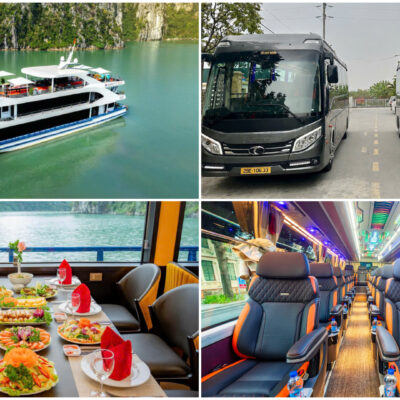

Hanoi to Halong Bay: How to Plan Your Trip
Traveling from Hanoi to Halong Bay is one of the easiest and most popular journeys in Northern Vietnam. The route takes you from the capital’s historic streets and busy food scene to a dramatic seascape of limestone islands, caves, beaches and emerald-colored water.
Hanoi is approximately 165 kilometers from Halong City, and modern road connections have made the journey much faster than it was in the past. Depending on the vehicle and traffic, a private car can take around 2.5–3 hours, while shuttle buses and limousines generally take around 3–3.5 hours. From Noi Bai International Airport, the journey is longer, at roughly 190 kilometers and around 3–4 hours by road.
For most visitors, the most important decision is not simply how to get from Hanoi to Halong Bay. It is how to combine the transfer with your cruise, how many nights to stay, which bay to visit, what activities to choose and how much time to allow between Hanoi and your boat departure.
This complete guide explains the practical details so you can build a comfortable Hanoi–Halong Bay itinerary without wasting time on unnecessary transfers.
Hanoi to Halong Bay at a Glance
| Option | Approx. Travel Time | Typical Cost | Best For |
|---|---|---|---|
| Private car | 2.5–3 hours | US$60–100 per car | Families, couples, private groups |
| Limousine / shuttle | 3–3.5 hours | US$15–30 per person | Most travelers |
| Local bus | 4–5 hours | US$5–10 | Budget travelers |
| Motorbike | 3–4 hours | Varies | Experienced riders |
| Seaplane | About 45 minutes | US$250–350 | Luxury travelers |
These are indicative ranges rather than fixed prices. Operators, travel dates, vehicle types and pickup arrangements can change the final cost.
How Far Is Hanoi to Halong Bay?
The distance from central Hanoi to Halong City is approximately 165 kilometers. Modern expressway connections make the journey relatively straightforward, with private vehicles often completing it in around 2.5–3 hours under normal traffic conditions.
If you are traveling from Noi Bai International Airport, allow more time. Vietnam Airlines currently lists the airport-to-Halong route at approximately 190 kilometers and 3–4 hours by road.
The final travel time is always influenced by traffic, weather, pickup locations and the exact cruise terminal.
How to Get From Hanoi to Halong Bay
There are several ways to reach Halong Bay, but four are particularly practical for most travelers:
Private car
Limousine or tourist shuttle
Local bus
Motorbike
A seaplane is an additional luxury option for travelers who value speed and aerial views more than budget.
1. Hanoi to Halong Bay by Private Car
A private car is the most comfortable and flexible option.
Current published estimates put a one-way private car from Hanoi to Halong City at around US$60–100, depending on vehicle type and service level. Travel time is generally around 2.5–3 hours.
The biggest advantage is door-to-door service. You can be picked up at your Hanoi hotel, leave at the time that matches your cruise and travel directly to the port.
This is particularly useful for:
Families with children
Couples
Private groups
Travelers with lots of luggage
Luxury travelers
Travelers who want a flexible schedule
For a group of four or five people, a private vehicle can also become surprisingly good value when the total price is divided among passengers.
2. Hanoi to Halong Bay by Limousine
For many travelers, a limousine shuttle offers the best balance between price and comfort.
Published 2026 guidance currently places typical fares around US$15–30 per person, with journey times of approximately 3–3.5 hours. Many services offer hotel pickup or pickup from central Hanoi.
Modern limousine vans are generally more comfortable than traditional buses and make fewer stops.
This is probably the best choice when you want a straightforward transfer without paying for a private car.
3. Hanoi to Halong Bay by Local Bus
The local bus is the cheapest option, with published fares around US$5–10 and travel times of approximately 4–5 hours. Common departure points include My Dinh and Gia Lam bus stations.
The downside is convenience.
You may need to get yourself to the bus station, make more stops and organize another transfer to the cruise port.
For an independent budget traveler, however, this is perfectly workable.
4. Hanoi to Halong Bay by Motorbike
Experienced riders can make the trip by motorbike in approximately 3–4 hours, depending on route and stops.
This gives you maximum independence, but it is not the easiest choice if you are carrying large luggage or connecting directly to a cruise.
Weather also matters. Rain, strong winds and wet road conditions can make the journey considerably less comfortable.
For first-time visitors, private transportation is generally much more practical.
5. Hanoi to Halong Bay by Seaplane
Travelers looking for a luxury experience can consider a seaplane transfer.
Published information currently gives a flight time of approximately 45 minutes and fares around US$250–350 per person, subject to availability and weather conditions.
The biggest attraction is not simply speed. The flight offers aerial views over the Red River Delta and limestone seascape.
This is a specialist luxury option rather than a practical choice for most travelers.
Should You Travel From Hanoi or Noi Bai Airport?
If you are already staying in central Hanoi, travel directly from your hotel.
If you are landing at Noi Bai International Airport and immediately continuing to Halong Bay, arrange an airport transfer rather than going into Hanoi first. This can save several hours.
Airport-to-Halong travel currently takes around 3–4 hours by road.
However, if you have just arrived after a long international flight, consider staying in Hanoi for at least one night before starting the cruise. This reduces the risk of missing your boat because of flight delays.
How Long Should You Spend in Halong Bay?
For most first-time visitors, the best choice is a 2-day, 1-night cruise.
This gives you enough time to:
See the limestone islands
Visit a cave or viewpoint
Try kayaking or another water activity
Watch sunset
Enjoy dinner on board
Wake up for sunrise
Return to port the following day
A 3-day, 2-night cruise works better for travelers who want a slower itinerary and more time for kayaking, swimming, beaches or less visited parts of the bay.
Is a Day Trip From Hanoi to Halong Bay Worth It?
A day trip is possible, but it is not the most relaxing option.
You would spend several hours traveling to and from Hanoi and only have a limited amount of time on the water.
For travelers with only one free day, a day cruise can still provide an introduction to the landscape.
But when your schedule allows it, an overnight cruise is substantially better because the scenery looks completely different around sunset, sunrise and midday.
Why Stay Overnight on a Cruise?
Halong Bay is not simply a single viewpoint. The experience changes throughout the day.
Morning light creates long shadows across the limestone islands. Midday reveals the scale of the karst landscape. Sunset changes the atmosphere again, while early morning often brings calmer water and softer light.
An overnight cruise gives you time to experience all of these moments.
Halong Bay vs Lan Ha Bay
Travelers often compare Halong Bay and Lan Ha Bay.
Halong Bay is the iconic destination and offers the classic limestone-island scenery that most visitors associate with Northern Vietnam.
Lan Ha Bay, near Cat Ba, offers similar karst landscapes and can be attractive to travelers looking for kayaking, beaches and a somewhat different cruise environment.
The right choice should depend on the actual cruise itinerary, not simply which bay has the more famous name.
Halong Bay vs Bai Tu Long Bay
Bai Tu Long Bay is another alternative for travelers interested in a quieter cruise experience.
Vietnam Airlines currently describes travel to Bai Tu Long as involving a transfer from Hanoi to Halong City and then onward to Hon Gai Port for boats entering the bay.
When comparing cruises, look at how much time the boat actually spends away from the main port and what activities are included.
What Are the Main Things to Do in Halong Bay?
A good cruise itinerary may include:
Kayaking
Cave visits
Swimming
Island visits
Sunset viewing
Sunrise photography
Cooking demonstrations
Squid fishing or other evening activities
Not every cruise includes all of these, so read the itinerary carefully before booking.
Kayaking in Halong Bay
Kayaking is one of the best ways to appreciate the scale of the limestone formations.
From a large cruise ship, you see the landscape from above water level. From a kayak, you are much closer to the cliffs, small beaches and caves.
Choose a cruise that gives you meaningful kayaking time rather than simply a short photo stop.
Visiting Caves
Many Halong Bay cruises include a cave visit.
The cave systems are characterized by stalactites, stalagmites and large chambers created through geological processes over long periods.
Some caves require stairs and walking, so travelers with mobility limitations should ask about accessibility before booking.
Titop Island
Titop Island is one of the well-known stops in Halong Bay. It combines a small beach with an elevated viewpoint reached by a stair climb.
The climb involves more than 400 steps, but the panorama from above provides a wide view over the surrounding karst islands.
For travelers who enjoy photography and don’t mind stairs, it can be a worthwhile stop.
Beaches and Swimming
Some cruises include swimming opportunities at beaches or quieter coves.
Water conditions depend heavily on weather and season, so don’t choose a cruise purely on the promise of swimming.
Kayaking and sightseeing may remain the highlights even when conditions are not suitable for swimming.
Sunrise in Halong Bay
For photographers, sunrise is one of the best reasons to stay overnight.
The early morning light can create soft reflections across the water and illuminate the karst islands from a completely different angle.
Even travelers who normally dislike early mornings often find the experience worthwhile.
Sunset in Halong Bay
Sunset is another advantage of an overnight cruise.
As the sun drops, the limestone islands become silhouettes and the water often becomes calmer.
Choose an outdoor deck or balcony when possible.
What Is the Best Time to Visit Halong Bay?
Halong Bay can be visited throughout the year, but weather changes considerably by season.
March–May: generally favorable for comfortable sightseeing.
June–August: hot and humid, with greater risk of heavy rain and tropical storms.
September–November: often attractive for cooler conditions and clearer skies.
December–February: cooler, sometimes hazy or misty.
There is no universally perfect season because some travelers prefer bright skies while others enjoy misty winter scenery.
Can Weather Cancel a Halong Bay Cruise?
Yes. Weather conditions, especially storms and strong winds, can affect cruise operations.
Because Halong Bay is a marine destination, cruise schedules can sometimes change at short notice.
This is another reason to avoid arranging an international flight immediately after your cruise without sufficient buffer time.
What Should You Pack for Halong Bay?
Bring:
Light, comfortable clothing
Swimwear
Sun protection
Sunglasses
Light jacket
Comfortable walking shoes
Small day bag
Motion-sickness medication if necessary
Waterproof protection for electronics
A light jacket is particularly useful during cooler months or on windy evenings.
What to Wear on a Halong Bay Cruise
During the day, comfortable casual clothing is usually appropriate.
Bring swimwear if your cruise includes swimming.
For cave visits and island climbs, wear comfortable shoes with good grip.
For photographs at sunrise or on the upper deck, bring an extra layer because it can feel cooler on the water.
What Food Is Served on Halong Bay Cruises?
Most cruises serve Vietnamese and international meals, often as set menus or buffets depending on the vessel.
Seafood naturally plays an important role, although menus vary considerably.
Travelers with allergies or dietary requirements should notify the cruise company before departure rather than assuming suitable options will automatically be available.
Vegetarian Food on Halong Bay Cruises
Vegetarian meals are generally available with advance notice.
Tell the cruise operator exactly what you need, particularly if you avoid fish sauce, seafood, eggs or dairy.
For strict vegan diets, communicate requirements in advance and confirm them again at boarding.
Hanoi to Halong Bay With a Private Transfer
Combining a private Hanoi-to-Halong transfer with an overnight cruise is one of the simplest ways to plan the journey.
For example:
8:00 AM: Hotel pickup in Hanoi.
10:30–11:00 AM: Arrive in Halong area.
11:30–12:00: Cruise check-in.
Afternoon: Lunch and first activities.
Evening: Sunset, dinner and overnight cruise.
Exact boarding times vary by cruise operator.
What Time Should You Leave Hanoi?
For a typical overnight cruise, an early morning departure is essential because cruise check-in is generally around late morning or midday.
A useful rule is to leave Hanoi around 7:00–8:00 AM, depending on your port and cruise schedule.
Never rely on a late departure simply because the road journey itself takes only three hours. Cruise check-in has a fixed window.
Can You Go From Sapa to Halong Bay Directly?
Yes, but it requires careful coordination because Sapa is much farther from Halong Bay than Hanoi is.
Many travelers travel:
Sapa → Hanoi → Halong Bay
because Hanoi functions as the main transportation hub.
Private transfers can sometimes arrange direct Sapa-to-Halong transportation, but this becomes a long travel day.
If your schedule allows, returning to Hanoi before the cruise is easier.
Can You Go From Ha Giang to Halong Bay Directly?
It is possible by private road transfer, but the journey is long.
For many travelers, the more comfortable route is:
Ha Giang → Hanoi → Halong Bay
This provides a recovery period after the mountain journey.
Hanoi + Halong Bay: Best Short Itinerary
For travelers with only 3 days, use:
Day 1: Hanoi.
Day 2: Hanoi → Halong Bay overnight cruise.
Day 3: Halong Bay → Hanoi.
This gives you one full city day and one overnight cruise.
Hanoi + Halong Bay: 4-Day Itinerary
Day 1: Hanoi Old Quarter and Hoan Kiem Lake.
Day 2: Hanoi cultural attractions and food.
Day 3: Hanoi → Halong Bay cruise.
Day 4: Halong Bay → Hanoi departure.
This is a much more comfortable first introduction.
Hanoi + Halong Bay + Ninh Binh
Travelers with 5–6 days can combine all three.
Days 1–2: Hanoi.
Day 3: Ninh Binh.
Day 4: Ninh Binh → Halong Bay.
Day 5: Halong Bay cruise → Hanoi.
This creates a strong combination of city + countryside + seascape.
Hanoi + Halong Bay + Sapa
For a longer Northern Vietnam itinerary:
Days 1–2: Hanoi.
Days 3–4: Sapa.
Days 5–6: Halong Bay.
Day 7: Return to Hanoi.
Sapa and Halong Bay are very different, which is exactly why the combination works well.
Hanoi + Halong Bay + Ha Giang
For adventurous travelers, use at least 8–10 days.
Hanoi → Ha Giang → Hanoi → Halong Bay → Hanoi
The mountain section requires several days, while the cruise adds a completely different environment.
Hanoi to Halong Bay for Couples
Couples often benefit from a private transfer because it avoids shared pickup schedules and allows direct hotel-to-port transportation.
For the cruise itself, consider:
Private balcony cabin
2-day, 1-night itinerary
Kayaking
Sunset viewing
Sunrise photography
A private transfer also makes the beginning and end of the cruise much more relaxed.
Hanoi to Halong Bay for Families
Families should prioritize a cruise with comfortable cabins, suitable food and a manageable number of activities.
A private transfer from Hanoi is particularly convenient because you can leave the hotel at a predictable time and keep luggage together.
For younger children, check the cruise’s safety policies before booking.
Hanoi to Halong Bay for Seniors
Seniors should compare cruises based on walking distance, stair requirements and cabin accessibility.
A private car transfer is usually more comfortable than a shared bus, particularly if you have significant luggage.
For cave and island activities, ask how many stairs and how much walking are involved.
Hanoi to Halong Bay for Photographers
Photographers should prioritize:
Sunrise
Sunset
Open-deck viewing areas
Balcony cabins
Kayaking
Less crowded routes
The bay changes considerably according to light and weather, so having time on the water matters more than simply checking off an attraction.
Hanoi to Halong Bay for Luxury Travelers
Luxury travelers can choose a private car, premium cruise cabin and potentially a seaplane transfer.
A seaplane currently takes roughly 45 minutes from Hanoi’s area to Halong Bay and offers aerial views, but costs around US$250–350 per person according to current published estimates.
For most luxury travelers, the private road transfer plus premium cruise is a better value, while the seaplane works as a special experience.
Is Halong Bay Worth Visiting?
Yes, particularly if you have never experienced a large limestone-karst seascape.
The combination of water, cliffs, caves, islands and changing light is genuinely distinctive.
The main question is not whether Halong Bay is worth visiting, but which cruise itinerary will give you the type of experience you want.
How to Choose a Halong Bay Cruise
Don’t choose only by price.
Compare:
Departure port
Bay or route
Cabin size
Cabin location
Number of passengers
Kayaking time
Cave visits
Meals
Transfer service
Cancellation policy
Weather policy
A cheaper cruise can sometimes spend much less time on the activities you actually care about.
Large Cruise vs Boutique Cruise
A larger vessel may offer more facilities, restaurants and entertainment.
A smaller boutique cruise can feel more intimate and may suit travelers who prioritize scenery and a quieter atmosphere.
For couples, boutique ships are often attractive.
For families and groups, larger vessels may offer more facilities.
Day Cruise vs Overnight Cruise
Choose a Day Cruise
When your schedule is extremely limited.
Choose an Overnight Cruise
When you want sunset, sunrise, dinner on board and a slower experience.
For first-time visitors, overnight is the better choice.
What About a 3-Day, 2-Night Cruise?
Choose a 3-day cruise when you enjoy slower travel and want more time away from the main port.
It can be especially useful for travelers who want more kayaking, beaches and quiet scenery.
However, don’t assume longer automatically means better. Compare the actual route.
Common Hanoi to Halong Bay Planning Mistakes
Leaving Hanoi Too Late
Cruise check-in has a fixed time.
Booking a Cruise Without Transfer
You then have to coordinate port arrival yourself.
Choosing Only by Price
Cheap cruises can have less attractive cabins and shorter activity periods.
Booking an International Flight Immediately After the Cruise
Weather can delay cruise schedules.
Treating Halong Bay as One Single Route
Different cruises visit different areas.
Carrying Too Much Luggage
A small suitcase or organized luggage makes boat transfers easier.
Suggested Hanoi to Halong Bay Packing List
Passport
Phone and charger
Swimsuit
Light jacket
Walking shoes
Sunscreen
Camera
Medicine
Small overnight bag
If you are continuing to another destination after the cruise, confirm whether the cruise company can store larger luggage.
Hanoi to Halong Bay Travel Budget
A realistic transport-only budget might look like:
Local bus: around US$5–10.
Limousine: around US$15–30.
Private car: around US$60–100.
Seaplane: around US$250–350.
The cruise itself is separate and can range widely depending on cabin category, duration, vessel and included activities.
When comparing complete packages, check whether Hanoi transportation is included.
Best Overall Hanoi to Halong Bay Option
For most travelers, the best combination is:
Private or premium shuttle transfer + 2-day, 1-night cruise.
This offers enough comfort, sightseeing time and convenience without making the journey unnecessarily expensive.
For budget travelers, use a shared limousine.
For families and private groups, use a private car.
For luxury travelers, consider a premium cruise and potentially a seaplane.
Final Thoughts
Planning a Hanoi to Halong Bay trip is relatively straightforward because the modern road connection makes the journey much easier than it once was. Central Hanoi is approximately 165 kilometers from Halong City, with private cars often taking around 2.5–3 hours and limousine services around 3–3.5 hours.
The bigger decision is how you organize the entire experience.
For first-time visitors, plan at least one overnight on a cruise. Leave Hanoi early enough to meet the cruise’s boarding time. Choose the bay and itinerary according to your interests rather than simply choosing the cheapest boat. And leave some flexibility around the weather.
A good Northern Vietnam itinerary might look like:
Hanoi → Halong Bay → Hanoi
or, with more time:
Hanoi → Sapa → Halong Bay
or:
Hanoi → Ninh Binh → Halong Bay → Hanoi
Don’t treat Halong Bay as just another day trip. Give the bay time to change from morning mist to afternoon sunlight, sunset silhouettes and a quiet sunrise on the water.
Explore Hanoi and Halong Bay With Vietnam Women Travel
For travelers looking for private and small-group experiences led by women, Hanoi and Halong Bay can be combined into a flexible Northern Vietnam itinerary.
A private journey can begin with Hanoi’s Old Quarter, local food and city sightseeing before continuing by private vehicle to Halong Bay for an overnight cruise. The itinerary can also be extended to Sapa, Ha Giang or Ninh Binh, depending on how many days you have.
A women-led itinerary is suitable for couples, families, solo travelers and private groups, rather than being limited to women-only travel.
Contact Vietnam Women Travel
VIETNAM WOMEN TRAVEL
Address: 91 Tho Nhuom Street, Hoan Kiem District, Hanoi, Vietnam
Phone / WhatsApp 24/7: +84 982 416 518
Second Contact: +84 981 090 989
Website: vietnamwomentravel.com
Private Northern Vietnam Tours Led By Women
Hanoi Tours Led By Women
Sapa Tours Led By Women
Ha Giang Tours Led By Women
Halong Bay Tours
Private & Small-Group Vietnam Experiences
Start in Hanoi, travel comfortably to the coast and experience Halong Bay at its best—from limestone islands and hidden caves to sunset, sunrise and quiet moments on the water.