Hanoi to Sapa: Complete Travel Guide
Traveling from Hanoi to Sapa is one of the most popular journeys in Northern Vietnam. The route takes you from the historic capital into the mountains of Lao Cai Province, where rice terraces, ethnic villages, cool weather and dramatic landscapes replace Hanoi’s busy streets.
The distance is roughly 315 kilometers by road, but the actual travel experience depends heavily on your chosen transport. A modern limousine or sleeper bus can reach Sapa in around 5.5–6.5 hours, while the overnight train takes you to Lao Cai, followed by another 45–60 minutes by road to Sapa. Private cars offer greater flexibility and can take around 4.5–5.5 hours in favorable conditions.
For most visitors in 2026, the daytime limousine bus is the simplest option, while the overnight train is a better choice for travelers who enjoy rail journeys or prefer not to spend the daytime traveling. A private car is especially attractive for couples, families and small groups that want door-to-door service and flexible stops.
Hanoi to Sapa at a Glance
| Option | Approx. Time | Typical Cost | Best For |
|---|---|---|---|
| Limousine bus | 5.5–6.5 hours | US$13–18 one way | Most travelers |
| Sleeper bus | 5.5–6.5 hours | US$11–15 | Budget travelers |
| Overnight train + transfer | 8.5–9.5 hours total | US$22–65+ | Train lovers |
| Private car | 4.5–5.5 hours | From about US$130/car | Families & private groups |
| Motorbike | 7–9+ hours | Varies | Experienced riders |
Actual schedules and fares vary by operator and travel date, so check the service you are booking immediately before departure. Current 2026 transport guides show substantial variation between vehicle types and operators.
Where Is Sapa?
Sapa is a mountain town in northern Lao Cai Province, close to the Chinese border. It sits at roughly 1,500 meters above sea level and is surrounded by the Hoang Lien Son mountain range.
The town itself is only part of the experience. Most travelers visit Sapa as a base for exploring Muong Hoa Valley, rice terraces, ethnic villages and Fansipan, Vietnam’s highest mountain.
The elevation also means the climate can feel very different from Hanoi.
How Far Is Hanoi to Sapa?
The road distance between central Hanoi and Sapa is approximately 315 kilometers. The route effectively has two sections: a long expressway journey toward Lao Cai followed by a winding mountain road up to Sapa.
That final mountain section is important. Even after making excellent time on the expressway, the last stretch can take around an hour and includes winding roads and elevation gain.
This is why a journey that looks relatively short on a map can still take most of a day.
How to Get From Hanoi to Sapa
There are four practical choices:
Limousine or sleeper bus
Overnight train + Lao Cai transfer
Private car
Motorbike
For most international travelers, the first three are the most practical.
1. Hanoi to Sapa by Limousine Bus
The limousine van is currently one of the most convenient ways to travel from Hanoi to Sapa. Modern services generally use comfortable seated vans or premium minibuses and travel along the Hanoi–Lao Cai expressway.
Current 2026 information puts the journey at around 5.5–6 hours, with typical one-way fares around US$13–18, depending on the operator and vehicle. Some services offer Old Quarter pickup or central Hanoi departure points.
Why Choose a Limousine Bus?
The biggest advantage is efficiency.
You leave Hanoi in the morning, spend several hours on the road and can arrive in Sapa around midday or early afternoon. That gives you time to check into your hotel, have lunch and begin exploring the town on the same day.
For most travelers with limited vacation time, this is the best balance between price, comfort and travel time.
Typical Daytime Schedule
Current services commonly operate morning and afternoon departures, although exact times vary. 2026 schedules show departures from approximately the early morning through late afternoon, with many morning services reaching Sapa around late morning or early afternoon.
For a first visit, a departure around 6:30–8:00 AM is particularly useful because you can reach Sapa with a substantial part of the day remaining.
2. Hanoi to Sapa by Sleeper Bus
Sleeper buses are another popular option, especially among budget travelers.
The journey typically takes around 5.5–6.5 hours, similar to other road services, but the seats are designed for reclining or sleeping.
The main advantage is that overnight services can save a hotel night.
The main disadvantage is arrival time. Some night buses reach Sapa in the early morning, sometimes around 3:00–5:30 AM depending on the service.
That can create an awkward gap between arriving and being able to check into your hotel.
Should You Take a Sleeper Bus?
Choose it if:
You are traveling on a budget.
You sleep reasonably well on buses.
You want to maximize daytime sightseeing.
Avoid it when:
You are a light sleeper.
You get motion sickness.
You don’t have early check-in arranged.
For many travelers, a daytime limousine is worth paying a little more for.
3. Hanoi to Sapa by Train
The train does not go directly to Sapa.
This is one of the most important details first-time travelers need to know.
The train travels from Hanoi Railway Station to Lao Cai, which is around 35 kilometers from Sapa. You then continue from Lao Cai to Sapa by shuttle, taxi or private vehicle. The additional road transfer generally takes around 45–60 minutes, making the overall journey roughly 8.5–9.5 hours including the connection.
Typical Overnight Train
Current 2026 schedules include overnight services such as:
SP1: around 9:35 PM Hanoi → 5:30 AM Lao Cai.
SP3: around 10:00 PM Hanoi → 6:05 AM Lao Cai.
Exact timetables can change, so verify your departure date before booking.
Train Ticket Classes
The choice ranges from basic state-operated sleepers to private tourist carriages.
A basic shared sleeper can be relatively inexpensive, while upgraded private cabins can cost considerably more. Current 2026 guides show private 4-berth tourist cabins around US$45–65 one way, with premium options priced higher.
Is the Train Better Than the Bus?
Choose the train when you:
Prefer sleeping on a train.
Want to save a hotel night.
Dislike long mountain-road journeys.
Are traveling with children and want a different travel experience.
Choose the bus when your priority is speed and simplicity.
The train is more of an experience, while the bus is usually the more efficient transport solution.
4. Hanoi to Sapa by Private Car
A private car is the most flexible road option.
Current 2026 estimates place a private 4-seat car at roughly US$130–180 one way, with larger vehicles costing more. Travel time can be around 4.5–5.5 hours, depending on traffic, stops and road conditions.
The big advantage is flexibility.
You can choose your departure time, travel directly from your hotel and stop for food, coffee or photographs along the way.
For a couple, family or small private group, the higher price can become reasonable once divided among several travelers.
Why Private Car Can Be Worth It
A private car is particularly useful when:
You have lots of luggage.
You are traveling with children.
You want hotel-to-hotel transportation.
You need flexibility with departure times.
You want to make photography or meal stops.
You prefer not to share a vehicle with strangers.
For premium private travel, it is usually the most comfortable road option.
5. Hanoi to Sapa by Motorbike
Experienced riders can travel overland by motorbike, but this is a completely different experience from taking a bus or private car.
A direct motorcycle journey can take approximately 7–9 hours or more, depending on the route and stops, and some travelers choose to split it across two days.
This option is best for riders who are genuinely comfortable with long-distance travel in Vietnam.
It should not be treated as simply a cheaper alternative to the bus.
Traffic, weather, road conditions and mountain riding all require experience.
Is It Safe to Ride a Motorbike From Hanoi to Sapa?
For an experienced rider with the correct legal documentation, protective equipment and good road awareness, it can be an adventurous journey.
For inexperienced international riders, it is generally more sensible to travel by private vehicle or ride as a passenger with an experienced local driver.
The final road section into Sapa is winding and mountainous, and rain or fog can reduce visibility.
Hanoi to Sapa From Noi Bai Airport
You can also travel directly from Noi Bai International Airport to Sapa instead of going into central Hanoi first.
This makes sense for travelers landing in Hanoi and immediately continuing north.
Private transfers and some bus services can arrange airport pickup, but always confirm the exact pickup location before booking because airport procedures and pickup points vary.
For international arrivals, allow sufficient time for immigration, baggage collection and meeting your driver.
Should You Stay in Hanoi Before Going to Sapa?
For most first-time visitors, yes.
Hanoi deserves at least 2–3 nights before moving into the mountains because the city offers a completely different side of Northern Vietnam.
It is also easier to recover from jet lag in Hanoi than immediately combining a long international arrival with a mountain journey.
A strong sequence is:
Arrive Hanoi → explore Hanoi → travel to Sapa → continue through Northern Vietnam.
Best Time to Travel From Hanoi to Sapa
The best time depends on what you want to do in Sapa.
Sapa Tourism Office recommends March to May and August to October as particularly favorable periods, with April and September especially attractive for outdoor activities and scenery.
However, there is no single perfect month for everyone.
March to May
Spring brings generally comfortable conditions for trekking and outdoor activities.
Temperatures are usually pleasant, and the mountain environment becomes greener.
June to August
The landscape can be intensely green, but summer is also wetter.
Rain can affect trekking conditions, visibility and mountain-road travel.
Sapa’s tourism information notes that rainfall is concentrated particularly from May through August.
September to October
This is an excellent period for travelers interested in rice terraces and mountain photography.
Harvest-season scenery can be spectacular, although the exact appearance of the terraces depends on local agricultural timing and weather.
November to February
Sapa becomes much colder and can be foggy. Temperatures can sometimes fall below freezing in winter, particularly during colder periods.
For some travelers, the misty atmosphere is part of the appeal. For others, limited visibility may be disappointing.
Best Time of Day to Leave Hanoi
For most visitors, early morning is the most practical departure time.
Leaving around 6:30–8:00 AM can put you in Sapa around midday, depending on the service and traffic. Current 2026 transport schedules support this general timing.
That gives you enough time for lunch, check-in and a short afternoon activity.
An evening departure works when you deliberately want to travel overnight.
How Long Should You Stay in Sapa?
A practical minimum is 2 nights.
A better itinerary is 3 nights if trekking is important.
For example:
Day 1: Hanoi → Sapa.
Day 2: Full-day trekking.
Day 3: Fansipan or another valley excursion.
Day 4: Sapa onward to your next destination.
Trying to squeeze all of Sapa into one night often makes the trip feel rushed.
Best Things to Do in Sapa
Sapa is not just about the town itself.
Top experiences include:
Muong Hoa Valley
Rice-terrace trekking
Ta Van Village
Lao Chai
Cat Cat Village
Fansipan
Local markets
Mountain-view cafés
The strongest itineraries combine one major scenic activity with time to simply enjoy the mountain environment.
Trekking From Sapa
Trekking is one of the main reasons travelers make the journey from Hanoi to Sapa.
Routes can vary from short walks through villages to full-day mountain hikes.
Tell your guide your fitness level honestly. A route that looks easy on a map can involve steep climbs, muddy paths and uneven terrain.
Good hiking shoes become particularly important during wet weather.
Muong Hoa Valley
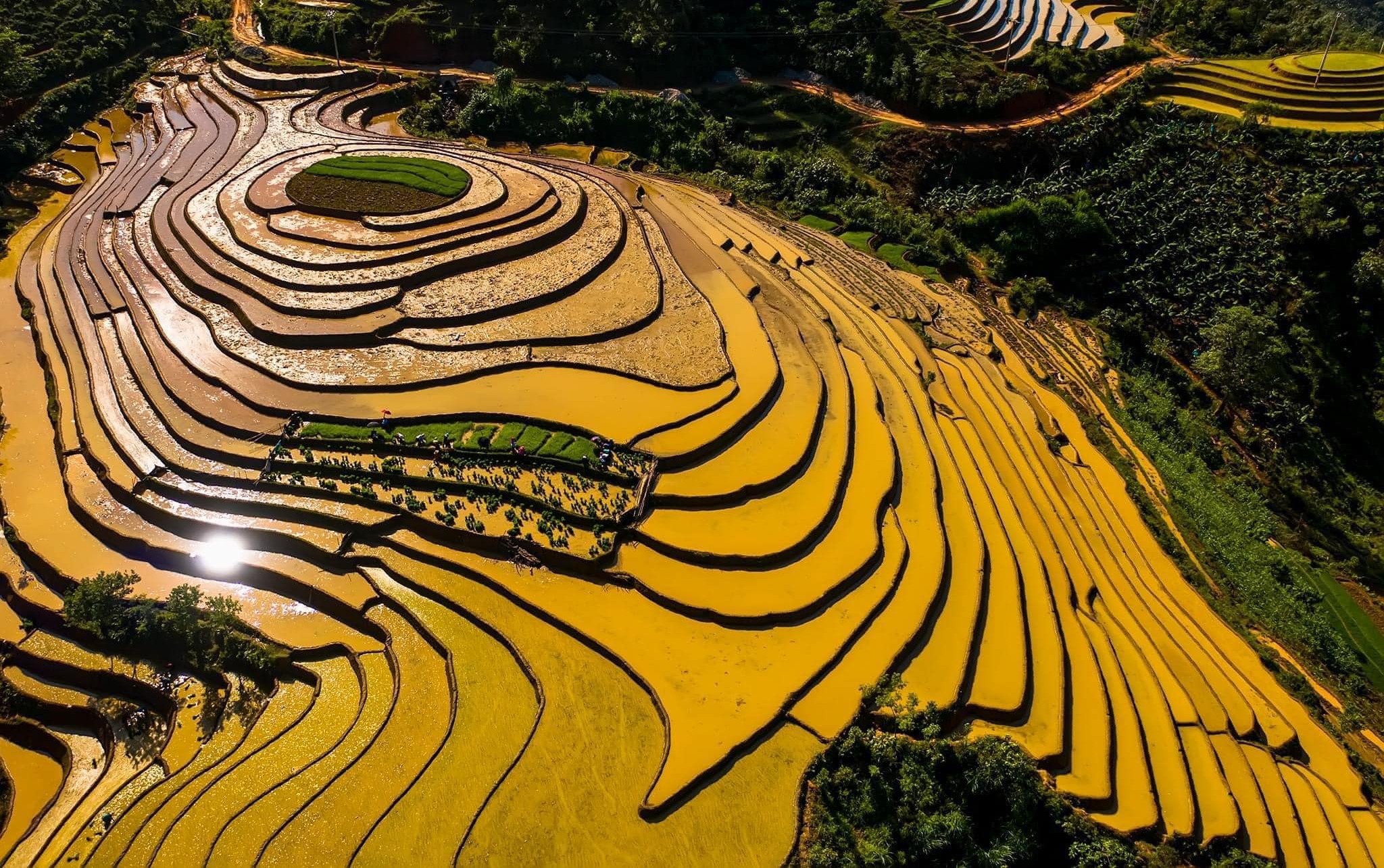
Muong Hoa Valley is one of Sapa’s most famous landscapes, with layered rice terraces running across the surrounding hills.
The valley is especially beautiful when the terraces are green or golden, but mist and seasonal changes can make the scenery different every time you visit.
A private trekking guide can help adjust the walking route around weather and fitness.
Ta Van and Lao Chai Villages
The villages around Muong Hoa Valley are among the best places to combine landscapes with local cultural experiences.
Walking through the countryside gives you a better sense of agricultural life than staying only in Sapa town.
Some travelers choose homestays in the valley for a more immersive experience.
Cat Cat Village
Cat Cat Village is one of the easiest cultural attractions to reach from central Sapa.
It has become more developed for tourism than some remote villages, but it remains convenient for travelers with limited time.
For a quieter experience, ask a local guide about alternative village routes.
Fansipan
At 3,143 meters, Fansipan is Vietnam’s highest mountain.
Travelers can reach the summit area using a cable car, while experienced trekkers can choose hiking routes.
The Sapa Tourism Office notes that the most favorable period for Fansipan experiences often extends from late September into early spring, while conditions can vary considerably by day.
Clouds can transform the view completely, so don’t be disappointed if the summit is misty.
Hanoi to Sapa for Couples
Couples often benefit from a private car or premium limousine.
A comfortable itinerary might be:
Day 1: Private transfer Hanoi → Sapa.
Day 2: Private trekking experience.
Day 3: Fansipan + mountain-view café.
Day 4: Continue to Hanoi or another Northern destination.
A private vehicle allows you to stop for photographs and avoid rigid group schedules.
Hanoi to Sapa for Families
Families generally benefit from private transportation.
Children may find six hours on a bus easier than a long overnight train, although this depends on age and personality.
If traveling with young children, consider staying at least three nights in Sapa so you don’t spend the entire trip moving between hotels.
Hanoi to Sapa for Seniors
For older travelers, comfort and accessibility should be prioritized.
A private car minimizes transfers, while a premium limousine can be a good alternative for travelers comfortable with a shared vehicle.
Trekking should be adapted to fitness level rather than selected solely because it is a famous route.
Hanoi to Sapa for Solo Travelers
Solo travelers usually choose between a limousine bus and train.
The limousine is efficient and economical.
The train provides a more social travel experience and saves a night in Hanoi.
Once in Sapa, joining a small-group trekking experience can help solo travelers explore the valleys more comfortably.
Hanoi to Sapa for Photographers
Photographers should consider traveling during late summer to autumn if rice terraces are a major priority.
The journey itself can also produce good images, particularly during the final mountain climb toward Sapa.
A private car is ideal when photography is a priority because you can stop at viewpoints that buses may simply pass.
What to Pack for Hanoi to Sapa
Don’t pack only for Hanoi.
Bring:
Comfortable walking shoes
A light rain jacket
Warm layers
Sun protection
Small backpack
Power bank
Reusable water bottle
Basic medication
Extra socks
Mountain weather can change quickly.
Do You Need Warm Clothes?
Yes, depending on the season.
Even when Hanoi is warm, Sapa can feel cool, particularly in the evening or during winter.
In the colder months, bring a proper jacket rather than assuming a light sweater will be sufficient.
Sapa Tourism Office notes that winter temperatures can fall very low and that fog is common during the colder season.
What to Eat in Sapa
Sapa has both Vietnamese and local mountain specialties.
Try grilled pork, grilled vegetables, local sausages, salmon or sturgeon dishes, sticky rice and regional vegetables.
For breakfast, you can still find familiar Vietnamese dishes such as phở and bánh mì.
For a richer cultural experience, eat at a local market or family-run restaurant rather than limiting yourself to hotel dining.
Hanoi vs Sapa Food
Hanoi is the stronger destination for classic Northern street food such as:
Phở
Bún chả
Bánh cuốn
Chả cá
Bún đậu
Sapa offers a more mountainous food culture, with local ingredients and dishes associated with highland communities.
Try both rather than expecting Sapa to duplicate Hanoi cuisine.
Is a Hanoi to Sapa Day Trip Possible?
Technically, transportation can get you between Hanoi and Sapa in around six hours each way, but that means approximately 12 hours on the road for a round trip before you have any meaningful time to explore.
A day trip is therefore not recommended.
Stay at least one night, and preferably two or more.
Hanoi to Sapa and Back in Two Days
A two-day trip is possible but rushed.
You could leave Hanoi early on Day 1, explore Sapa in the afternoon and trek on Day 2 before returning to Hanoi.
For a better experience, add another night.
Hanoi to Sapa and Ha Giang
Many travelers want to combine Sapa and Ha Giang because both provide mountain scenery but in very different ways.
Sapa is stronger for trekking and rice terraces.
Ha Giang is stronger for mountain-road scenery and the famous loop.
A good combined itinerary takes around 6–8 days including Hanoi, rather than trying to cram both mountain destinations into three or four days.
Hanoi to Sapa and Halong Bay
This is one of the most popular Northern Vietnam combinations.
Hanoi + Sapa + Halong Bay gives you:
City culture.
Mountain landscapes.
Trekking.
Limestone islands and a cruise.
For a first-time Northern Vietnam trip, this is an excellent combination over roughly 7–9 days.
Hanoi to Sapa by Private Tour
A private tour is particularly convenient when Sapa is only one part of a larger Northern Vietnam journey.
Instead of booking each bus, hotel transfer, trekking guide and activity separately, you can coordinate the complete route around your schedule.
Private travel also makes it easier to continue from Sapa to another destination without returning to Hanoi unnecessarily.
Is the Hanoi to Sapa Road Scenic?
The first part of the journey is primarily about getting north efficiently.
The scenery becomes more interesting as you approach Lao Cai and especially as the road begins climbing toward Sapa.
The final mountain section is the most visually distinctive because you begin seeing valleys, steep slopes, cultivated hillsides and mountain communities.
If scenic stops are important, choose a private vehicle.
What About Motion Sickness?
The final mountain road can be winding.
Travelers prone to motion sickness should consider medication, avoid heavy meals immediately before the mountain section and keep water available.
A private car also allows you to request a short stop if you feel unwell.
Should You Book Hanoi to Sapa Transport in Advance?
For weekends, holidays and peak travel periods, advance booking is strongly recommended.
Current 2026 guidance suggests booking several days ahead during busy weekends, with much earlier reservations advisable during major holidays such as Tết and April 30–May 1.
For quieter midweek periods, availability is often easier, but popular premium services can still fill quickly.
Where Should You Stay in Sapa?
There are three main approaches.
Central Sapa: best for restaurants, shops and easy access.
Muong Hoa Valley: best for scenery and quieter surroundings.
Village homestay: best for cultural immersion.
Couples often prefer mountain-view hotels or valley lodges, while trekkers may enjoy staying closer to the walking routes.
How Early Should You Arrive at the Bus or Train Station?
Allow enough time to find your departure point and handle luggage.
For buses, confirm whether the service picks you up at your hotel or requires you to travel to a central office.
For trains, arrive at Hanoi Railway Station with enough time to locate your carriage and settle in before departure.
Never assume that “Hanoi station” means every train uses exactly the same boarding arrangement.
Common Hanoi to Sapa Mistakes
Mistake 1: Thinking the train goes directly to Sapa
It doesn’t. The train stops in Lao Cai, followed by a road transfer.
Mistake 2: Choosing a 4 AM arrival without a hotel plan
Very early arrivals can leave you carrying luggage around town until check-in.
Mistake 3: Packing only for Hanoi
Sapa can be dramatically colder.
Mistake 4: Trying to do Sapa in one day
The road journey is too long for a comfortable day trip.
Mistake 5: Underestimating the mountains
Weather and road conditions can change quickly.
Frequently Asked Questions
How long does it take from Hanoi to Sapa?
A road journey generally takes around 5.5–6.5 hours by bus or limousine, while private cars can take roughly 4.5–5.5 hours in favorable conditions. Train travel is longer because it ends at Lao Cai and requires a road transfer.
Is the train or bus better from Hanoi to Sapa?
For most travelers, the daytime limousine bus is the easiest choice. The train is better if you enjoy rail travel or prefer an overnight journey.
Can you fly from Hanoi to Sapa?
No. Sapa does not have a commercial airport, so travelers must continue by road or by train to Lao Cai and then by road to Sapa.
How many nights should I stay in Sapa?
Two nights is a good minimum. Three nights is better for travelers who want both trekking and Fansipan.
Is Sapa worth visiting?
Yes, particularly if you enjoy mountains, trekking, rice terraces and cultural experiences. It offers a completely different landscape from Hanoi.
What is the best month to go from Hanoi to Sapa?
For trekking and generally favorable conditions, March–May and August–October are strong choices according to Sapa Tourism Office. September and October are especially attractive for rice-terrace scenery.
Can I travel Hanoi to Sapa with children?
Yes. For families, a private car or comfortable daytime limousine is generally easier than an overnight bus.
Can I combine Sapa with Halong Bay?
Absolutely. Hanoi + Sapa + Halong Bay is one of the best combinations for a first Northern Vietnam trip.
Recommended Hanoi to Sapa Routes
Best for First-Time Visitors
Hanoi → Sapa by morning limousine
Spend 2–3 nights in Sapa.
Return by limousine or continue to another Northern destination.
Best for Couples
Private car Hanoi → Sapa
Private trekking.
Mountain-view accommodation.
Return by private car or continue to Ha Giang.
Best for Budget Travelers
Day or night sleeper bus
Stay in a local hotel or homestay.
Use local transportation in Sapa.
Best for Train Lovers
Overnight train Hanoi → Lao Cai
Private transfer Lao Cai → Sapa.
Stay 2–3 nights.
Return by train or bus for variety.
Final Thoughts
The Hanoi to Sapa journey is much more than a simple transfer between two cities. It is the transition from Vietnam’s historic capital into the cool mountain landscapes of the northwest.
For most visitors in 2026, the daytime limousine bus offers the best balance of speed, price and convenience, taking around 5.5–6.5 hours. The overnight train remains a memorable alternative, but remember that it stops at Lao Cai rather than Sapa itself. A private car is the best choice for travelers who value comfort, flexibility and door-to-door service.
Once you arrive, give Sapa enough time. Two nights is a useful minimum, while three nights is better if you want to combine trekking, villages and Fansipan.
The best journey is not necessarily the cheapest or fastest.
Choose the transport that matches your travel style, slow down once you reach the mountains and allow Sapa to be more than a one-night stop between Hanoi and your next destination.
Explore Hanoi and Sapa With Vietnam Women Travel
For travelers who prefer private and small-group experiences led by women, Hanoi and Sapa can be combined into a customized Northern Vietnam journey.
A private itinerary can begin with Hanoi’s Old Quarter, local food and city experiences before continuing by private vehicle to Sapa for rice-terrace trekking, mountain villages and Fansipan. The route can then continue to Ha Giang, Halong Bay or another Northern Vietnam destination, depending on the length of your trip.
The women-led format is suitable for couples, families, solo travelers and private groups, rather than being limited to women-only travel.
Contact Vietnam Women Travel
VIETNAM WOMEN TRAVEL
Address: 91 Tho Nhuom Street, Hoan Kiem District, Hanoi, Vietnam
Phone / WhatsApp 24/7: +84 982 416 518
Second Contact: +84 981 090 989
Website: vietnamwomentravel.com
Private Northern Vietnam Tours Led By Women
Hanoi Tours Led By Women
Sapa Tours Led By Women
Ha Giang Tours Led By Women
Halong Bay Tours
Private & Small-Group Vietnam Experiences
Start in Hanoi, climb into the mountains and discover Sapa at a slower pace—with local women guides helping you experience the food, villages, rice terraces and everyday life behind the scenery.