How to Spend Your First 3 Days in Hanoi as a Woman
Your first three days in Hanoi are enough to experience the city’s most important historical landmarks, eat some of its best-known dishes, explore the Old Quarter, discover Vietnamese coffee culture, visit religious and cultural sites, and see a quieter side of the capital around West Lake. The key is not to put too many attractions into one day. Hanoi is a city where walking, traffic, food stops, coffee breaks, and spontaneous street discoveries are part of the experience. For women traveling alone, with friends, as a couple, or with family, a private itinerary also makes it easier to control the pace, choose your food, adjust transportation, and spend more time at the places that genuinely interest you.
Vietnam Women Travel – Premium Private Tours Led by Women offers private Hanoi experiences designed around the interests and schedule of each group. The following three-day plan is designed for a first-time female traveler who wants a balanced introduction to Hanoi rather than a rushed checklist of attractions.
Day 1: Discover Hanoi’s Historic Center, Old Quarter and Food Culture
Your first morning should begin in the Hoan Kiem Lake area. This is one of the best starting points for understanding Hanoi because the lake sits in the center of the city and combines history with everyday life. The area is particularly interesting in the morning, when residents exercise, walk, practice Tai Chi, and gather around the water. Hoan Kiem Lake is open to the public, and its location makes it easy to continue toward the Old Quarter afterward.
After walking around the lake, cross the famous red bridge to Ngoc Son Temple. The temple sits on a small island in Hoan Kiem Lake and is connected with Vietnamese historical and cultural figures. It is a relatively compact attraction, so you do not need to spend hours here. Instead, use the visit as an introduction to Hanoi’s traditional beliefs and history before moving into the surrounding streets. Current visitor information should be checked before your visit because opening times and admission arrangements can change.
From Hoan Kiem Lake, continue into the Hanoi Old Quarter. Do not try to walk every street. The historic district is associated with the traditional “36 streets,” many of which developed around particular trades and crafts. Today, you can still see narrow tube houses, small businesses, food stalls, cafés, temples, shops, and residential spaces operating side by side.
For a first-time woman traveler, the Old Quarter is best experienced slowly. Walk along several streets, stop for photographs, look inside small shops, and pay attention to how the buildings are used. Instead of spending the whole afternoon shopping, concentrate on understanding the neighborhood. A private female guide can explain the history of streets such as Hang Bac, Hang Ma, Hang Gai, and other areas while helping you avoid wasting time on places that do not match your interests.
Lunch: Make Your First Hanoi Meal Part of the Experience
Lunch on Day 1 should be Vietnamese rather than something familiar from home. Consider trying bun cha, pho, banh cuon, or another Hanoi specialty. Bun cha is particularly associated with Hanoi and combines grilled pork, rice noodles, herbs, and dipping sauce. Pho is another obvious choice, but experiencing northern Vietnamese pho in Hanoi gives you an opportunity to compare it with versions you may have tried elsewhere.
If you have allergies, are vegetarian, avoid seafood, do not eat pork, or have other dietary requirements, communicate this before the tour rather than waiting until you arrive at a restaurant.
Afternoon: French Quarter and Hanoi’s Colonial Architecture
After lunch, move toward the French Quarter. This part of Hanoi feels completely different from the Old Quarter, with broader streets, mature trees, colonial-era buildings, and more spacious urban planning.
The Hanoi Opera House is an obvious highlight for architecture and photography. Rather than simply taking a picture and leaving, walk through the surrounding streets and compare the architecture with the narrow buildings of the Old Quarter. This contrast helps explain why Hanoi looks so different from one neighborhood to another.
If you enjoy photography, this is an excellent time to slow down. The French Quarter provides elegant architectural backgrounds, while nearby streets offer a mixture of old buildings, cafés, shops, and contemporary Hanoi.
Late Afternoon: Vietnamese Coffee
Leave time for a proper Vietnamese coffee break. Hanoi’s café culture is an important part of understanding the city, and Vietnam Tourism specifically highlights the city’s leisurely coffee culture as one of its essential experiences.
Try egg coffee if you want something particularly associated with Hanoi. The drink combines strong Vietnamese coffee with a rich, creamy egg mixture. Even if you do not normally drink coffee, it can be an interesting cultural experience.
Do not rush this part of the day. Sitting in a café and watching Hanoi’s streets can tell you something about the city that another monument cannot.
Evening: Hanoi Street Food and Hoan Kiem Lake
Finish your first day with an evening food experience in or around the Old Quarter. Hanoi’s streets become particularly lively after dark, with restaurants, street food stalls, cafés, and pedestrians filling the historic center. Vietnam Tourism notes that the Old Quarter is particularly rich in street food and evening activity.
After dinner, take another walk around Hoan Kiem Lake if you still have energy. Seeing the same area at night compared with the morning gives you two very different impressions of Hanoi.
Best Day 1 focus: Hoan Kiem Lake → Ngoc Son Temple → Old Quarter → Vietnamese lunch → French Quarter → Hanoi Opera House → Vietnamese coffee → evening food.
Day 2: Hanoi’s History, Education, Women and Traditional Culture
Day 2 should move beyond the central commercial streets and focus more heavily on Hanoi’s history and culture. This is the day to understand how the city developed as a political, educational, and cultural center.
Morning: Temple of Literature
Start at the Temple of Literature, one of Hanoi’s most important historical sites. The complex was established in 1070 and became home to Quốc Tử Giám, Vietnam’s first university, in 1076. It is strongly associated with Vietnamese education, Confucian learning, scholarship, and traditional architecture.
This is one attraction where a guide can make a major difference. Without context, you may simply see courtyards, gates, gardens, stone steles, and statues. With an explanation, you can understand why the site was important to Vietnamese scholars and why Vietnamese students still associate it with academic success.
Give yourself enough time to walk through the courtyards rather than treating it as a quick photo stop.
Late Morning: Thang Long Imperial Citadel
Continue to the Thang Long Imperial Citadel, which provides a deeper look at Hanoi’s long political history. The site is connected with the development of Thang Long as an important imperial center and contains archaeological and architectural evidence from different periods.
The Citadel works particularly well after the Temple of Literature because the two attractions tell different parts of Hanoi’s historical story: one focuses strongly on education and scholarship, while the other reveals the city’s political development.
Vietnam Tourism identifies Thang Long Imperial Citadel as a UNESCO World Heritage Site and includes it among Hanoi’s important heritage experiences.
Lunch: Choose a Comfortable Restaurant
After two historical sites, take a proper lunch break rather than adding another attraction immediately. A private itinerary gives you the flexibility to choose a restaurant according to your dietary preferences, preferred cuisine, and desired level of comfort.
For women traveling in a private group, this is also a good opportunity to slow down, rest, charge your phone, and avoid turning the day into continuous sightseeing.
Afternoon: Ho Chi Minh Historical Area
Continue to the Ho Chi Minh Mausoleum area and surrounding historical attractions if their current visiting schedules fit your itinerary. This part of Hanoi is important for understanding modern Vietnamese history.
The mausoleum has specific visiting arrangements, so it should not be treated like an attraction that can simply be visited at any hour. Check the current official schedule before building your day around it. Vietnam Tourism lists specific visiting periods and notes that access is subject to schedule.
Nearby, the One Pillar Pagoda is another recognizable Hanoi landmark. The small Buddhist structure was built in 1049 and is traditionally associated with a lotus emerging from water.
Late Afternoon: Vietnamese Women’s Museum
For a three-day itinerary specifically designed for a woman traveler, the Vietnamese Women’s Museum is an especially meaningful addition.
The museum provides a perspective on Vietnamese women through subjects such as family life, work, traditional clothing, crafts, wartime experiences, and cultural traditions. Vietnam Tourism also includes the museum in its recommended Hanoi walking route through the Hoan Kiem and French Quarter area.
Allow enough time to read and understand the exhibitions. This is not simply a place to take photographs. It can give you a better understanding of Vietnamese women across different generations and communities.
Evening: Water Puppetry or a Relaxed Cultural Evening
If the schedule works, consider seeing a traditional Vietnamese water puppet performance in the evening. Water puppetry is a distinctive Vietnamese performing art with roots in northern Vietnam and traditionally depicts scenes connected with village life and folklore.
Alternatively, keep the evening flexible and return to the Old Quarter for dinner and coffee. After a history-heavy day, there is no need to add another major attraction simply because you have time available.
Best Day 2 focus: Temple of Literature → Thang Long Imperial Citadel → lunch → Ho Chi Minh historical area → One Pillar Pagoda → Vietnamese Women’s Museum → water puppetry or relaxed evening.
Day 3: West Lake, Tran Quoc Pagoda, Long Bien Bridge and Everyday Hanoi
Day 3 should feel different from the first two days. Instead of concentrating on famous central attractions, use the day to experience Hanoi’s neighborhoods, lakes, religious culture, photography, and everyday street scenes.
Morning: West Lake
Start the day around West Lake (Ho Tay). The atmosphere here is more spacious and relaxed than the Old Quarter, making it a useful contrast after two busy days in central Hanoi.
Walk along selected parts of the lake rather than attempting to walk the entire shoreline. Stop at a café if you want a slower start.
West Lake is also a good area for travelers who enjoy photography because the open water and surrounding streets create a completely different visual environment from the dense Old Quarter.
Visit Tran Quoc Pagoda
Continue to Tran Quoc Pagoda, located beside West Lake. This is one of Hanoi’s best-known Buddhist sites and provides an opportunity to learn about religious traditions and Vietnamese temple architecture.
A female guide can explain what you are seeing rather than simply giving you a list of names. If you are unfamiliar with Vietnamese Buddhism, ask about the statues, incense, offerings, architecture, and how visitors behave at the site.
Wear respectful clothing and follow the current rules for visitors and photography.
Late Morning: Truc Bach Lake and Neighborhood Streets
After Tran Quoc Pagoda, explore the area around Truc Bach Lake and nearby streets. This allows you to see a more residential and relaxed side of Hanoi.
Rather than searching for a single famous attraction, focus on the experience of moving through the neighborhood: cafés, small restaurants, residential buildings, street vendors, and everyday activities.
This is one reason private touring can be valuable. The guide can adjust the route according to what you find interesting rather than forcing the group from one predetermined landmark to another.
Lunch: Try Another Hanoi Specialty
By Day 3, you will have had time to discover what foods you enjoy. Use lunch to try something different.
If you had pho on Day 1, choose bun cha, banh cuon, cha ca, or another northern Vietnamese specialty. If you have already tried several meat dishes, consider exploring vegetarian Vietnamese food.
The goal is to use three days to experience a range of Hanoi flavors rather than repeatedly ordering the same dish.
Afternoon: Long Bien Bridge and the Red River
After lunch, head toward Long Bien Bridge. The bridge provides a completely different perspective on Hanoi and the Red River.
For photographers, this can be one of the most interesting parts of the three-day itinerary. The bridge, railway, river, surrounding vegetation, and changing urban landscape create subjects that look very different from the polished French Quarter.
Your guide can also explain the historical importance of the bridge and its relationship to Hanoi’s development.
Do not rush this stop. If photography is important to you, tell your guide in advance so enough time can be allocated.
Experience Hanoi by Private Motorbike
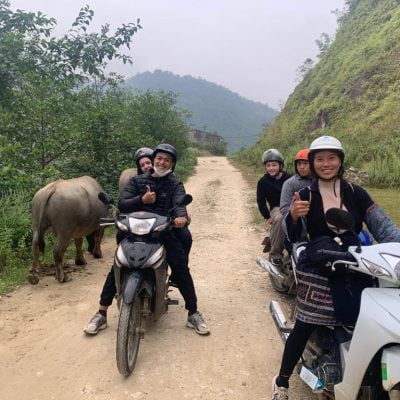
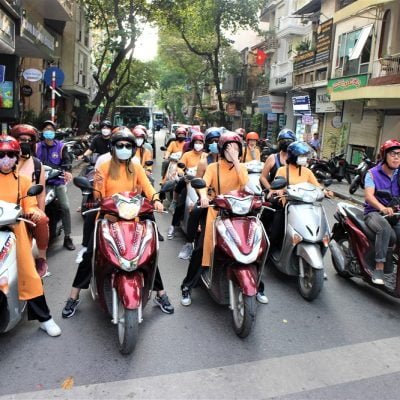
Day 3 is also an excellent opportunity to experience Hanoi by private motorbike with women guides or drivers.
The advantage is not simply speed. A motorbike allows you to see how Hanoi changes from neighborhood to neighborhood. You can move from the Old Quarter to West Lake, residential streets, markets, Long Bien Bridge, and other parts of the city without spending the entire day walking.
As a passenger, you can concentrate on the streets rather than navigation. This is particularly useful for visitors who want to see more of Hanoi but are not comfortable driving themselves through unfamiliar traffic.
For a private tour, discuss the route, vehicle arrangement, safety equipment, pickup location, and timing before the tour.
Late Afternoon: Hanoi Coffee and Free Time
After three days of sightseeing, leave some time with no major attraction scheduled.
Choose a café, order Vietnamese coffee, and simply watch the city. This may sound like a small activity, but it is one of the best ways to finish a Hanoi trip.
You can also use this time for shopping if you want Vietnamese textiles, handicrafts, souvenirs, coffee, or other gifts. If shopping is not interesting to you, skip it. A personalized itinerary should not force you into activities that you do not enjoy.
Evening: Your Final Hanoi Dinner
For your final evening, choose a dinner that represents something you enjoyed during the trip.
If you loved street food, return to the Old Quarter for another food experience. If you prefer a quieter atmosphere, choose a comfortable restaurant. If you want one final cultural activity, combine dinner with an evening walk around Hoan Kiem Lake.
Weekend evenings around Hoan Kiem can be particularly lively because sections of the area become pedestrian-friendly and attract residents for walking, exercise, entertainment, and social activities.
The Best 3-Day Hanoi Route at a Glance
Day 1 — Classic Hanoi: Hoan Kiem Lake → Ngoc Son Temple → Old Quarter → Vietnamese lunch → French Quarter → Hanoi Opera House → egg coffee → Hanoi street food.
Day 2 — History and Women’s Culture: Temple of Literature → Thang Long Imperial Citadel → lunch → Ho Chi Minh historical area → One Pillar Pagoda → Vietnamese Women’s Museum → water puppet show or relaxed dinner.
Day 3 — Beyond the Center: West Lake → Tran Quoc Pagoda → Truc Bach Lake → Vietnamese lunch → Long Bien Bridge → private motorbike sightseeing → coffee → final Hanoi dinner.
This structure follows a practical principle: keep geographically related attractions together and alternate intensive sightseeing with food, coffee, and slower periods. That makes three days more enjoyable and gives you time to actually experience Hanoi rather than simply collecting photographs.
How to Make Three Days in Hanoi More Comfortable as a Woman
You do not need to dress formally for Hanoi sightseeing. Comfortable, breathable clothing and good walking shoes are more useful, particularly when exploring the Old Quarter. When visiting temples, pagodas, and other religious sites, choose clothing that is respectful and follow the specific requirements of each attraction.
Carry a small day bag rather than a large backpack when walking through crowded streets. Keep your phone and valuables secure, especially around busy markets and traffic-heavy areas.
For food tours, communicate allergies and dietary restrictions before the experience. If you are unsure about a dish, ask your guide what ingredients it contains rather than relying only on its appearance.
Most importantly, do not make your itinerary so full that you have no time to stop. Hanoi’s cafés, streets, food stalls, lakes, and small cultural details are part of the experience.
Should a Woman Travel Around Hanoi Alone or With a Private Guide?
Hanoi can be explored independently, and many travelers enjoy navigating the city on their own. However, a private female-led tour can be particularly useful during a first visit when you want to combine several neighborhoods, understand historical sites, and experience food without spending time researching every detail.
A private guide can also adapt the itinerary during the day. If you are tired, walking can be reduced. If you love photography, more time can be spent at a location. If you discover that you particularly enjoy Vietnamese food, additional food stops can be incorporated.
The benefit is not simply having someone show you famous attractions. It is having someone help turn three days into an itinerary that matches your interests, pace, and travel style.
Why Choose Vietnam Women Travel for Your First 3 Days in Hanoi?
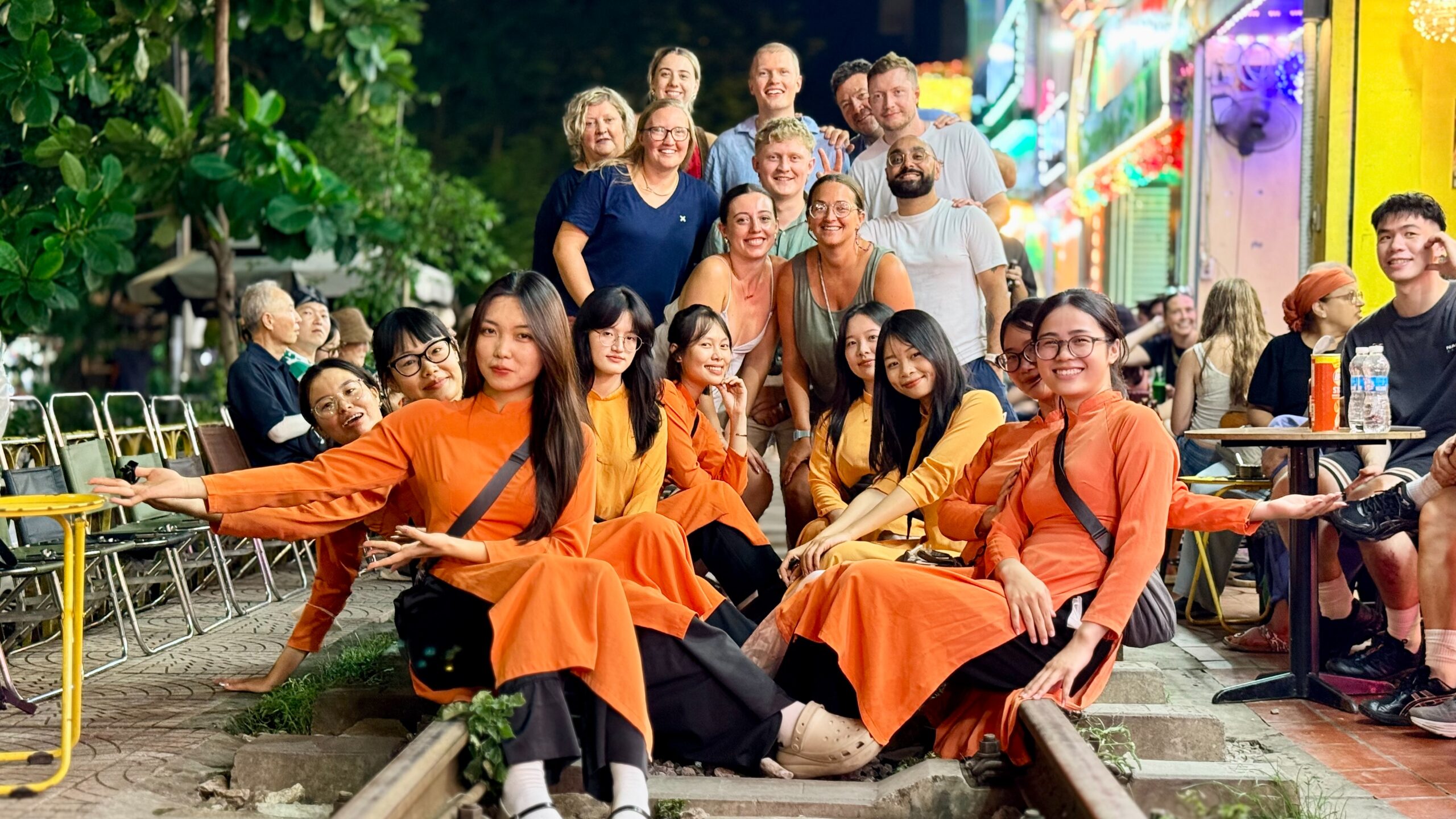
Vietnam Women Travel – Premium Private Tours Led by Women specializes in private experiences led by professional women. The tours are designed for solo travelers, couples, families, friends, and mixed private groups, rather than being restricted to women-only groups.
A private Hanoi itinerary can combine historic landmarks, Vietnamese food, coffee culture, temples, museums, photography, Old Quarter exploration, West Lake, Long Bien Bridge, and private motorbike sightseeing.
The itinerary can also be adjusted according to your hotel location, available hours, preferred starting time, dietary requirements, mobility, and interests.
Instead of following a large group’s fixed schedule, your private group can decide where to spend more time and which activities are not worth including.
Final Advice for Your First Three Days in Hanoi
Three days is enough to get a strong first impression of Hanoi, but it is not enough to understand everything the city has to offer. Use the first day to discover the historic center and food culture, the second to understand Hanoi’s history and cultural identity, and the third to explore neighborhoods and landscapes beyond the Old Quarter.
Most importantly, do not measure your trip by the number of attractions you visit. A morning walking around Hoan Kiem Lake, a bowl of bun cha, an hour inside the Temple of Literature, a Vietnamese coffee, a conversation with your guide, or an evening watching Hanoi’s streets can become more memorable than visiting five attractions in a hurry.
For a first-time woman traveler, the ideal three-day Hanoi experience is a balance of history, food, culture, neighborhoods, photography, relaxation, and flexibility.
VIETNAM WOMEN TRAVEL
Vietnam Women Travel – Premium Private Tours Led by Women
📍 Address: 91 Tho Nhuom Street, Hoan Kiem District, Hanoi, Vietnam
📞 Hotline/WhatsApp: +84988402008 / +84982416518 / +84981090989
📧 Email: info@vietnamwomentravel.com
🌐 Website: https://vietnamwomentravel.com/
Website: Vietnam Women Travel
Plan your first three days in Hanoi around the experiences you actually want—whether that means historic landmarks, Vietnamese food, coffee, women’s culture, photography, private motorbike sightseeing, or discovering quieter neighborhoods with a professional female guide.