
Sapa Full-Day Private Car Tour – Muong Hoa Valley, Lao Chai, Ta Van & Mountain Villages Led by Women
Discover the quieter side of northern Vietnam on a Sapa Full-Day Private Car Tour Led by Women, traveling deep into the Muong Hoa Valley to explore terraced rice fields, Black Hmong and Zay villages, mountain roads, traditional homes and everyday life beyond Sapa town.
This private full-day experience is designed around the landscapes and communities that make Sapa unique.
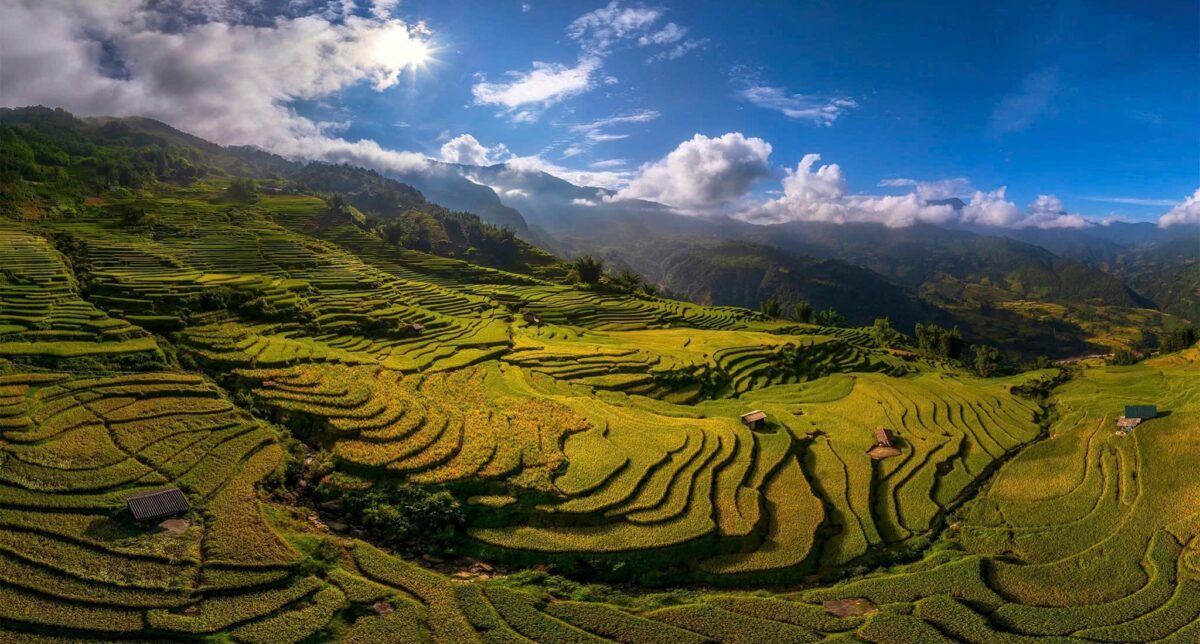
Rather than focusing on Fansipan or spending most of the day around the town center, the journey follows the winding roads into Y Linh Ho, Lao Chai, Ta Van and Hau Thao, where enormous rice terraces stretch across the slopes of the Hoang Lien Son mountains.
Along the way, discover local farming communities, traditional houses, village paths, mountain streams, handicraft traditions and viewpoints overlooking the Muong Hoa Valley.
Traveling by private car provides a comfortable way to reach several villages in one day while still allowing time to stop for photographs, short walks, local coffee and cultural encounters.
With Vietnam Women Travel – Premium Private Tours Led by Women, your Vietnamese female guide introduces not only the scenery but also the people, traditions and agricultural knowledge behind the landscape.
Muong Hoa Valley Beyond the Famous Viewpoints
Muong Hoa Valley is one of the most spectacular agricultural landscapes in Vietnam.
From the road above the valley, layers of rice terraces descend toward streams and villages.
But the landscape becomes much more meaningful when you understand who created it.
For generations, ethnic communities have shaped the steep mountain slopes into productive farmland.
Water is carefully managed.
Terraces are repaired.
Rice is planted according to seasonal conditions.
Villages are connected by narrow paths and mountain roads.
This private car tour takes you into that living landscape.
Why Choose a Private Car for Muong Hoa Valley?
The villages around Muong Hoa are spread across mountainous terrain.
A private car allows you to travel comfortably between several communities without committing to a demanding full-day trek.
It is especially suitable for:
- Couples
- Families
- Older travelers
- Private groups
- Photography travelers
- Travelers who want village experiences without long hikes
You can combine scenic drives with short walks according to your interests and fitness level.
The itinerary can also be adjusted according to weather, road conditions, farming seasons and village activities.
Sapa Full-Day Private Car Tour Itinerary
Part 1: Sapa Town to Y Linh Ho – First Views of Muong Hoa Valley
Begin with private car pickup from your hotel in Sapa.
Leave the town behind and travel toward the mountains overlooking Muong Hoa Valley.
As the road descends, the scenery changes from hotels and restaurants to steep hillsides, farmland and scattered villages.
Make a viewpoint stop above Y Linh Ho, where you can see layers of rice terraces extending across the valley.
Your female guide explains how the terraces were constructed and how local farmers use the mountain landscape for agriculture.
Continue toward Y Linh Ho Village, a community associated with the Black Hmong.
Take a short walk through selected areas of the village and observe traditional homes, gardens, livestock and agricultural activity.
This is the beginning of the transition from tourist Sapa to rural mountain life.
Part 2: Lao Chai Village – Black Hmong Culture & Terraced Rice Fields
Continue deeper into the valley to Lao Chai Village.
The village sits beneath dramatic mountain slopes and is surrounded by some of the most impressive rice terraces in the Sapa region.
Walk along village paths and selected sections of the valley.
Your female guide introduces the traditions of the Black Hmong, including farming, clothing, embroidery and family life.
Depending on the season, you may see farmers working in the terraces, planting rice, harvesting crops or transporting agricultural products.
Stop at suitable viewpoints overlooking the valley for photographs.
The scale of the landscape is particularly impressive from Lao Chai.
Part 3: Muong Hoa River & Ancient Stone Area – Nature, Agriculture & Local Landscapes
Continue along the valley toward the Muong Hoa River.
The river provides water for surrounding agricultural communities and forms an important part of the valley’s landscape.
Explore selected areas near the river and learn how local villages depend on mountain water for farming.
Your guide can also introduce the Muong Hoa ancient stone area, where large stones are marked with unusual carvings and patterns whose meanings remain a subject of historical and cultural interest.
The combination of river, terraces, mountains and ancient stone markings adds another layer to the Muong Hoa landscape.
Take time for photographs before continuing toward Ta Van.
Part 4: Ta Van Village – Zay Culture, Traditional Houses & Valley Life
Continue to Ta Van Village, one of the best-known communities in the Muong Hoa Valley.
Ta Van is particularly associated with the Zay people, while other ethnic communities also live in the surrounding area.
Explore quieter village paths and traditional residential areas.
Your guide explains the differences between Zay and Black Hmong culture, including architecture, clothing, agriculture and family traditions.
Where appropriate, visit a local family or small workshop and learn about everyday life in the valley.
Ta Van is also a popular area for homestays, but the village remains surrounded by working rice terraces, gardens and mountain landscapes.
Enjoy a relaxed local drink or coffee before continuing.
Part 5: Hau Thao Village – Mountain Roads, Rice Terraces & Hidden Viewpoints
Leave the main Ta Van route and continue toward Hau Thao, a quieter mountain community above the Muong Hoa Valley.
The road provides changing perspectives over the rice terraces and surrounding peaks.
Hau Thao is an excellent place to experience the scale of the valley without concentrating only on the busiest tourist viewpoints.
Make several scenic stops according to weather and visibility.
Your guide can point out villages, farming areas and mountain ridges across the valley.
If conditions allow, take a short walk along a village path.
This section is deliberately slower and more flexible, giving you time to appreciate the landscape rather than rushing from attraction to attraction.
Part 6: Local Mountain Lunch & Return to Sapa – Food, People & Final Valley Views
Stop at a carefully selected local restaurant or family-style dining place for lunch.
Enjoy regional dishes prepared with ingredients commonly found in the northern highlands.
Depending on the season and restaurant, the meal may include:
- Local mountain pork
- Black chicken
- Fresh vegetables
- Bamboo shoots
- Seasonal mushrooms
- Corn-based dishes
- Grilled meats
- Local herbs
- Rice
- Mountain-style soups
- Seasonal fruit
Your female guide explains how the food connects with the agricultural traditions of the communities you have visited.
After lunch, begin the journey back toward Sapa.
Make a final viewpoint stop above Muong Hoa Valley if weather and visibility are favorable.
Return to Sapa by private car with time to relax and enjoy the changing mountain scenery.
Y Linh Ho Village
Y Linh Ho is located along the lower section of Muong Hoa Valley and is surrounded by steep mountains and terraced farmland.
The village provides an early opportunity to see how Black Hmong communities have adapted to the difficult mountain terrain.
The scenery is particularly impressive when viewed from the elevated roads above the valley.
Lao Chai Village
Lao Chai is one of the most important Black Hmong communities in the Muong Hoa Valley.
Its location beneath towering mountains provides extraordinary views of the surrounding rice terraces.
The village offers opportunities to learn about traditional farming, textiles, clothing and family life.
The terraces around Lao Chai are not decorative landscapes.
They remain working agricultural land.
Muong Hoa Valley
Muong Hoa is the geographical heart of this tour.
The valley stretches between steep mountain slopes and contains numerous ethnic communities.
Its rice terraces change appearance throughout the year.
During planting season, water reflects the sky across the terraces.
During the growing season, the valley becomes intensely green.
As harvest approaches, the slopes turn golden.
This seasonal transformation makes Muong Hoa one of northern Vietnam’s most remarkable landscapes.
Muong Hoa River
The Muong Hoa River runs through the valley below the mountain villages.
Its water supports agriculture and contributes to the distinctive landscape of rice terraces, gardens and settlements.
Spending time near the river provides a quieter perspective on the valley.
Muong Hoa Ancient Stone Area
The ancient stone area contains large stones with unusual carved markings.
The origin and meaning of some of the carvings remain subjects of discussion among researchers and local communities.
The site adds an archaeological dimension to the otherwise strongly agricultural landscape of Muong Hoa.
Ta Van Village
Ta Van provides an opportunity to discover Zay culture within the Muong Hoa Valley.
Traditional houses, rice terraces and mountain streams surround the village.
The pace of life here is slower than in central Sapa.
Your female guide can explain how Zay communities have traditionally organized their homes, farms and family life.
Hau Thao Village
Hau Thao is positioned on higher ground overlooking parts of Muong Hoa Valley.
Its location provides different perspectives from those found in Lao Chai and Ta Van.
The village roads are ideal for a slower scenic drive and short walks when weather conditions permit.
Rice Terrace Agriculture
The rice terraces around Sapa are the result of generations of agricultural knowledge.
Farmers work with the natural slope rather than trying to eliminate it.
Terraces slow water movement, retain fertile soil and create level areas where rice can be cultivated.
The result is one of Vietnam’s most recognizable cultural landscapes.
Black Hmong Culture
The Black Hmong are one of the most prominent ethnic communities in the Sapa region.
Traditional clothing, embroidery, farming practices and family customs remain important parts of cultural identity.
Your female guide provides context while encouraging respectful interaction with local residents.
Visitors should always ask before photographing people or entering private homes.
Zay Culture
The Zay people are particularly associated with villages in the Muong Hoa Valley, including Ta Van.
Their traditional houses, agricultural practices and community traditions contribute to the cultural diversity of the region.
Seeing Black Hmong and Zay communities on the same journey allows travelers to appreciate the differences between neighboring mountain cultures.
Sapa Mountain Roads
One of the pleasures of this private car experience is the journey between the villages.
The roads wind through mountains, forests and terraces.
At different points, the landscape opens into huge valley views.
At other times, the road passes directly through small communities.
The journey therefore becomes part of the sightseeing experience rather than simply transportation between attractions.
Local Sapa Cuisine
The northern highlands have a distinctive food culture shaped by climate, agriculture and local ingredients.
Traditional meals may include mountain pork, black chicken, bamboo shoots, mushrooms, vegetables, herbs and corn-based dishes.
Your guide can explain which foods are commonly prepared by local families and how seasonal ingredients influence mountain cuisine.
The restaurant is selected for authentic flavors, freshness and food hygiene.
A Different Kind of Sapa Day Trip
This tour is deliberately different from the previous Sapa itinerary centered on Fansipan, Cat Cat and O Quy Ho Pass.
It does not make the summit the main attraction.
Instead, the entire day is dedicated to understanding Muong Hoa Valley and its communities.
The route follows:
Sapa → Y Linh Ho → Lao Chai → Muong Hoa River → Muong Hoa Ancient Stone Area → Ta Van → Hau Thao → Local Mountain Lunch → Muong Hoa Viewpoint → Sapa.
The experience combines:
- Y Linh Ho Village
- Lao Chai Village
- Ta Van Village
- Hau Thao Village
- Muong Hoa Valley
- Muong Hoa River
- Muong Hoa Ancient Stone Area
- Rice terraces
- Black Hmong culture
- Zay culture
- Traditional houses
- Mountain agriculture
- Local food
- Rural roads
- Valley viewpoints
- Private car travel
- Women-led guiding
Vietnam Women Travel – Premium Private Tours Led by Women
Vietnam Women Travel – Premium Private Tours Led by Women creates private cultural experiences that connect travelers with Vietnam’s landscapes and local communities.
Our tours are private tours led by women, not women-only tours.
Your Vietnamese female guide provides insight into the cultures and landscapes you encounter throughout the day.
She can explain how rice terraces are created, introduce the traditions of Black Hmong and Zay communities, interpret local architecture and help you understand the relationship between mountain villages and agriculture.
Because the tour is private, there is no fixed large-group schedule.
You can spend longer at a viewpoint, take additional photographs, walk through a village or stop for a local drink whenever appropriate.
Comfortable Private Car Experience
Travel between Sapa and the surrounding villages in a private car with a professional driver and Vietnamese female guide.
The car is especially useful for travelers who want to experience Muong Hoa Valley without committing to a full-day trek.
Short walks can be added throughout the route depending on your preferences.
The exact itinerary may change according to weather, road conditions, seasonal farming activities, local access and village conditions.
Mountain weather can change quickly, so a light jacket is recommended even during warmer months.
Comfortable walking shoes, sunscreen, sunglasses and drinking water are also recommended.
Who Is This Sapa Private Car Tour For?
This experience is ideal for:
- Couples
- Families
- Private groups
- First-time Sapa visitors
- Repeat visitors
- Photography enthusiasts
- Nature lovers
- Culture-focused travelers
- Travelers interested in ethnic communities
- Travelers fascinated by rice terraces
- Travelers who prefer comfortable transportation
- Travelers who want village experiences without strenuous trekking
- Guests seeking private tours led by women
Book Your Sapa Full-Day Private Car Tour
If you are searching for a Sapa private car tour, Muong Hoa Valley private tour, Lao Chai and Ta Van tour, Y Linh Ho Village tour, Hau Thao Village tour, or a full-day cultural experience led by women, this itinerary offers a deeper alternative to the standard Sapa sightseeing route.
Travel from Sapa to Y Linh Ho, explore Lao Chai, follow the Muong Hoa River, discover the ancient stone area, experience Ta Van and Hau Thao, admire the rice terraces and enjoy an authentic mountain lunch before returning to Sapa.
With Vietnam Women Travel – Premium Private Tours Led by Women, the focus is not simply on taking photographs of Sapa’s mountains.
It is about understanding the villages, farming traditions, ethnic cultures and people who have shaped the Muong Hoa Valley for generations.