
Sapa Full-Day Private Car Tour – Fansipan Cable Car, Cat Cat Village, Muong Hoa Valley & Local Culture Led by Women
Experience the dramatic landscapes and diverse cultures of northern Vietnam on a Sapa Full-Day Private Car Tour Led by Women, combining the summit of Fansipan, Hmong villages, Muong Hoa Valley, terraced rice fields and the mountain roads surrounding Sapa.
This private journey is designed for travelers who want more than a standard visit to Sapa town.
Travel by comfortable private car from the center of Sapa into the surrounding mountains, combining the spectacular Fansipan cable car experience with visits to Cat Cat Village, Lao Chai Village and Ta Van Village.
Along the way, discover the landscapes of Muong Hoa Valley, traditional homes, terraced fields, local handicrafts and mountain communities.
The route also includes opportunities to experience the dramatic scenery around O Quy Ho Pass, one of the most impressive mountain roads in northern Vietnam.
With Vietnam Women Travel – Premium Private Tours Led by Women, your Vietnamese female guide connects the scenery with the history and traditions of the Hmong, Red Dao and other ethnic communities living in the Sapa region.
Sapa Beyond the Town Center
Sapa is famous for its mountains and rice terraces, but the most memorable experiences are often found outside the town.
Only a short drive from central Sapa, the landscape changes dramatically.
Buildings give way to steep mountains.
Busy streets become narrow village roads.
Hotels disappear behind rice terraces and forests.
Traditional houses appear among the hills.
This private car tour is designed to connect these different environments in one carefully planned day.
Why Choose a Private Car Tour in Sapa?
Sapa’s attractions are spread across mountainous terrain.
A private car provides comfortable transportation between the town, cable car station, villages and valley viewpoints.
It is particularly convenient for travelers who want to combine several major attractions without spending the entire day hiking.
The private format also gives you greater flexibility.
You can spend more time photographing rice terraces, stop at a village workshop, enjoy a local lunch or adjust the route according to weather and mountain conditions.
Sapa Full-Day Private Car Tour Itinerary
Part 1: Fansipan Cable Car – Journey to the Roof of Indochina
Begin with private car pickup from your hotel in Sapa.
Travel to the Fansipan cable car station and begin the spectacular journey toward the summit of Fansipan.
The cable car crosses deep valleys and mountain slopes, providing panoramic views over the Hoang Lien Son range.
As you gain altitude, the landscape changes from villages and farmland to forests and rugged mountain terrain.
At the upper station, continue toward the summit area.
Fansipan rises to approximately 3,143 meters, making it the highest mountain in Vietnam and Indochina.
Your female guide explains the geography and cultural significance of the mountain while allowing time for photographs and exploration.
Weather at the summit can change quickly, so the experience can feel completely different from the conditions in Sapa town.
Part 2: Cat Cat Village – Hmong Culture at the Foot of the Mountains
Return from Fansipan and continue to Cat Cat Village, one of the best-known Hmong communities near Sapa.
Walk through the village and explore traditional houses, small craft workshops, mountain paths and local viewpoints.
Your guide introduces aspects of Hmong culture, including traditional clothing, handicrafts, farming and family life.
Cat Cat is surrounded by steep mountain scenery, making the village particularly photogenic.
Explore the paths leading through the settlement and toward the small waterfall area.
Rather than simply taking photographs, learn how the village developed and how tourism has changed local life.
Part 3: Muong Hoa Valley – Rice Terraces, Mountain Roads & Ancient Landscapes
Continue by private car toward Muong Hoa Valley.
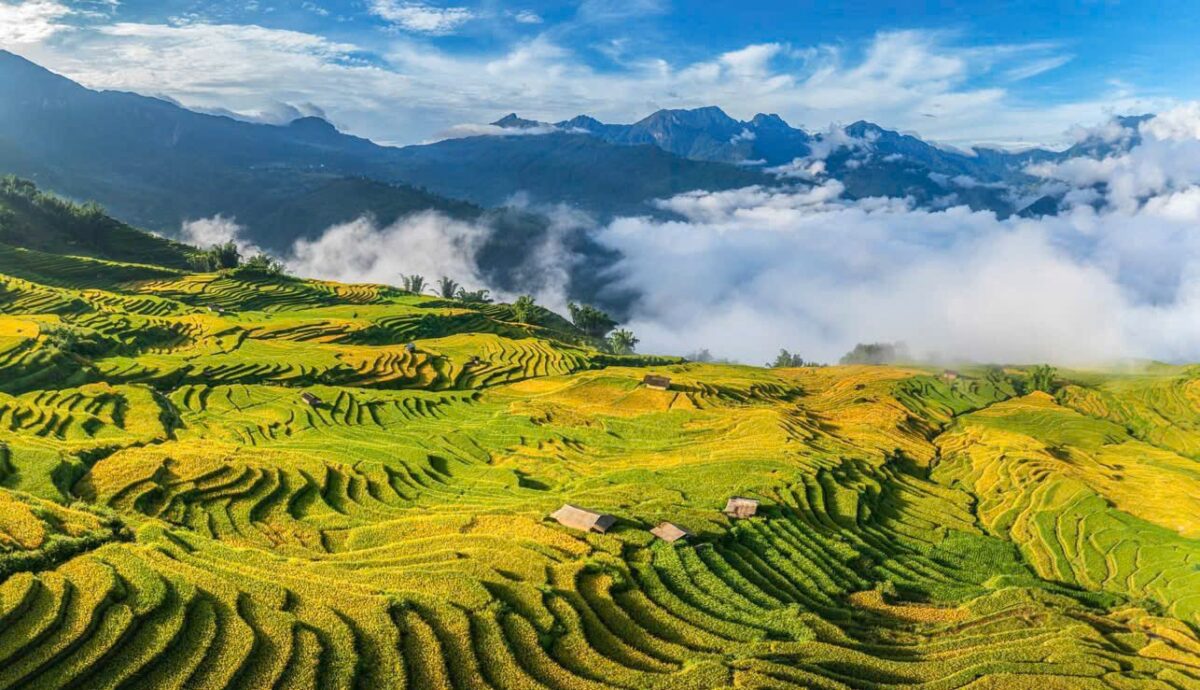
The valley is famous for its enormous terraced rice fields carved into the mountain slopes.
Depending on the season, the terraces may appear bright green, golden or freshly harvested.
Stop at selected viewpoints where you can appreciate the scale of the landscape.
Your female guide explains how ethnic communities have cultivated rice on steep terrain for generations.
The terraces are not simply scenic attractions.
They are part of an agricultural system built through generations of local knowledge.
Part 4: Lao Chai Village – Black Hmong Community & Mountain Agriculture
Continue into Lao Chai Village, an important Black Hmong community in the Muong Hoa Valley.
Explore village paths and observe traditional houses, gardens, livestock and agricultural areas.
Your guide explains the distinctive traditions of the Black Hmong, including clothing, embroidery, farming and family customs.
If local conditions permit, visit a small family workshop or interact with local residents respectfully.
The surrounding rice terraces create one of the most impressive landscapes in the Sapa region.
From the village, you can see mountains rising dramatically on both sides of the valley.
Part 5: Ta Van Village – Zay Culture & Riverside Mountain Life
Continue to Ta Van Village, home to Zay communities as well as other ethnic groups.
Ta Van has a different atmosphere from Cat Cat and Lao Chai.
The village stretches along the valley floor and is surrounded by rice fields, streams and forested mountains.
Walk through selected parts of the village and learn about traditional Zay houses and local agricultural life.
Your guide can explain the differences between the cultures of the communities you have encountered during the day.
Stop at a local viewpoint or riverside area for photographs before continuing.
Part 6: O Quy Ho Mountain Road & Local Sapa Cuisine
After exploring the villages, continue by private car toward the O Quy Ho Pass area, weather and road conditions permitting.
The pass is one of the highest and most dramatic mountain roads in northern Vietnam.
The landscape opens toward enormous valleys and rugged peaks.
Stop at a suitable viewpoint for photographs and enjoy the mountain scenery before returning toward Sapa.
Finish the day with a local meal featuring northern Vietnamese dishes.
Depending on the restaurant and seasonal availability, enjoy specialties such as:
- Salmon hotpot
- Grilled mountain pork
- Local vegetables
- Bamboo shoots
- Black chicken
- Corn-based dishes
- Seasonal mushrooms
- Fresh herbs
- Mountain-style grilled dishes
- Local rice
Your female guide can explain how the cuisine reflects the ingredients and farming traditions of the northern highlands.
Fansipan – Vietnam’s Highest Mountain
Fansipan is the highest mountain in Vietnam and the entire Indochina region.
The modern cable car makes it possible for travelers to experience the mountain without undertaking a multi-day summit trek.
The journey itself is part of the attraction.
As the cable car rises above the Hoang Lien Son landscape, you can see valleys, forests and mountain ridges stretching into the distance.
At the summit area, weather conditions can create dramatically different experiences from one visit to another.
Cat Cat Village
Cat Cat is located close to Sapa and is strongly associated with the Black Hmong community.
Traditional crafts, textiles and agricultural traditions remain important parts of local culture.
The village’s steep paths and mountain setting also make it one of Sapa’s most recognizable cultural attractions.
Muong Hoa Valley
Muong Hoa Valley is one of the defining landscapes of Sapa.
Its enormous rice terraces demonstrate how ethnic communities have adapted agriculture to steep mountain terrain.
The valley changes dramatically throughout the year.
During planting season, the terraces reflect the sky and mountains.
During the growing season, they become green.
Before harvest, the fields turn golden.
This seasonal transformation makes Muong Hoa worth experiencing at different times of the year.
Lao Chai Village
Lao Chai is located deeper inside Muong Hoa Valley.
The surrounding terraces and mountain views provide excellent opportunities for photography.
The village also offers a closer look at Black Hmong agricultural life.
Your female guide helps explain traditional clothing, farming practices, local architecture and family customs.
Ta Van Village
Ta Van is known for its mixed ethnic communities and peaceful valley setting.
Zay culture is particularly visible in the village.
Traditional houses, rice fields, streams and mountain paths create a very different environment from Sapa’s busy center.
The village is an excellent place to understand how communities have adapted to life in the Muong Hoa Valley.
O Quy Ho Pass
O Quy Ho Pass connects the Sapa area with Lai Chau and crosses the Hoang Lien Son mountain range.
The road provides spectacular views over deep valleys and high mountain peaks.
On clear days, the scale of the surrounding landscape is impressive.
Weather can change rapidly at this altitude, so the viewpoint portion of the itinerary remains flexible.
Ethnic Culture in Sapa
The Sapa region is home to several ethnic communities, including:
- Black Hmong
- Red Dao
- Zay
- Tay
- Xa Pho
Each community has its own traditions, clothing, language, architecture and customs.
A private tour allows your guide to explain these differences in context rather than presenting them as a simple list.
Traditional Hmong & Zay Villages
The villages around Sapa are working communities rather than open-air museums.
People continue farming, raising animals, producing handicrafts and maintaining family traditions.
Travelers are encouraged to interact respectfully, ask before photographing people and follow local guidance when entering private spaces.
This approach creates a more meaningful cultural experience.
Sapa Mountain Food
Food in the northern highlands reflects the mountain environment.
Local restaurants commonly use ingredients such as:
- Mountain vegetables
- Bamboo shoots
- Local herbs
- Black chicken
- Mountain pork
- Fresh mushrooms
- River fish
- Salmon
- Corn
- Seasonal fruits
Your female guide can introduce regional specialties and explain how local ingredients are traditionally prepared.
What Makes This Sapa Private Car Tour Different?
This itinerary is intentionally different from a simple Muong Hoa Valley and ethnic villages tour.
It also goes beyond a standard Fansipan day trip.
The route connects the major mountain experiences with specific villages and viewpoints:
Sapa → Fansipan Cable Car → Cat Cat Village → Muong Hoa Valley → Lao Chai Village → Ta Van Village → O Quy Ho Pass → Local Restaurant → Sapa.
The experience combines:
- Fansipan
- Fansipan Cable Car
- Hoang Lien Son Mountains
- Cat Cat Village
- Muong Hoa Valley
- Lao Chai Village
- Ta Van Village
- O Quy Ho Pass
- Rice terraces
- Black Hmong culture
- Zay culture
- Traditional houses
- Local handicrafts
- Mountain scenery
- Sapa cuisine
- Private car travel
- Women-led guiding
Vietnam Women Travel – Premium Private Tours Led by Women
Vietnam Women Travel – Premium Private Tours Led by Women creates private journeys that connect Vietnam’s iconic landscapes with local communities.
Our tours are private tours led by women, not women-only tours.
Your Vietnamese female guide provides context throughout the day.
She can explain how rice terraces are cultivated, introduce the traditions of Hmong and Zay communities, describe the history of Fansipan and help you understand how tourism is affecting mountain villages.
The private format allows the experience to be adjusted around your interests.
Spend longer at Fansipan.
Explore a village more slowly.
Stop for photography.
Visit a craft workshop.
Or enjoy additional time in the valley.
Comfortable Private Car Travel
Travel between Sapa’s mountain attractions in a private air-conditioned car with a professional driver and Vietnamese female guide.
The car provides a comfortable base for the steep mountain roads and changing weather conditions.
The exact sequence may be adjusted according to cable car operation, weather, traffic, road conditions, village access and seasonal agricultural activity.
Mountain weather can change quickly, so bring a light jacket even during warmer months.
Comfortable walking shoes, sunscreen, sunglasses and drinking water are recommended.
Who Is This Sapa Private Car Tour For?
This experience is ideal for:
- Couples
- Families
- Private groups
- First-time Sapa visitors
- Repeat visitors
- Mountain lovers
- Photography enthusiasts
- Culture-focused travelers
- Travelers interested in ethnic communities
- Travelers who want to visit Fansipan
- Travelers who prefer comfortable transportation
- Travelers who do not want a full-day trek
- Guests seeking private tours led by women
Book Your Sapa Full-Day Private Car Tour
If you are searching for a Sapa private car tour, Fansipan private tour, Muong Hoa Valley tour, Cat Cat Village tour, Lao Chai and Ta Van tour, or a full-day Sapa cultural experience led by women, this itinerary offers a comprehensive way to explore the region.
Travel from Sapa to Fansipan, descend into Cat Cat Village, follow the mountain roads through Muong Hoa Valley, explore Lao Chai and Ta Van, experience the scenery around O Quy Ho Pass, and finish with authentic northern Vietnamese cuisine.
With Vietnam Women Travel – Premium Private Tours Led by Women, Sapa becomes more than a mountain viewpoint.
It becomes a journey through highland landscapes, living ethnic cultures, ancient farming traditions and the mountain communities that have shaped northern Vietnam for generations.