Northern Vietnam Travel Guide: Hanoi, Sapa, Ha Giang & Halong Bay
Northern Vietnam is where many travelers begin to understand the country’s landscape, history and culture. The region brings together the sophisticated capital of Hanoi, the rice terraces of Sapa, the dramatic mountain roads of Ha Giang and the limestone islands of Halong Bay. These destinations are very different, but together they create one of the most varied travel experiences in Vietnam.
A trip through Northern Vietnam can move from centuries-old streets and traditional markets to remote mountain villages, winding passes and an overnight cruise surrounded by limestone karsts. You can eat phở and bún chả in Hanoi, trek through rice terraces around Sapa, ride through the mountains of Ha Giang and spend a night on a boat in Halong Bay. The key is planning the route carefully because the distances, road conditions and travel times between destinations can be significant.
This guide explains what to see, how long to stay, how to move around and how to combine Hanoi, Sapa, Ha Giang and Halong Bay into an efficient Northern Vietnam itinerary.
Northern Vietnam at a Glance
| Destination | Best For | Recommended Stay |
|---|---|---|
| Hanoi | History, food, culture, cafés | 2–4 days |
| Sapa | Rice terraces, trekking, mountain villages | 2–3 days |
| Ha Giang | Mountain scenery, road trips, ethnic cultures | 3–4 days |
| Halong Bay | Cruises, limestone islands, kayaking | 1–2 days |
| Ninh Binh | Rivers, karst scenery, rural landscapes | 1–2 days |
For this Northern Vietnam guide, the main route focuses on Hanoi → Sapa → Ha Giang → Halong Bay. The four destinations can be combined into a longer holiday, although travelers should allow enough time for transfers rather than trying to rush between them.
Why Visit Northern Vietnam?
Northern Vietnam offers one of the country’s strongest combinations of history, mountains, ethnic cultures, food and natural landscapes.
Hanoi provides the cultural and historical foundation. Sapa introduces highland landscapes and trekking. Ha Giang offers some of the most spectacular mountain roads in Vietnam. Halong Bay provides the classic limestone seascape that has become one of the country’s best-known natural attractions.
The region is also geographically diverse. Within one journey, you can move from crowded urban streets at sea level to mountain valleys more than 1,000 meters above sea level and then to a bay filled with limestone karsts.
1. Hanoi – Start Your Northern Vietnam Journey
Hanoi is the natural starting point for most Northern Vietnam trips. The capital combines more than a thousand years of history with a modern café culture, busy markets, historic temples and one of the country’s strongest street-food traditions.
The Old Quarter and Hoan Kiem Lake are the best places for first-time visitors to begin. You can walk through narrow streets, visit Ngoc Son Temple, try phở or bún chả and stop at a traditional Vietnamese coffee shop.
Hanoi also works as a transportation hub for northern destinations, making it practical to spend several days here before continuing to the mountains or coast.
2. Best Things to Do in Hanoi
A first-time Hanoi itinerary should include Hoan Kiem Lake, Ngoc Son Temple, the Old Quarter, Temple of Literature, Ho Chi Minh Complex, One Pillar Pagoda and the French Quarter.
Food should be part of the itinerary rather than an afterthought. Try phở, bún chả, bánh cuốn, chả cá, phở cuốn and egg coffee.
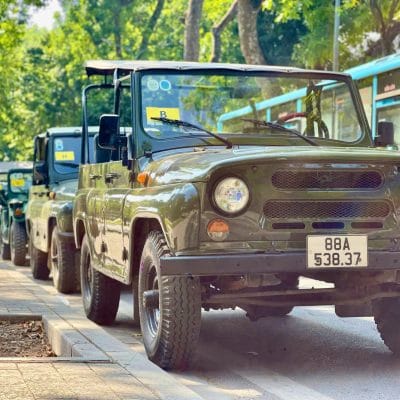
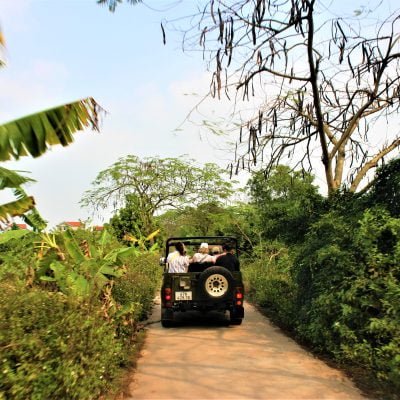
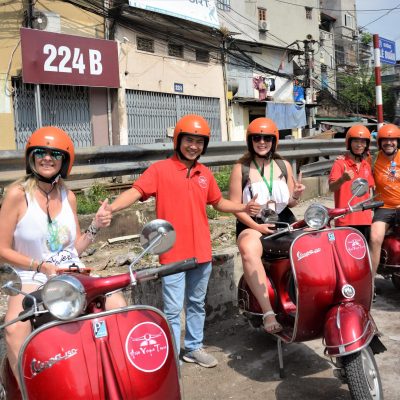
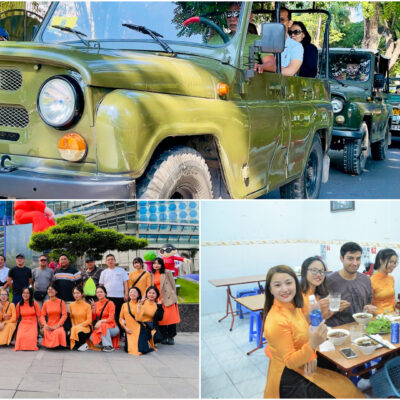
For a more local perspective, spend an evening exploring the city by motorbike, Vespa or Jeep, or join a food-focused walking or riding experience.
3. Explore Hanoi’s Old Quarter
The Old Quarter is one of Hanoi’s defining neighborhoods. Historic streets, old houses, shops, restaurants, cafés and food stalls are concentrated into a relatively small area.
The traditional district is associated with specialized trade streets, which is why many street names remain connected with particular products and crafts. Vietnam’s official travel information recommends exploring the Old Quarter on foot because of its dense historic and culinary character. (vietnam.travel)
Allow at least half a day if you want to combine sightseeing, food and coffee.
4. Visit Hoan Kiem Lake
Hoan Kiem Lake is the symbolic center of Hanoi. The lake is particularly interesting early in the morning when local residents walk and exercise around the water.
Visit Ngoc Son Temple, cross the red Huc Bridge and then continue into the Old Quarter.
Sunset is another attractive time to visit because the atmosphere becomes cooler and more relaxed.
5. Experience Hanoi Street Food
Hanoi is one of the best places in Vietnam to understand Northern food culture.
Start with phở in the morning, have bún chả for lunch and finish with egg coffee or chè in the evening. Other dishes worth trying include bánh cuốn, chả cá, bún đậu and bún ốc.
The official Hanoi food guide identifies the Old Quarter and surrounding streets as important areas for experiencing the city’s food culture. (vietnam.travel)
6. Hanoi by Motorbike, Vespa or Jeep
Hanoi is easy to explore on foot in the center, but a motorbike, Vespa or open-air Jeep lets you connect more distant neighborhoods.
You can combine the Old Quarter with West Lake, Long Bien Bridge, the French Quarter, Red River areas and local markets in one experience.
For travelers who don’t want to drive, riding as a passenger with a professional local rider is the easiest way to experience the city from street level.
7. Sapa – Mountains and Rice Terraces
From Hanoi, many travelers continue north to Sapa, a mountain destination famous for dramatic rice terraces, valleys and trekking.
Sapa sits in the Hoang Lien Son mountain range and is an important base for exploring the surrounding highlands. The area is home to ethnic communities including the Hmong, Red Dao, Tay and other groups.
The experience is very different from Hanoi. The city itself can feel busy and tourist-oriented, while the surrounding villages and mountain paths provide a much slower environment.
8. How Many Days in Sapa?
Allow at least 2 days and 1 night for Sapa. Three days is better if trekking is a major priority.
A typical itinerary could include:
Day 1: Arrive in Sapa and explore the town.
Day 2: Trek through villages and rice terraces.
Day 3: Visit Fansipan or continue to another mountain area.
Avoid trying to visit Sapa as a simple few-hour excursion from Hanoi. The mountain environment deserves more time.
9. Trekking in Sapa
The main reason many travelers visit Sapa is trekking.
Routes can pass through rice terraces, bamboo forests, streams and villages inhabited by ethnic communities. The difficulty varies significantly, so tell your guide your fitness level before selecting a route.
A short village walk can be suitable for beginners, while longer mountain routes require better physical preparation.
10. Muong Hoa Valley
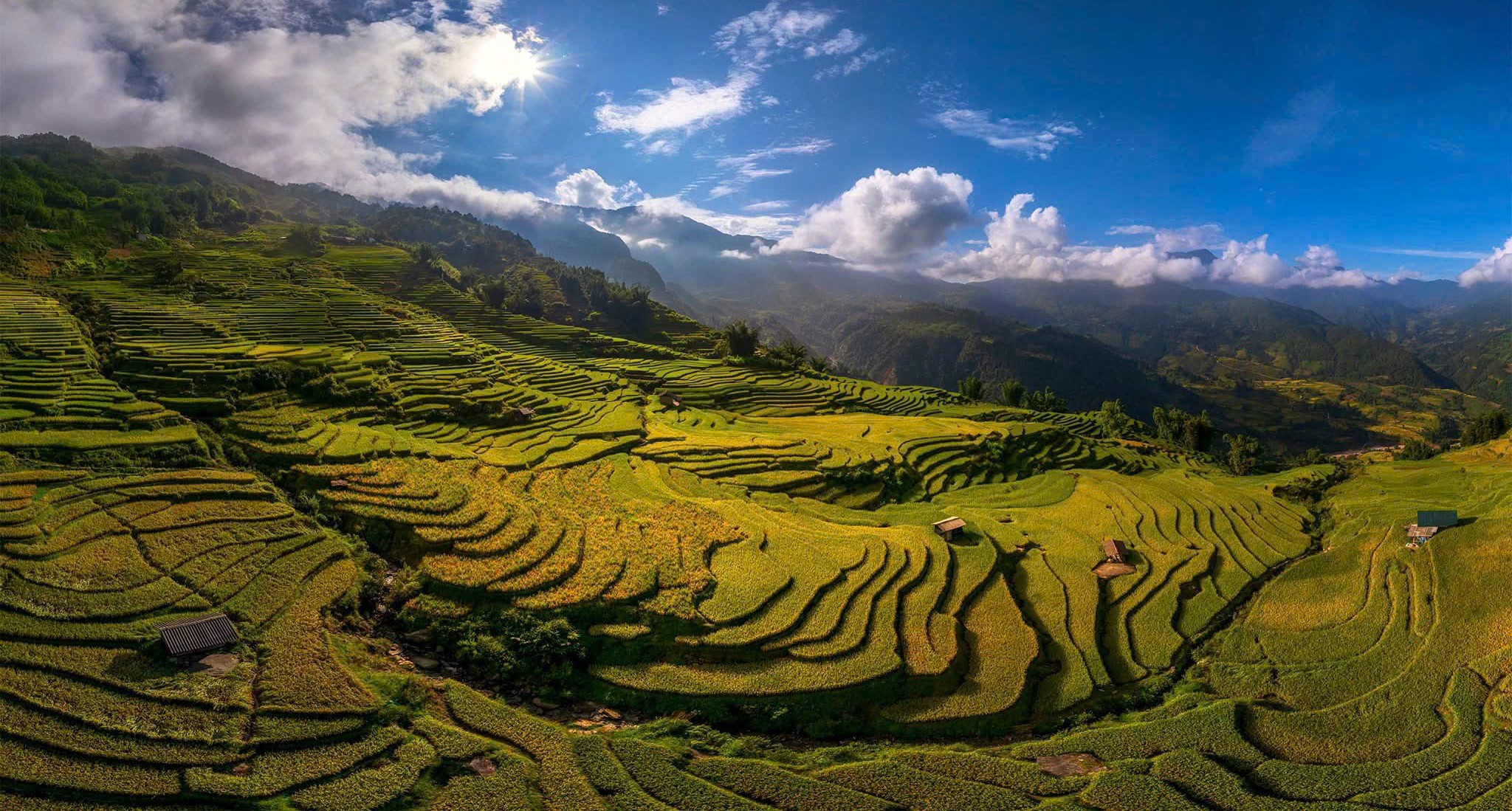
Muong Hoa Valley is one of the most scenic areas around Sapa. Rice terraces descend along the mountain slopes, creating layers that change color according to the agricultural season.
The valley is especially attractive during planting and harvest periods, although the landscape remains impressive throughout the year.
A trekking itinerary can combine the valley with ethnic villages and local lunch.
11. Cat Cat Village
Cat Cat Village is one of the most accessible cultural attractions around Sapa. It offers mountain scenery, local houses, paths, waterfalls and shops.
Because it is relatively close to Sapa town, it can be visited during a half-day itinerary.
However, travelers looking for a quieter experience should consider less commercialized village routes with a local trekking guide.
12. Ta Van Village
Ta Van Village is popular for travelers who want a more rural trekking and homestay experience.
The route through the valley provides opportunities to see agricultural fields, traditional houses and daily life in the mountain communities.
An overnight homestay can make the Sapa experience more immersive because you spend the night outside the main tourist center.
13. Fansipan – The Roof of Indochina
Fansipan is the highest mountain in Vietnam and the highest peak in Indochina.
You no longer need to undertake a multi-day expedition to reach the summit area because the cable-car system makes access much easier. However, weather at altitude can change quickly, and cloud or fog may reduce visibility.
If you want dramatic mountain views, check the forecast before choosing your travel day.
14. Best Time to Visit Sapa
Sapa changes considerably with the seasons.
Spring brings flowers and relatively pleasant temperatures.
Summer can be lush and green but is also wetter.
Late summer and autumn can provide spectacular rice-terrace scenery depending on the agricultural cycle.
Winter can be cold, foggy and damp, particularly at higher elevations.
If your main goal is trekking and mountain photography, choose your dates carefully rather than assuming one season is perfect for everyone.
15. Travel From Sapa to Ha Giang
Moving from Sapa to Ha Giang requires careful planning because this is not a simple short transfer.
The route is mountainous, and travel times can be affected by weather, road conditions and traffic. Private transportation is usually the most flexible option for travelers who want to control departure time and make photography stops.
Many travelers choose to return toward Hanoi and continue to Ha Giang, while others arrange direct road transfers.
The important point is to allow enough time rather than planning a tight connection between major activities.
16. Ha Giang – Northern Vietnam’s Mountain Adventure
Ha Giang is one of the best destinations in Vietnam for travelers who want dramatic mountain landscapes and a road-trip experience.
Unlike Sapa, where trekking is often the main activity, Ha Giang is strongly associated with motorbike journeys, mountain passes, limestone valleys and remote ethnic villages.
The landscape becomes increasingly spectacular as you travel deeper into the province.
17. The Ha Giang Loop
The Ha Giang Loop is a multi-day route through the northern mountains. The exact itinerary varies, but popular highlights include Quan Ba, Yen Minh, Dong Van and Meo Vac.
The route is famous for winding mountain roads and steep limestone landscapes. It is one of the most visually dramatic road journeys in Vietnam.
Because some sections are narrow, steep and exposed, inexperienced visitors should not assume that renting a motorbike independently is the easiest or safest option.
Traveling with an experienced local driver is often the more practical choice for international visitors.
18. Quan Ba Heaven Gate
Quan Ba Heaven Gate provides an early introduction to the dramatic landscapes of the Ha Giang region.
The road rises through mountain terrain, and viewpoints offer expansive views across valleys and limestone peaks.
This is typically one of the first major scenic stops on the Ha Giang Loop.
19. Dong Van Karst Plateau
The Dong Van Karst Plateau is one of the defining landscapes of Northern Vietnam. Limestone mountains dominate the horizon, while roads wind through steep valleys and remote villages.
The area is valuable not only for scenery but also for its geology and ethnic diversity.
Plan to spend enough time outside the vehicle. The road is the attraction, but stopping at viewpoints and villages is what turns the ride into a meaningful cultural journey.
20. Ma Pi Leng Pass
Ma Pi Leng Pass is one of the most famous mountain passes in Vietnam. The road runs high above the Nho Que River, creating spectacular views across the canyon.
This is a highlight of the Ha Giang Loop and one of the best places in Northern Vietnam for landscape photography.
Weather can change quickly at elevation, so bring a light jacket even when Hanoi is warm.
21. Nho Que River
The Nho Que River winds through the mountains below Ma Pi Leng Pass.
Boat trips on the river can provide a completely different perspective from the mountain road above. The contrast between turquoise water, steep limestone cliffs and narrow valleys is one of the region’s most memorable landscapes.
Allow additional time if you want to combine the road journey with a river experience.
22. Meo Vac
Meo Vac is one of the major towns on the Ha Giang Loop and an important base for exploring the surrounding mountains.
The area becomes particularly interesting around market days, when ethnic communities travel from surrounding villages to trade goods, livestock and food.
A local market visit can provide more cultural context than simply driving past villages.
23. Ha Giang’s Ethnic Cultures
Ha Giang is home to many ethnic minority communities, including Hmong, Tay, Dao and Lo Lo communities.
The best way to experience these cultures is through respectful village visits, local markets and community-based homestays rather than staged performances.
Photography should always be handled respectfully. Ask before taking close-up portraits.
24. How Many Days Do You Need for Ha Giang?
Allow at least 3 days and 2 nights for a classic loop. Four days is more relaxed and provides additional time for photography, villages and short walks.
A rushed two-day loop can be physically demanding and leaves very little time to appreciate the places between the main viewpoints.
25. Ha Giang by Motorbike
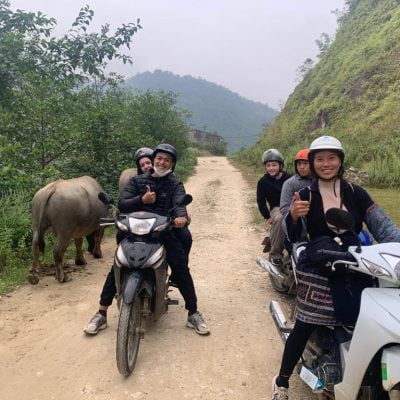
The motorbike is central to the Ha Giang experience, but there is an important distinction between riding yourself and riding as a passenger with an experienced local driver.
International visitors who are unfamiliar with Vietnamese mountain roads may find a guided rider significantly easier. You can concentrate on the scenery and photographs while the driver handles the road.
This is particularly relevant on narrow mountain passes and sections with steep drops.
26. Best Time to Visit Ha Giang
Ha Giang is beautiful throughout much of the year, but weather can influence the experience significantly.
Cooler, drier periods are often preferred for mountain-road travel and clear views. Wet weather can create slippery roads and lower visibility.
Avoid choosing your dates solely because the weather is pleasant in Hanoi. Mountain conditions can be completely different.
27. Halong Bay – Northern Vietnam’s Coastal Icon
After the mountains, Halong Bay offers a dramatic change of scenery.
Instead of high mountains and winding roads, the landscape becomes a sea filled with thousands of limestone islands and karst formations.
An overnight cruise is one of the easiest ways to experience the bay because it allows you to see the landscape at different times of day rather than arriving for only a few hours.
28. How Long Should You Stay in Halong Bay?
A 2-day, 1-night cruise is the most popular format and usually provides enough time to appreciate the scenery without spending too much of your trip on the water.
A 3-day, 2-night cruise is better for travelers who prefer a slower itinerary and want more time for kayaking, beaches, caves or quieter areas.
A day trip can work if your schedule is extremely limited, but an overnight cruise generally gives a much more complete experience.
29. What to Do in Halong Bay
Depending on the cruise itinerary, activities can include:
Kayaking
Cave visits
Swimming
Sunrise photography
Sunset viewing
Cooking demonstrations
Fishing or squid fishing
Not every cruise includes every activity, so check the exact itinerary before booking.
30. Halong Bay vs Lan Ha Bay
Travelers often compare Halong Bay and Lan Ha Bay.
Halong Bay is the classic name and offers iconic limestone scenery. Lan Ha Bay, farther east around Cat Ba, has a reputation for a more relaxed atmosphere and numerous small islands and beaches.
The better choice depends on your cruise operator, itinerary and preferred level of activity.
Don’t choose solely based on the name. Compare the actual route and time spent away from the main port.
31. Best Time to Visit Halong Bay
Weather matters greatly because the scenery is the main attraction.
Clear days produce the best photography. Cloudy or misty conditions can also create beautiful atmospheric landscapes, but heavy rain or storms can affect cruise schedules.
Before booking a non-refundable itinerary, check the weather pattern and the cruise’s cancellation policy.
32. Hanoi to Halong Bay
The journey from Hanoi to Halong Bay is now considerably easier than it was in the past because modern highways have reduced road travel times.
Private transfers provide the most flexibility, while shared limousines can be more economical.
For travelers with limited time, choose a package that coordinates Hanoi pickup, cruise boarding and return transportation rather than organizing each segment separately.
33. Hanoi to Sapa
Travelers can reach Sapa by road transfer or train-plus-transfer combinations.
Private or shared road services are increasingly convenient, while the overnight train can still be attractive to travelers who enjoy railway travel and want a different experience.
Allow for the fact that Sapa itself is mountainous, so the final transfer from the rail station area to Sapa town adds additional travel time.
34. Hanoi to Ha Giang
The road journey to Ha Giang takes several hours depending on the transport method and traffic.
Private vehicles provide the greatest flexibility, while scheduled buses are commonly used by independent travelers.
For a multi-day Ha Giang trip, many travelers choose a package that combines transportation, accommodation and local drivers because this simplifies logistics.
35. Best Northern Vietnam Route for First-Time Visitors
For a first trip, a practical route is:
Hanoi → Sapa → Ha Giang → Halong Bay → Hanoi
However, this route is better suited to travelers with at least 9–12 days.
Trying to complete all four destinations in one week can leave too much time on the road and too little time experiencing the places themselves.
36. 7-Day Northern Vietnam Itinerary
If you only have one week, prioritize fewer destinations.
Days 1–2: Hanoi.
Days 3–4: Halong Bay.
Days 5–7: Sapa.
This is much more comfortable than trying to add Ha Giang.
37. 10-Day Northern Vietnam Itinerary
With ten days, you can create a more ambitious route:
Day 1: Arrive Hanoi.
Day 2: Hanoi city and food.
Day 3: Hanoi → Sapa.
Day 4: Sapa trekking.
Day 5: Sapa → Ha Giang.
Day 6: Ha Giang Loop.
Day 7: Ha Giang Loop.
Day 8: Return toward Hanoi.
Day 9: Halong Bay cruise.
Day 10: Halong Bay → Hanoi departure.
This is an active itinerary with several long travel days.
38. 12-Day Northern Vietnam Itinerary
Twelve days provides a much better balance:
Days 1–3: Hanoi.
Days 4–5: Sapa.
Days 6–9: Ha Giang Loop.
Days 10–11: Halong Bay cruise.
Day 12: Return to Hanoi and departure.
The additional Ha Giang day makes the mountain experience significantly more comfortable.
39. Northern Vietnam Travel for Couples
Couples can build a particularly varied itinerary around Hanoi, Sapa and Halong Bay.
Choose a private Hanoi food or Vespa experience, a mountain homestay or private trekking guide in Sapa and an overnight cruise in Halong Bay.
Ha Giang is ideal for couples who enjoy road trips and photography.
40. Northern Vietnam Travel for Families
Families should pay close attention to travel times.
Hanoi + Halong Bay + Sapa is generally easier than adding the full Ha Giang Loop, particularly with younger children.
A private vehicle allows the family to stop for breaks, adjust departure times and avoid rigid group schedules.
41. Northern Vietnam Travel for Seniors
For older travelers, prioritize comfort and shorter transfers.
Hanoi and Halong Bay can be combined easily with private transportation. Sapa can also work if trekking is adapted to the traveler’s fitness level.
Ha Giang is more physically demanding because of long road journeys and mountain terrain, so it should be chosen selectively.
42. Northern Vietnam Travel for Photographers
Northern Vietnam is extraordinary for photography.
Hanoi: Old Quarter, markets, street life, Long Bien Bridge.
Sapa: rice terraces, mountain villages, sunrise landscapes.
Ha Giang: mountain passes, limestone peaks, Nho Que River, ethnic markets.
Halong Bay: karst islands, sunrise, sunset and misty seascapes.
A private itinerary is particularly useful because photographers need flexibility around light and weather.
43. Northern Vietnam Travel for Food Lovers
Start in Hanoi, where you can explore phở, bún chả, bánh cuốn, chả cá and egg coffee.
In Sapa, try local mountain specialties and dishes influenced by ethnic communities.
In Ha Giang, look for local noodles, corn-based foods, grilled meats and regional specialties in village markets.
On Halong Bay cruises, seafood naturally becomes more prominent.
44. Northern Vietnam Travel for Adventure Travelers
Adventure travelers should prioritize Sapa trekking + Ha Giang Loop + kayaking in Halong Bay.
This combination provides three very different physical experiences: walking in the mountains, riding mountain roads and exploring limestone islands from the water.
45. Northern Vietnam Travel for Cultural Travelers
For culture-focused travelers, spend more time in Hanoi and the ethnic villages around Sapa and Ha Giang.
Visit local markets, learn about traditional crafts and stay in a community homestay where appropriate.
Avoid treating ethnic villages as photo backgrounds. The people and communities are not attractions in themselves; the goal is respectful cultural exchange.
46. Northern Vietnam Weather
Northern Vietnam has a more noticeable seasonal cycle than Southern Vietnam.
Winter can be cool and damp in Hanoi and genuinely cold in Sapa and Ha Giang.
Spring is generally pleasant, although conditions can be misty in the mountains.
Summer is hot, humid and rainy, with the possibility of storms.
Autumn is often favored for comfortable Hanoi weather and mountain photography.
Because Sapa and Ha Giang sit at higher elevations, they can be substantially cooler than Hanoi.
47. What to Pack for Northern Vietnam
Your luggage should include:
Comfortable walking shoes
Light layers
Rain jacket
Sun protection
Warm jacket for mountain areas
Small backpack for trekking
Power bank
Reusable water bottle
Basic medication
Do not pack only for Hanoi’s weather. Mountain temperatures can be significantly lower.
48. Transportation in Northern Vietnam
Choose transportation according to the destination.
Hanoi: Walking, taxi, private car, motorbike, Vespa or Jeep.
Sapa: Road transfer, train-plus-transfer, private vehicle.
Ha Giang: Private car, guided motorbike or passenger motorbike.
Halong Bay: Private or shared transfer from Hanoi, then cruise.
The more remote the destination, the more valuable organized transportation becomes.
49. Independent Travel vs Private Tour
Independent travel works well for Hanoi and can also work in Sapa and Halong Bay with sufficient planning.
A private tour becomes particularly useful for Ha Giang because of the distances, mountain roads and need for local logistical knowledge.
Private touring also helps families and couples connect multiple destinations without constantly arranging new transfers.
50. How to Combine Hanoi, Sapa, Ha Giang and Halong Bay
The strongest itinerary is not necessarily the one that includes everything as quickly as possible.
Give Hanoi at least 2 days, Sapa at least 2 days, Ha Giang 3–4 days and Halong Bay 1–2 days.
That means a comfortable trip covering all four destinations generally requires about 10–12 days, excluding international arrival and departure days.
If you have less time, remove Ha Giang rather than reducing every destination to a rushed overnight stay.
Northern Vietnam Travel Safety
For cities, use reputable transportation and remain aware of traffic when crossing roads.
For mountain journeys, choose experienced local drivers and check road and weather conditions. Don’t underestimate the difficulty of mountain roads simply because photographs make them look easy.
For trekking, use appropriate footwear and a local guide if the route is unfamiliar.
On boats, follow crew instructions and wear life jackets during water activities when instructed.
Northern Vietnam Travel and Local Communities
Travelers increasingly want more meaningful experiences rather than simply taking photographs.
Choose locally operated guesthouses, eat at family-run restaurants, hire local trekking guides and purchase crafts directly from artisans where possible.
Respect photography requests and ask before entering homes or private spaces.
Small choices can make a significant difference to the communities you visit.
Final Thoughts
A Northern Vietnam Travel Guide cannot fully capture the variety of this region because Hanoi, Sapa, Ha Giang and Halong Bay feel like completely different worlds.
Hanoi gives you history, architecture, street food and city life.
Sapa provides rice terraces, trekking and mountain communities.
Ha Giang delivers some of Vietnam’s most spectacular roads, limestone peaks and ethnic-market experiences.
Halong Bay completes the journey with a dramatic seascape of limestone islands and calm waters.
For a first trip, allow 10–12 days if you want to experience all four destinations without spending the entire holiday in transit. With only 7 days, focus on Hanoi, Sapa and Halong Bay. If you have more time and enjoy adventure, add Ha Giang.
The best Northern Vietnam itinerary is not simply a list of famous destinations. It is a journey through city, mountain, culture and sea.
Start in Hanoi, climb into the northern mountains, ride through Ha Giang’s spectacular passes and finish among the limestone islands of Halong Bay.
Explore Northern Vietnam With Vietnam Women Travel
For travelers looking for private and small-group experiences led by women, a women-led itinerary can combine Hanoi sightseeing, Northern Vietnamese food, mountain journeys and cultural experiences while keeping the pace flexible.
A private Northern Vietnam journey can be designed around couples, families, solo travelers or private groups, with time for Hanoi’s historic neighborhoods, Sapa trekking, Ha Giang’s mountain scenery and a Halong Bay cruise.
Contact Vietnam Women Travel
VIETNAM WOMEN TRAVEL
Address: 91 Tho Nhuom Street, Hoan Kiem District, Hanoi, Vietnam
Phone / WhatsApp 24/7: +84 982 416 518
Second Contact: +84 981 090 989
Website: vietnamwomentravel.com
Private Northern Vietnam Tours Led By Women
Hanoi Tours Led By Women
Sapa Tours Led By Women
Ha Giang Tours Led By Women
Halong Bay Tours
Private & Small-Group Vietnam Experiences
Discover Northern Vietnam with local women guides, from the historic streets of Hanoi and the rice terraces of Sapa to the dramatic mountains of Ha Giang and the limestone islands of Halong Bay.