Northern Vietnam Off the Beaten Path: Places Beyond the Main Tourist Route
Northern Vietnam is best known internationally for Hanoi, Sapa, Ha Giang and Halong Bay. These destinations deserve their popularity, but they are only one part of the region. Once you move farther into the mountains and rural valleys, the landscape becomes quieter, roads become less crowded and village life becomes more visible.
For travelers looking for Northern Vietnam off the beaten path, the most rewarding destinations are often places where tourism infrastructure is still developing. You may find fewer hotels, fewer English-speaking services and longer road journeys, but you also gain more opportunities to see rice terraces, traditional houses, local markets, forests, waterfalls and mountain communities without the same concentration of visitors found in Sapa or the classic Ha Giang Loop.
The official Vietnamese tourism website itself recommends lesser-known northern destinations such as Cao Bang for travelers seeking rugged landscapes, motorcycle journeys and ethnic communities, while destinations such as Hoang Su Phi, Y Ty, Mu Cang Chai, Thac Ba and Ta Xua offer alternatives for travelers willing to go farther.
What Does “Off the Beaten Path” Mean in Northern Vietnam?
Off the beaten path does not necessarily mean a place where no tourists exist. In Northern Vietnam, it usually means destinations that receive fewer international visitors, require more transportation time or offer fewer large-scale tourist facilities than Hanoi, Sapa, Halong Bay and the main Ha Giang Loop.
The reward is a different kind of travel. Instead of moving from one famous viewpoint to another, you may spend an afternoon walking through a farming village, sitting beside a rice field, taking a boat across a quiet lake or sharing dinner in a family homestay.
For travelers who value landscape and local culture more than nightlife and shopping, these places can be the highlight of a Northern Vietnam trip.
1. Hoang Su Phi – Rice Terraces Without the Sapa Crowds
Hoang Su Phi is one of the best destinations for travelers who want dramatic rice terraces but prefer a quieter mountain environment. Located in the western part of the northern mountain region, it is still considerably less visited than Sapa. Vietnam’s official tourism information describes Hoang Su Phi as a place of steep rice terraces, ethnic villages, mountain valleys and trekking routes that remain relatively separated from mass tourism.
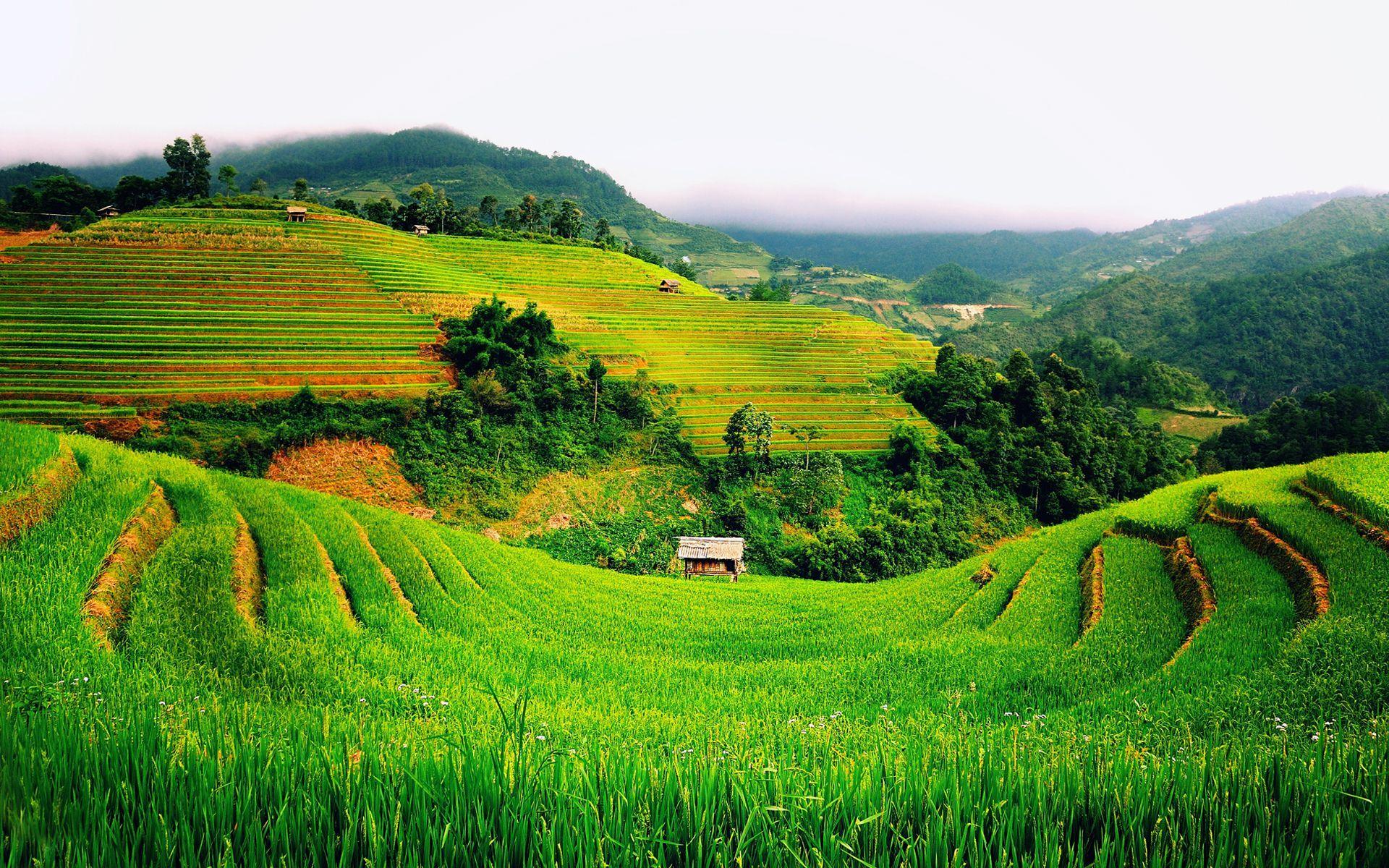
The terraces here are spread across large mountain slopes rather than concentrated around one town. Communities including Dao, Tay and Nung people live among the valleys, and the landscape changes dramatically through the agricultural seasons.
Hoang Su Phi is particularly rewarding for travelers who enjoy trekking, photography, homestays and slow travel.
When to Visit Hoang Su Phi
The landscape changes according to the rice cycle. During the water season, flooded terraces reflect the sky and clouds. Later, the fields become green, followed by golden colors during harvest.
For photographers, the changing agricultural calendar is more important than simply choosing a generic “high season.” Official Vietnamese tourism information specifically notes the watering season from around March to May.
2. Y Ty – A Remote Mountain Escape
Y Ty is a remote mountain community in northern Vietnam, near the Chinese border, known for clouds, forests, rice terraces and ethnic villages. It has long been a destination for travelers who want landscapes that feel far removed from the standard tourist circuit.
The area has traditionally been difficult to reach, but road improvements have made access easier. A February 2026 report from the national tourism authority noted that the Ban Xeo–Muong Hum–Den Sang–Y Ty road route had largely been completed, reducing the road journey from the former Lao Cai city area to Y Ty’s center to a little over two hours. The same report noted that Y Ty had 21 accommodation establishments by early 2026.
This makes Y Ty particularly interesting now: it remains remote in atmosphere while becoming easier to access.
What to Do in Y Ty
The main attraction is the landscape. Walk through rice terraces, visit villages, photograph traditional houses, explore mountain roads and look for the low clouds that often settle across the valleys.
Y Ty works best as a slow two- or three-day mountain journey, rather than a quick stop.
3. Mu Cang Chai – Vietnam’s Great Rice Terrace Destination
Mu Cang Chai may be better known among photographers than casual tourists, but it remains considerably quieter than Sapa. Located around 300 kilometers from Hanoi, the district is famous for more than 2,000 hectares of terraced rice fields.
The terraces were developed by generations of Hmong farmers and cover dramatic mountain slopes. The landscape is especially impressive during planting and harvest seasons.
Unlike Sapa, Mu Cang Chai does not revolve around one central mountain town. The scenery is spread across communities and mountain roads, which makes private transportation particularly useful.
When to Visit Mu Cang Chai
The water-pouring season from late May to early June produces extraordinary reflective terraces. The fields become like giant mirrors, reflecting mountains, clouds and sunlight.
September and October are the main harvest period, when the terraces can turn golden.
For photographers, these are arguably the two most interesting periods of the year.
4. Khau Pha Pass – Mountain Roads and Paragliding
Khau Pha Pass is one of the most spectacular mountain passes in Northwestern Vietnam and forms an important part of the journey toward Mu Cang Chai.
The road winds through mountains and rice-terrace landscapes, with viewpoints that stretch across valleys.
During certain seasonal festivals, the area also hosts paragliding activities over the rice terraces. Official tourism information highlights Khau Pha as a major viewpoint for the surrounding landscapes.
For travelers who enjoy road trips, the pass is as important as the destination at the end of the road.
5. Ta Xua – The Land of Clouds
Ta Xua is one of Northern Vietnam’s most famous destinations for cloud hunting, but it remains less visited internationally than Sapa or Halong Bay.
Located at roughly 1,500–1,800 meters, Ta Xua combines rugged mountains, terraced fields and dramatic cloud formations. Vietnam’s official tourism website describes the area as a highland destination where mountain peaks can disappear beneath a sea of clouds.
The journey from Hanoi takes roughly five hours by road, making Ta Xua realistic as a two- or three-day mountain escape.
Dinosaur Spine in Ta Xua
The Dinosaur Spine is one of Ta Xua’s most recognizable hiking locations. A narrow ridge extends across the mountains, with steep drops and views into the surrounding valleys.
This is not a casual stroll. Visitors should consider local weather and trail conditions and use a local driver or guide when necessary.
When to Visit Ta Xua
Official tourism guidance identifies January to March as a particularly favorable period for cloud hunting, although cloud conditions depend on weather and are never guaranteed.
The experience is called cloud hunting for a reason: patience and luck are part of the adventure.
6. Thac Ba Lake – Islands, Water and Quiet Villages
Thac Ba Lake is one of Northern Vietnam’s most interesting alternatives to the better-known mountain destinations. Located in the Yen Bai area, the reservoir covers nearly 20,000 hectares of water surface and contains more than 1,300 islands and small islets.
Surrounded by limestone mountains and green hills, the lake offers a completely different Northern Vietnam experience.
Instead of climbing mountain passes all day, travelers can explore the lake by boat, kayak, hike to viewpoints or stay in a village homestay.
Ngoi Tu Village
Ngoi Tu Village is home primarily to Dao communities and offers travelers opportunities to see stilt houses, traditional crafts, local food and village life. Official tourism information also highlights activities such as boating, fishing and cultural experiences in the area.
A homestay here can be an excellent alternative to a standard mountain hotel.
7. Cao Bang – One of Northern Vietnam’s Best Hidden Regions
Cao Bang is one of the strongest choices for travelers who want mountains, waterfalls, caves and ethnic cultures without following the standard Sapa route.
Vietnam’s official tourism website has specifically described Cao Bang as an off-the-beaten-path destination, highlighting motorcycle routes, ethnic communities, Ngườm Ngao Cave, Thang Hen Lake and Ban Gioc Waterfall.
The province is large enough to justify several days rather than a short excursion.
8. Ban Gioc Waterfall – Northern Vietnam’s Border Landscape
Ban Gioc Waterfall is one of the most spectacular natural attractions in Northern Vietnam. Located on the Vietnam–China border, the waterfall spreads across a broad limestone landscape surrounded by green mountains.
Vietnam’s tourism authority currently places Ban Gioc about 340 kilometers north of Hanoi, with access by road through scenic mountain routes.
The waterfall is beautiful, but the surrounding landscape is equally important. Spend time at viewpoints, visit the nearby pagoda and explore the rural roads around the waterfall.
Best Time to Visit Ban Gioc
The official tourism guide recommends the dry season from October to April as a favorable period. The falls can also be particularly impressive when water releases increase the flow of the Quay Son River.
9. Ngườm Ngao Cave
Near Ban Gioc, Ngườm Ngao Cave provides an excellent underground experience.
The cave system extends for more than two kilometers, although only a portion is open to visitors. It contains large chambers and distinctive stalactite formations.
The cave is a useful addition because it gives you a completely different landscape after spending time outdoors among mountains and waterfalls.
10. Thang Hen Lake System
Thang Hen is not simply one lake. It is a system of interconnected lakes and waterways surrounded by limestone scenery.
Vietnam’s official tourism information describes the system as a collection of small lakes connected by caves and underground passages, with water levels changing significantly between seasons.
This is an excellent destination for travelers who prefer quiet landscapes and photography rather than busy sightseeing.
11. Pac Bo Historical Complex
Pac Bo combines natural scenery with important modern Vietnamese history. The area is associated with Ho Chi Minh’s revolutionary activities, including the cave where he lived and the stream where he worked.
The destination is especially valuable for Vietnamese history enthusiasts because the landscape and historical story are closely connected.
12. Ba Be Lake – Forest, Water and Ethnic Villages
Ba Be Lake is another strong choice for travelers who want to replace busy mountain roads with a slower combination of lake, forest and village life.
The surrounding landscape includes limestone mountains, forest, caves and rural settlements. Boat trips provide the easiest way to appreciate the scale of the lake, while walking routes provide a closer look at village life.
Ba Be works particularly well as a two-day nature retreat.
A Night at a Ba Be Homestay
Staying with a local family can turn a lake excursion into a cultural experience. Have dinner with your hosts, walk around the village and take a boat early the next morning before returning to the main road.
The combination of nature and community is what makes Ba Be worth adding to a Northern Vietnam itinerary.
13. Pu Luong – Quiet Rice Valleys
Pu Luong Nature Reserve is a strong choice for travelers who want rice terraces, forests and village life without the more developed atmosphere of Sapa.
The landscape is softer than Ha Giang: instead of dramatic limestone cliffs and steep passes, you find forest-covered mountains, agricultural valleys and traditional stilt houses. Official tourism information describes Pu Luong as a secluded countryside destination with Thai and Muong communities, homestays and walking routes.
Pu Luong is especially good for trekking, cycling and slow travel.
14. Mai Chau – Village Life Close to Hanoi
Mai Chau is not completely unknown, but it remains a quieter alternative to Sapa for travelers who want rural scenery without long mountain journeys.
The valley is home to Thai communities, rice fields and traditional stilt houses. Vietnam’s official tourism information recommends homestays, cycling and walking as key experiences.
Because Mai Chau is relatively accessible from Hanoi, it is particularly suitable for families, couples and travelers with only a few extra days.
15. Son La – A Mountain Region Beyond the Standard Route
Son La is often overlooked by travelers racing from Hanoi toward Sapa or Ha Giang.
The province offers mountain valleys, tea plantations, ethnic communities and long scenic road journeys.
For travelers who want to build a slower Northwest Vietnam road trip, Son La can be combined with Moc Chau, Ta Xua or Mu Cang Chai.
The appeal here is not one superstar attraction but the overall landscape and road experience.
16. Moc Chau – Tea Plantations and Green Landscapes
Moc Chau is becoming better known, but it still feels considerably less concentrated than Sapa.
The high plateau is famous for tea plantations, rolling hills, flowers and cooler weather.
It is particularly attractive for travelers who want an easy mountain escape from Hanoi without committing to a long Ha Giang-style road trip.
Moc Chau can also be combined with Ta Xua for a cloud-and-tea road trip.
17. Lai Chau – Remote Mountain Landscapes
Lai Chau is for travelers willing to go farther.
The province offers steep mountain scenery, remote villages, waterfalls and roads that feel far removed from mainstream tourism.
It is particularly interesting for experienced road-trippers and photographers who have already explored Sapa and Ha Giang and want a more remote Northern Vietnam experience.
The main advantage is space: you can travel for long periods without encountering the concentration of tourist vehicles found on famous routes.
18. Sin Ho – The High Plateau of Lai Chau
Sin Ho is a remote highland area in Lai Chau known for mountain scenery, ethnic markets and cool weather.
It is not a destination for travelers looking for nightlife or extensive tourist infrastructure. The attraction is the landscape and the opportunity to see daily life at a slower pace.
A local guide becomes especially useful here because transportation, language and route planning are more complicated than in Sapa.
19. Muong Lay – Mountains and Rivers
Muong Lay offers dramatic mountain scenery where valleys and waterways meet.
It works best as part of a longer Northwest road journey rather than a standalone weekend trip from Hanoi.
Travelers interested in road trips can combine it with Lai Chau and Dien Bien Phu for a deeper exploration of Northwestern Vietnam.
20. Dien Bien Phu – History Beyond the Mountain Scenery
Dien Bien Phu is one of Vietnam’s most important historical destinations, particularly for travelers interested in the First Indochina War.
The city and surrounding area contain museums, memorials and former battlefield locations.
It is far from the classic Northern Vietnam tourist circuit, which makes it a good option for travelers who want to combine mountain scenery with serious historical exploration.
Why Go Off the Beaten Path in Northern Vietnam?
The main reason is not simply avoiding tourists.
It is about changing the pace and depth of the trip.
When you visit a less-developed destination, you are more likely to spend time in family-run restaurants, village homestays and local markets rather than moving between large tourist facilities.
You also have more opportunities to notice small details: farming, weaving, traditional houses, children walking home from school, local food preparation and seasonal agricultural work.
Northern Vietnam Off the Beaten Path for Photographers
Photographers should look beyond Sapa’s most recognizable viewpoints.
Hoang Su Phi offers terraces and cloud-covered valleys.
Mu Cang Chai provides enormous rice landscapes.
Y Ty offers mist, mountain villages and remote terraces.
Ta Xua is ideal for cloud photography.
Cao Bang provides waterfalls, caves and limestone valleys.
Thac Ba Lake offers water, islands and mountains.
Each destination produces a completely different visual identity.
Northern Vietnam Off the Beaten Path for Trekking
For trekking, consider Hoang Su Phi, Pu Luong, Y Ty, Ba Be and Ta Xua.
Hoang Su Phi is particularly attractive for travelers who want to combine rice terraces with ethnic villages. Current tourism information highlights half-day through multi-day trekking routes through rice fields, forest and Red Dao villages.
Pu Luong is easier for travelers who want gentler walks, while Ta Xua is more demanding and better suited to hikers comfortable with steep terrain.
Northern Vietnam Off the Beaten Path for Road Trips
If your idea of adventure is a road rather than a hiking trail, consider:
Hanoi → Thac Ba → Mu Cang Chai → Ta Xua
or:
Hanoi → Cao Bang → Ban Gioc → Ba Be
or:
Hanoi → Hoang Su Phi → Y Ty → Sapa
The third route is particularly interesting for travelers who want to see how the landscape changes as you move deeper into the northwestern mountains.
Northern Vietnam Off the Beaten Path for Couples
Couples can create a slower itinerary around Thac Ba Lake, Hoang Su Phi, Pu Luong or Ba Be.
These destinations are better suited to private homestays, scenic walks, quiet meals and countryside experiences than busy tourist hubs.
For a romantic trip, combine two quiet destinations with Hanoi rather than trying to visit five mountain areas.
Northern Vietnam Off the Beaten Path for Families
Families should prioritize destinations with manageable road journeys and comfortable accommodation.
Mai Chau, Pu Luong, Thac Ba and Ba Be are particularly practical.
Cao Bang can also work well for older children because waterfalls, caves and boat trips create variety.
Very remote destinations such as Y Ty or Lai Chau are better for families who are comfortable with long road journeys.
Northern Vietnam Off the Beaten Path for Adventure Travelers
Adventure travelers should consider Ta Xua, Hoang Su Phi, Cao Bang, Y Ty and Lai Chau.
These destinations offer mountain roads, trekking, waterfalls, caves and remote communities.
However, “remote” also means fewer immediate services. Travel with adequate preparation, especially when weather conditions are unstable.
Best Time for Northern Vietnam Off the Beaten Path
Timing depends heavily on the destination.
March–May: excellent for green landscapes, trekking and the water season in several rice-terrace areas.
Late May–June: reflective water-filled rice terraces in Mu Cang Chai and parts of the northwestern mountains.
August–October: green and golden rice landscapes, depending on location and altitude.
September–October: excellent for golden rice terraces in Mu Cang Chai and Hoang Su Phi.
October–April: particularly suitable for Cao Bang and Ban Gioc according to official regional guidance, although winter can be cold.
January–March: good potential for cloud hunting in Ta Xua, although cloud conditions are weather-dependent.
What to Pack
Off-the-beaten-path travel requires more preparation than staying in Hanoi or a large tourist destination.
Bring comfortable walking shoes, a rain jacket, warm layers, sun protection, power banks, basic medication and a small daypack.
For mountain road trips, keep your luggage compact.
A waterproof bag is useful during rainy periods.
Transportation in Remote Northern Vietnam
This is where private travel becomes especially valuable.
Public buses can reach many destinations, but schedules may be limited and connections can be difficult to coordinate.
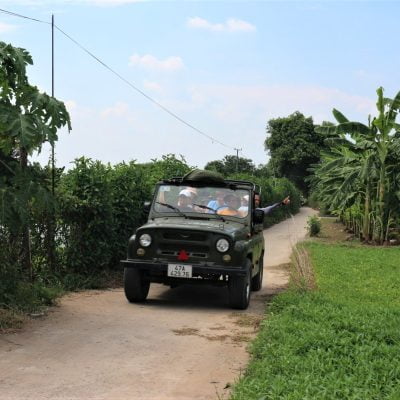
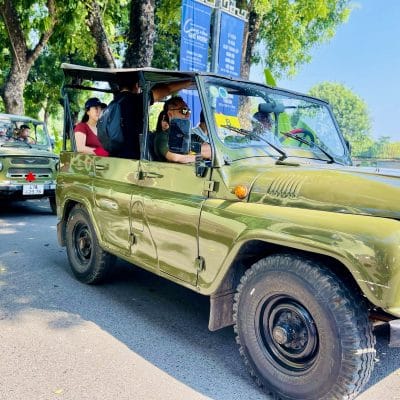
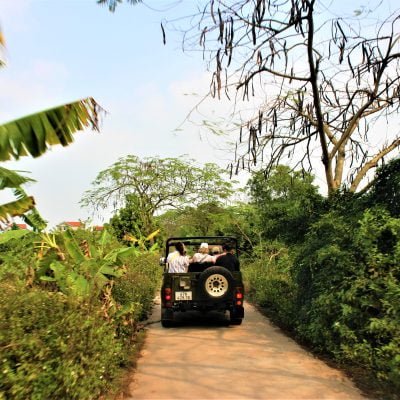
A private car or experienced local driver allows you to change the route, stop for photographs and reach villages that are not practical with regular buses.
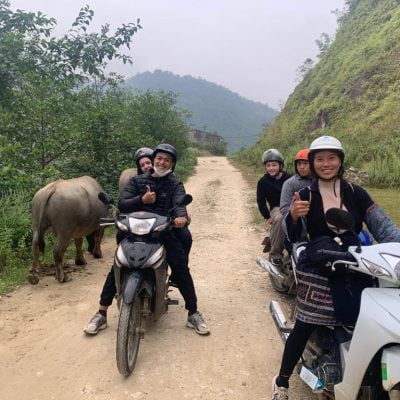
For adventurous travelers, motorcycles can provide more flexibility, but mountain riding requires appropriate experience and legal documentation.
Should You Rent a Motorbike?
Only when you are legally licensed, experienced and comfortable riding on mountain roads.
Northern Vietnam’s remote roads can include sharp curves, steep gradients, unpredictable weather and limited services.
For most international visitors, riding as a passenger with an experienced local driver gives you the freedom of a motorcycle without requiring you to focus on navigation and road conditions.
Homestays in Northern Vietnam
Homestays are one of the best ways to make an off-the-beaten-path trip more meaningful.
A good homestay can include a traditional house, family dinner, local breakfast and opportunities to talk with your hosts.
Don’t expect every homestay to provide hotel-level facilities. The point is often the setting and interaction rather than luxury.
Local Markets
Local markets can be more interesting than famous sightseeing attractions.
They show what people actually eat, grow, sell and use in everyday life.
Markets in Ha Giang, Cao Bang, Hoang Su Phi, Bac Ha and other highland areas can feature vegetables, livestock, clothing, herbs, handicrafts and prepared foods.
Visit respectfully and remember that these markets serve local residents first.
Responsible Travel in Remote Villages
Traveling beyond the main tourist route brings greater responsibility.
Ask before photographing people or entering homes. Avoid giving children sweets or money directly. Buy crafts from legitimate local sellers. Use local guides when appropriate and stay in locally operated accommodation.
Small decisions can help tourism create income without turning daily life into a performance.
What Makes These Places Different From Sapa?
Sapa has the advantage of accessibility. It has abundant hotels, restaurants, trekking operators and tourist services.
The destinations in this guide often have fewer services and longer journeys, but they also offer more space.
That’s the trade-off.
You exchange convenience for quieter landscapes and a slower experience.
Northern Vietnam Off the Beaten Path Itinerary: 7 Days
A good seven-day route for adventurous travelers is:
Day 1: Hanoi → Thac Ba Lake.
Day 2: Thac Ba → Mu Cang Chai.
Day 3: Mu Cang Chai rice terraces.
Day 4: Mu Cang Chai → Ta Xua.
Day 5: Ta Xua cloud hunting.
Day 6: Ta Xua → Hanoi.
Day 7: Hanoi.
This route focuses heavily on Northwestern landscapes and is best for travelers who enjoy long road journeys.
Northern Vietnam Off the Beaten Path Itinerary: 10 Days
A broader itinerary can be:
Days 1–2: Hanoi.
Days 3–4: Hoang Su Phi.
Days 5–6: Y Ty.
Days 7–9: Cao Bang and Ban Gioc.
Day 10: Return toward Hanoi.
This is more demanding logistically but offers an unusually broad view of northern mountain culture.
Northern Vietnam Off the Beaten Path Itinerary: 14 Days
For serious mountain travelers:
Days 1–2: Hanoi.
Days 3–4: Thac Ba.
Days 5–6: Mu Cang Chai.
Days 7–8: Hoang Su Phi.
Days 9–10: Y Ty.
Days 11–13: Cao Bang and Ban Gioc.
Day 14: Return toward Hanoi.
This itinerary is for travelers who value remote landscapes more than famous attractions.
Which Hidden Destination Should You Choose?
Choose Hoang Su Phi for rice terraces and trekking.
Choose Y Ty for remote villages, clouds and a quieter mountain atmosphere.
Choose Mu Cang Chai for some of Vietnam’s most impressive rice terraces.
Choose Ta Xua for cloud hunting and mountain hiking.
Choose Thac Ba Lake for boats, islands and village life.
Choose Cao Bang for waterfalls, caves and limestone landscapes.
Choose Ba Be for forest, lake and homestays.
Choose Pu Luong for gentle trekking and rural valleys.
Choose Mai Chau for an easier countryside escape from Hanoi.
Choose Lai Chau for a deeper Northwest Vietnam road trip.
Final Thoughts
Northern Vietnam off the beaten path is not about finding places that nobody knows. It is about finding places where travel still feels slower, more local and more connected to the landscape.
Instead of spending your entire trip between Hanoi, Sapa, Ha Giang and Halong Bay, consider adding Hoang Su Phi, Y Ty, Mu Cang Chai, Ta Xua, Thac Ba Lake, Cao Bang, Ba Be, Pu Luong or Mai Chau. Official Vietnamese tourism resources specifically identify several of these places as lesser-known alternatives, highlighting their rice terraces, ethnic communities, waterfalls, forests and quieter landscapes.
The best destinations are different depending on what you want. Photographers may prefer Mu Cang Chai or Hoang Su Phi. Adventure travelers may choose Ta Xua or Cao Bang. Couples may prefer Thac Ba or Ba Be. Families can find a gentler rural experience in Mai Chau or Pu Luong.
You may travel farther, spend more time on the road and find fewer polished tourist facilities.
But that is precisely the point.
Go beyond the famous route, slow down in the mountains and discover the Northern Vietnam that exists between the major tourist destinations.
Explore Northern Vietnam Off the Beaten Path With Vietnam Women Travel
For travelers looking for private and small-group experiences led by women, Vietnam Women Travel can build a Northern Vietnam itinerary around quieter mountain destinations rather than following only the standard Hanoi–Sapa–Ha Giang–Halong Bay route.
A private journey can combine Hoang Su Phi, Y Ty, Mu Cang Chai, Thac Ba, Cao Bang, Ba Be, Pu Luong or Mai Chau with Hanoi, depending on the time available. Private transportation is especially useful in remote regions because it allows flexible stops for photography, local food, village visits and changing weather.
The women-led format is suitable for couples, families, solo travelers and private groups, not only women travelers.
Contact Vietnam Women Travel
VIETNAM WOMEN TRAVEL
Address: 91 Tho Nhuom Street, Hoan Kiem District, Hanoi, Vietnam
Phone / WhatsApp 24/7: +84 982 416 518
Second Contact: +84 981 090 989
Website: vietnamwomentravel.com
Private Northern Vietnam Tours Led By Women
Hanoi Tours Led By Women
Sapa Tours Led By Women
Ha Giang Tours Led By Women
Northern Vietnam Off-the-Beaten-Path Tours
Private & Small-Group Vietnam Experiences
Travel beyond the famous Northern Vietnam route—discover quiet valleys, mountain villages, rice terraces, waterfalls and local life with women guides who know the roads beyond the main tourist trail.