Hanoi Travel Experiences: Food, Culture, History and Hidden Gems
Hanoi is not a city that can be understood from a list of monuments alone. Its character comes from the way history, food, religion, architecture, neighborhood life, and modern Vietnamese culture exist side by side. You can begin the morning around Hoan Kiem Lake, walk through centuries-old commercial streets, visit a historic temple, stop for Vietnamese coffee, taste a bowl of bun cha, cross Long Bien Bridge, and finish the day watching Hanoi’s streets come alive after dark. For travelers looking for Hanoi travel experiences beyond ordinary sightseeing, the most rewarding approach is to combine famous landmarks with food, cultural encounters, neighborhood exploration, and carefully selected places that reveal a less obvious side of the capital. Vietnam Women Travel – Premium Private Tours Led by Women creates private Hanoi experiences that can be customized around food, culture, history, photography, transportation, and the interests of each private group.
What Makes Hanoi a Great City for Travel Experiences?
Hanoi offers an unusual combination of different historical periods within a relatively compact urban area. The Old Quarter reflects centuries of commerce and traditional street life. The French Quarter introduces colonial-era architecture. Temples and pagodas reveal religious traditions. Historical sites explain Vietnam’s political and educational development. West Lake provides a slower atmosphere, while the Red River and Long Bien Bridge show another side of the city’s geography.
The city is also highly experiential. You do not need to enter a museum to learn something about Hanoi. A bowl of pho can introduce northern Vietnamese food culture. A café can reveal how coffee became part of everyday life. A walk through a residential lane can show how homes and businesses share the same narrow buildings. A visit to a temple can explain the relationship between Buddhism, Taoism, Confucian traditions, and Vietnamese folk beliefs.
For this reason, the best Hanoi itinerary is often a combination of places to see and experiences to have.
1. Start With Hoan Kiem Lake and the Heart of Hanoi
Hoan Kiem Lake is one of the most practical places to begin a Hanoi experience. Located in the center of the city, it provides an immediate introduction to both Hanoi’s history and modern daily life.
The lake is associated with the legend of the Returned Sword, but it is also a public space used by residents throughout the day. Early mornings can reveal people exercising and practicing activities, while evenings bring pedestrians and social gatherings.
From the lake, travelers can easily continue toward the Old Quarter, Ngoc Son Temple, French Quarter, restaurants, cafés, and shopping streets. A private guide can use the area as an orientation point before introducing you to other parts of the city.
2. Walk Through the Historic Old Quarter
The Hanoi Old Quarter is one of the most important places to experience the city’s traditional commercial character. Its network of narrow streets developed around specialized trades and remains one of the most visually distinctive areas of Hanoi.
Look beyond the obvious tourist shops. Notice the narrow tube houses, businesses operating from the ground floors, small family eateries, temples hidden between commercial buildings, street vendors, and the way residents use limited urban space.
A private walking experience allows you to stop whenever something interests you. Instead of simply following a predetermined route, your guide can explain the history of the streets and help you understand why the Old Quarter looks and functions the way it does.
3. Experience Hanoi Through Vietnamese Food
Food is one of the strongest ways to understand Hanoi. Northern Vietnamese cuisine has its own characteristics, and Hanoi is particularly well known for dishes such as pho, bun cha, banh cuon, cha ca, nem, noodles, fresh herbs, and Vietnamese coffee.
A food experience should not simply be a list of restaurants. Ask what you are eating, where the ingredients come from, how the dish is prepared, and why it is associated with Hanoi.
A private guide can also help travelers understand how dishes are traditionally eaten and communicate food preferences when necessary.
4. Eat Bun Cha Where Hanoi’s Grilled Pork Tradition Comes Alive
Bun cha is one of Hanoi’s signature dishes and a must-try for many visitors. The meal combines grilled pork, rice noodles, fresh herbs, and a savory dipping broth.
The dish is particularly interesting because it demonstrates how Vietnamese meals balance grilled flavors, herbs, noodles, acidity, sweetness, and fresh vegetables.
A private food tour can introduce bun cha as part of a wider Hanoi culinary experience rather than treating it as an isolated meal.
5. Taste Hanoi Pho
Pho is internationally famous, but eating pho in Hanoi provides a different experience from ordering it in another country. Northern-style pho has its own flavor profile and traditions.
Rather than focusing only on finding a famous restaurant, pay attention to how the dish is served and how people eat it. A knowledgeable guide can explain the ingredients and regional differences.
For travelers with dietary restrictions, discuss requirements before the food tour so suitable options can be considered.
6. Discover Hanoi’s Egg Coffee Culture
Hanoi’s egg coffee is one of the city’s most distinctive drinks. Vietnamese coffee is combined with a creamy whipped egg mixture to create a rich and unusual beverage.
The experience is also an introduction to Hanoi’s café culture. Small cafés are deeply integrated into everyday life, and sitting with coffee allows visitors to observe the city rather than constantly moving between attractions.
For a relaxed travel experience, schedule a coffee stop between major sightseeing areas.
7. Visit the Temple of Literature
The Temple of Literature provides an important connection to Vietnam’s educational and intellectual history. Founded in 1070, the complex is associated with Confucian learning and Vietnam’s traditional examination system.
The courtyards, stone steles, gates, gardens, and traditional architecture become much more meaningful when explained in historical context.
A private guide can adjust the amount of explanation to your interests, making the experience suitable for both serious history enthusiasts and travelers who simply want an introduction to Vietnamese culture.
8. Discover Hanoi’s Ancient and Modern History
Hanoi has served as an important political and cultural center for centuries. To understand the city, it helps to look at different historical periods rather than focusing on only one.
The Thang Long Imperial Citadel offers insight into Hanoi’s imperial history. The Temple of Literature reveals educational traditions. The Old Quarter demonstrates centuries of commerce. The French Quarter reflects colonial-era urban development. Historical sites associated with the twentieth century explain Vietnam’s modern transformation.
A private history-focused itinerary can connect these places into one coherent story.
9. Explore Thang Long Imperial Citadel
The Thang Long Imperial Citadel is particularly valuable for travelers who want to explore Hanoi’s deeper history. The complex represents the city’s long role as a political center.
Walking through the site with a guide allows you to understand how different structures and archaeological remains relate to the development of Thang Long and Hanoi.
It is an excellent addition for visitors who have more than one day in Hanoi or who prioritize history over shopping.
10. Understand Vietnam’s Modern History
Hanoi contains several sites connected with the history of modern Vietnam. The Ho Chi Minh historical area, Hoa Lo Prison Relic, and other museums and monuments can help visitors understand the events that shaped the country during the twentieth century.
These places can be emotionally and historically complex, so a knowledgeable guide is valuable. Instead of receiving disconnected facts, you can ask questions and understand the historical context behind what you are seeing.
11. Visit the Vietnamese Women’s Museum
For travelers specifically interested in women’s experiences in Vietnam, the Vietnamese Women’s Museum deserves special attention.
The museum explores subjects including women’s roles in family and society, traditional clothing, crafts, wartime experiences, and religious traditions. It offers a perspective that is different from conventional Hanoi sightseeing.
Women traveling alone or with friends may find the museum particularly meaningful because it provides a deeper understanding of Vietnamese women’s lives across different generations and communities.
12. Discover Hanoi’s Religious Culture
Hanoi’s temples and pagodas offer opportunities to understand Vietnamese spiritual traditions. A good cultural experience should explain that Vietnamese religious life can involve overlapping influences rather than fitting neatly into one category.
Visitors may encounter Buddhism, Taoism, Confucian traditions, and Vietnamese folk beliefs within different cultural settings. A guide can explain what visitors are seeing, why people make offerings, and how religious practices appear in everyday life.
When visiting religious sites, dress respectfully and follow the specific rules of each location.
13. Visit Tran Quoc Pagoda and West Lake
Tran Quoc Pagoda beside West Lake provides one of Hanoi’s most recognizable religious and scenic settings.
The pagoda can be combined with a wider West Lake itinerary, allowing travelers to experience both cultural heritage and a more relaxed part of the city.
After visiting the pagoda, spend time around West Lake’s neighborhoods and cafés. This creates a useful contrast with the narrow and busy streets of the Old Quarter.
14. Explore the French Quarter
Hanoi’s French Quarter reveals another layer of the city’s history. Broad streets, colonial buildings, mature trees, villas, and cultural landmarks create a different atmosphere from the Old Quarter.
The area is particularly interesting for travelers who enjoy architecture and photography. A guide can explain how Hanoi developed during the colonial period and how Vietnamese life adapted within the changing urban environment.
The French Quarter also connects naturally with Hoan Kiem Lake and the Hanoi Opera House.
15. Photograph Hanoi Opera House
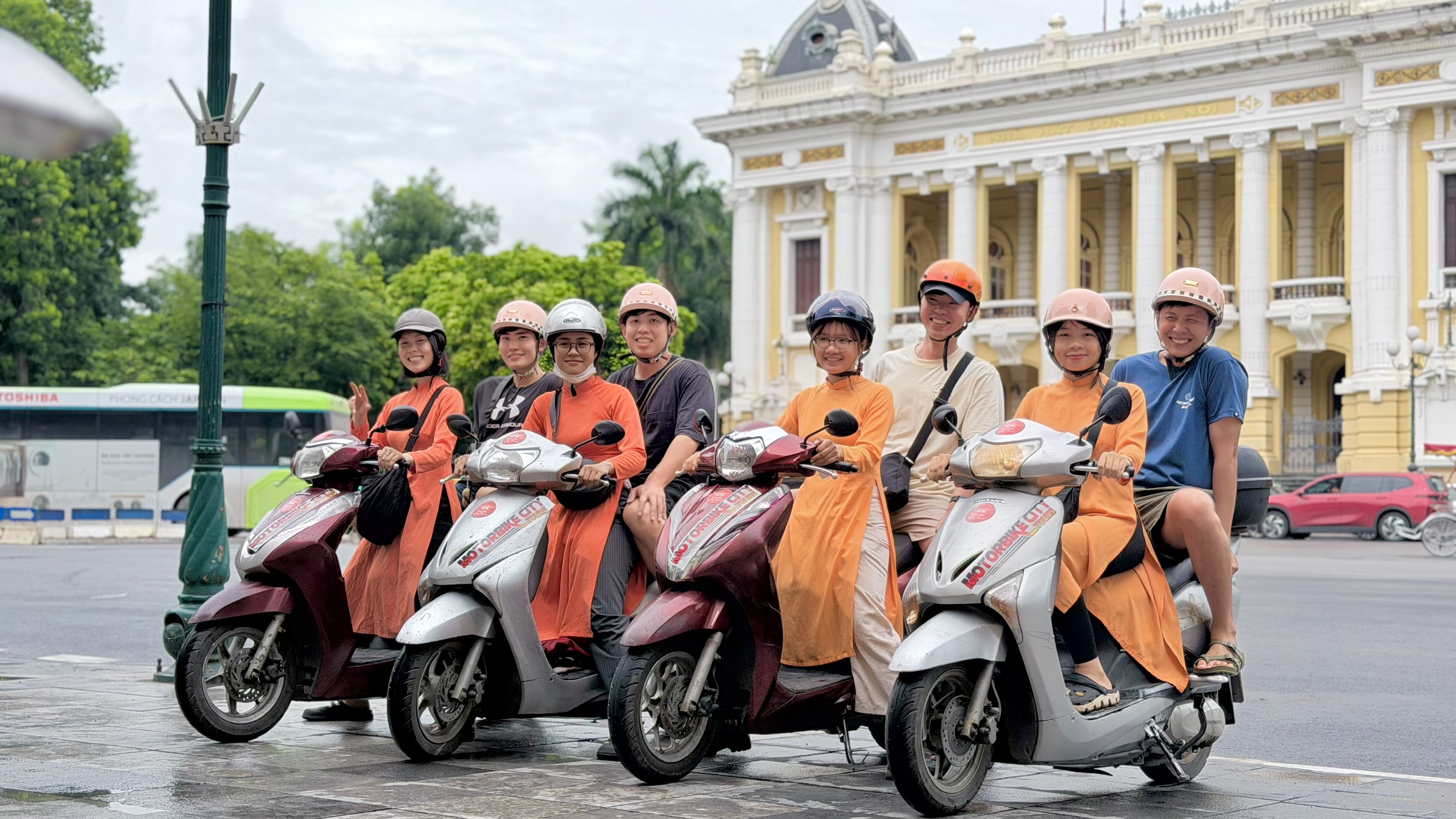
The Hanoi Opera House is one of the city’s most recognizable architectural landmarks. Its location makes it easy to combine with the French Quarter and surrounding streets.
Photography enthusiasts should take time to look at the details rather than simply photographing the facade. The surrounding architecture, tree-lined streets, and nearby buildings create additional compositions.
A private itinerary can schedule the visit according to your photography interests.
16. Cross Long Bien Bridge
Long Bien Bridge is an important historical structure crossing the Red River and provides a very different perspective on Hanoi.
The bridge and surrounding landscape can be particularly rewarding for photography. You may see railway infrastructure, river views, agricultural areas, and changing urban development.
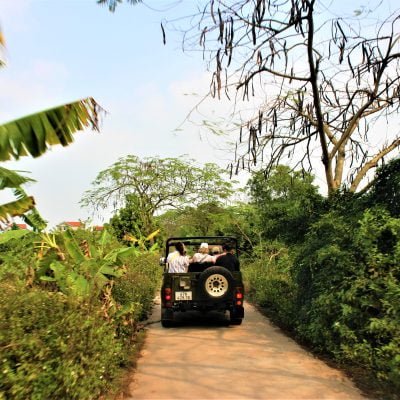
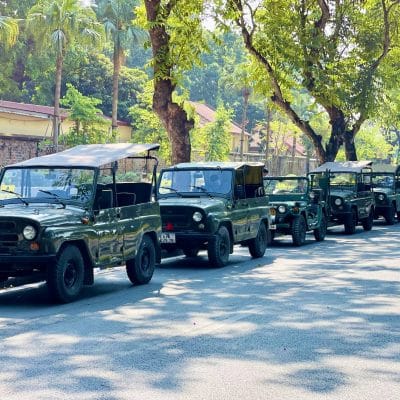
A private car or motorbike tour can make the bridge easier to combine with other neighborhoods while allowing the guide to explain its historical significance.
17. Experience Hanoi by Private Motorbike
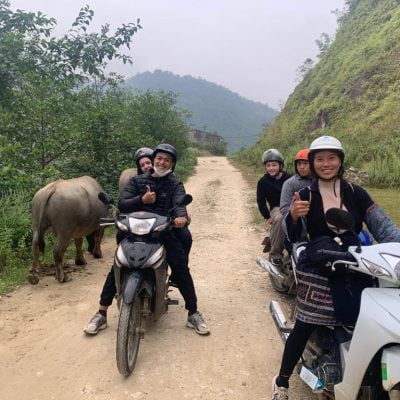
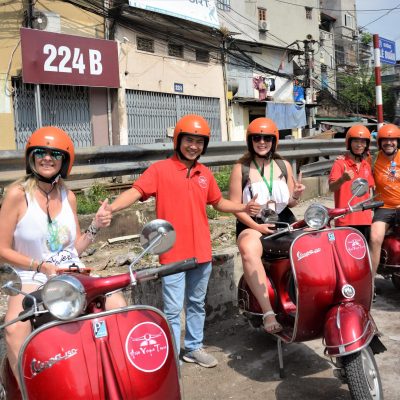
One of the most effective ways to see Hanoi’s different neighborhoods in a limited amount of time is by private motorbike. You travel as a passenger with an experienced driver while observing the city from street level.
A customized route can connect the Old Quarter, French Quarter, West Lake, Long Bien Bridge, markets, residential streets, and other areas.
The experience is particularly valuable because Hanoi’s character is not limited to its monuments. Moving through the streets lets you see traffic, businesses, food stalls, schools, cafés, and residential areas as they function in everyday life.
18. Explore Hanoi’s Markets
Markets provide a direct connection to Hanoi’s everyday commerce. Fresh ingredients, flowers, household goods, clothing, food preparation, and local shopping habits all become part of the experience.
For food travelers, markets can be particularly informative because you can see ingredients before they appear in a finished dish.
A guide can also help with communication and explain shopping etiquette, while reminding visitors to be respectful when photographing vendors.
19. Search for Hanoi’s Less Obvious Streets
Some of Hanoi’s most interesting moments happen away from major attractions. Residential lanes, small cafés, family businesses, neighborhood temples, and quiet streets can reveal aspects of the city that are easy to miss.
These are not necessarily secret tourist attractions. Their value comes from observing ordinary Hanoi without turning every moment into a sightseeing stop.
A private guide can introduce these areas appropriately while explaining the context and helping travelers interact respectfully.
20. Explore Hanoi’s Architecture Through Different Neighborhoods
Hanoi is ideal for travelers interested in architecture because several different styles exist within a relatively small area.
The Old Quarter demonstrates traditional urban development and narrow tube houses. The French Quarter shows colonial architecture. Religious sites provide examples of Vietnamese and East Asian architectural traditions. Modern neighborhoods demonstrate how Hanoi continues to change.
A private architecture-focused tour can compare these styles instead of treating each building as an isolated attraction.
21. Experience Hanoi After Dark
Hanoi’s personality changes in the evening. Restaurants become busier, street food becomes more prominent, cafés remain active, and areas around Hoan Kiem Lake attract pedestrians.
An evening experience can combine a walking route with dinner, street food, coffee, or cultural activities.
For travelers who prefer structured evening exploration, a private guide can make it easier to move between different areas without spending time working out transportation.
22. Take a Private Hanoi Food Tour at Night
A Hanoi night food experience can focus on several small dishes instead of one large meal. This gives you an opportunity to compare different flavors and cooking styles.
Your guide can explain what each dish is and help communicate dietary restrictions. For adventurous travelers, this can be one of the most memorable ways to experience the city.
The experience is especially suitable for private groups because the route can be adjusted according to the group’s appetite and preferences.
23. Slow Down in Hanoi’s Cafés
Not every memorable Hanoi experience needs to involve sightseeing. Spending time in a café can provide insight into the city’s everyday social culture.
Try Vietnamese drip coffee, egg coffee, coconut coffee, or another style that interests you. Observe how residents use cafés as places to meet friends, work, talk, or simply watch the street.
Including one or two café stops can also make a full sightseeing day more comfortable.
24. Create a Photography-Focused Hanoi Experience
Hanoi offers a wide range of photography subjects: historic architecture, food preparation, markets, lakes, bridges, narrow streets, bicycles, street vendors, cafés, and everyday life.
A private photography itinerary can be designed around your preferred style. Street photographers may want early morning markets and Old Quarter lanes. Architecture photographers may prefer the French Quarter. Landscape photographers can focus on West Lake and the Red River.
The advantage of private touring is that you can spend additional time at a location without worrying about holding up a large group.
25. Build Your Own Hanoi Travel Experience
The strongest Hanoi experience is often a combination of several interests rather than one theme.
A first-time visitor might combine Hoan Kiem Lake, the Old Quarter, Temple of Literature, French Quarter, Vietnamese food, and egg coffee. A history enthusiast could add Thang Long Imperial Citadel and Hoa Lo Prison. A photography enthusiast might focus on the Old Quarter, French Quarter, West Lake, and Long Bien Bridge. A food lover could dedicate much of the day to markets, traditional dishes, coffee, and an evening food tour.
A private female guide can help organize these choices into a realistic route based on your available time.
How to Plan Hanoi Travel Experiences Without Rushing
Hanoi has enough attractions to fill several days, but attempting to see everything can make the experience exhausting. A better approach is to group nearby attractions and leave time for meals and unexpected discoveries.
For one day, concentrate on central Hanoi. Hoan Kiem Lake, the Old Quarter, Temple of Literature, French Quarter, and food experiences can create a balanced introduction.
For two days, use the second day to explore West Lake, Tran Quoc Pagoda, Long Bien Bridge, museums, markets, and additional food experiences.
For longer stays, move beyond major landmarks and spend more time exploring neighborhoods, cafés, cultural sites, and culinary experiences.
Hanoi Travel Experiences for Female Travelers
Women traveling alone or in private groups often appreciate having the freedom to decide how the day unfolds. A private female-led guide can help with transportation, communication, food choices, sightseeing, and cultural explanations while allowing the group to control the pace.
This does not mean Hanoi should be treated as a destination that women need to experience differently from everyone else. Rather, it means travelers can choose a style of touring that provides privacy, flexibility, and professional female-led service.
The tours are suitable for solo women, couples, families, groups of friends, and mixed private groups.
What to Tell Your Tour Operator
When requesting a private Hanoi travel experience, provide your travel date, number of travelers, hotel, available hours, preferred starting time, interests, dietary requirements, mobility considerations, and transportation preference.
Also mention what you do not want. If shopping is not important, leave it out. If you have already visited the Old Quarter, focus on other neighborhoods. If you want more food stops, tell the tour operator. If photography is important, request additional time at scenic locations.
Specific information produces a much more useful itinerary than simply asking for a “Hanoi city tour.”
Best Time for Hanoi Travel Experiences
Hanoi can be visited throughout the year, but weather affects outdoor sightseeing. During hotter periods, early mornings and late afternoons can be more comfortable. Cooler months can be suitable for longer walks.
A private itinerary makes it possible to adjust the sequence according to the day’s weather, while attraction opening hours and special closures should also be checked before finalizing the route.
The most important point is to avoid overloading your schedule. Hanoi is a city worth experiencing slowly.
Why Choose Vietnam Women Travel?
Vietnam Women Travel – Premium Private Tours Led by Women focuses on private travel experiences rather than large standardized group tours.
The company can create Hanoi itineraries around food, culture, history, photography, architecture, neighborhoods, Vietnamese coffee, private motorbike sightseeing, and hidden or less-obvious experiences. Each private group can discuss its priorities before the tour so the final route is practical and relevant.
The tours are led by women and are suitable for travelers of different ages and travel styles. They are not restricted to women-only groups.
Book Your Hanoi Travel Experience
If you want to experience Hanoi through more than its famous landmarks, consider combining history with food, culture with neighborhoods, and sightseeing with time to simply observe the city.
A private itinerary allows you to decide whether your Hanoi experience should focus on traditional food, historical sites, architecture, photography, religious culture, coffee, markets, motorbike sightseeing, or a combination of all of them.
VIETNAM WOMEN TRAVEL
📍 Address: 91 Tho Nhuom Street, Hoan Kiem District, Hanoi, Vietnam
📞 Hotline/WhatsApp: +84988402008 / +84982416518 / +84981090989
📧 Email: info@vietnamwomentravel.com
🌐 Website: https://vietnamwomentravel.com/
Website: Vietnam Women Travel
Vietnam Women Travel – Premium Private Tours Led by Women can create a personalized Hanoi travel experience that brings together the food, culture, history, neighborhoods, photography, and hidden sides of the Vietnamese capital that interest you most.